Sunday, April 12, 2020

Is the phrase "God Exists" a meaningful statement? NO!

antenna galaxy


The Internet Infidels blog Secular Outpost
 6/09/10

 A discussion is launched by Bradley Bowen over the concept of alleged incoherence of the statement "God exists."

In The Coherence of Theism (original:1977, revised ed.:1993), Richard Swinburne argues that the sentence “God exists” is a meaningful indicative sentence that expresses a coherent proposition. He does this by raising objections to arguments that have been given against this view, and by also making a detailed positive case.

For the negative or defensive case, Swinburne starts out by raising objections to some general arguments against this view, and later in the book he raises objections to more specific arguments that focus on the alleged incoherence of specific characteristics or combinations of specific characteristics that are used to define the word “God”.

The main general argument against his position that is examined by Swinburne is a logical positivist argument about the sentence “God exists”, derived primarily from A.J. Ayer’s book Language, Truth, and Logic (1936).

This is how Swinburne interprets the skeptical argument presented by Ayer:

(1) If the sentence "God exists" expresses a coherent statement, then the sentence "God exists" expresses either an analytic proposition or else it expresses a synthetic proposition.
(2) The sentence "God exists" does not express an analytic proposition.

(3) The sentence "God exists" does not express a synthetic proposition.
Therefore,
(4) It is not the case that "God exists" expresses a coherent statement.

The logic of this argument is fine, and Swinburne accepts premises (1) and (2), so his focus is on the question of whether premise (3) is true or well-supported.

This skeptical argument is basically a modern version of Hume’s fork. Hume divided claims into two categories: (a) relations of ideas and (b) matters of fact. Hume argued that all claims fall into one or the other category, so since metaphysical sentences do not express either “the relations of ideas” or “matters of fact”, such sentences do not express claims or propositions.
 It seems unclear to me why this would have anything to do with Hume's fork. This concept says that one cannot derive an ought from an is. This would seem to have nothing to do with the attempt to make a coherent metaphysical statement. Moreover, the idea that metaphysical claims do not express relations of ideas seems absurd and ridiculous. First of all if that were true than science si incoherent. We have known since days of A.E. Burtt and well before that, that scinece is based upon metaphysical assumptions. See Burtt's great famous book The Metaphysical Foundations of Early Modern Science. Most aspect of modern knowledge relate to metaphysical assumptions, any attempt to organize an understanding of the world and group sense data under pre conceived categories is basically a metaphysical assumption. In this connection one might enjoy Edward Feser's commentary on "Recovering Sight After Scientism."

Nor is it logical that Metaphysical claims cannot be matter of fact. If that were the case then scinece would be unable to assert matters of fact. The assertion of materialism (physicalism) is a metaphysical assertion. Come to to that the assertion that Metaphysical claims cannot be matters of fact is a metaphysical claim. The whole concept is meaningless and the reason for this is because one runs a huge risk when basing one's views on Hume. Atheist worship Hume as the great thinker who launched modern atheism not realizing the was the considered the Derrida of his day. That is to say an opportunistic game player more concerned with his own greatness with truth, and hankering to be known as a genius at all cost, and advocating radical concepts he could not pull off. He was brilliant, but not serious, not truth seeking, obsessed with his own advancement. Moreover, Hume's take on religion is nothing short of amateurish and bombastic and nonfactual. In fact I would use the term "propaganda" in relation to this description. Most of the great ideas Hume stumbled on to came from Bishop Berkeley whom he admired (even though he was a Christian so even atheist in that day could recognize that Chrsitians were intellectually valid). Hume set's forth an empiricist understanding that defines religious thought in straw man terms as jaundiced and silly but takes the most absurd view as it's point of attack. Where does he come off asserting that metaphysical claims are not matters of fact when his assertions of empiricism must of necessity be metaphysical? The Empiricist brackets all knowledge but his own perceptions and that is a metaphysical move because it asserts that all sense data but be herded into pre conceived categories.


The concept of an analytic proposition can be viewed as a clarification of Hume’s notion of statements that express “the relations of ideas”. The concept of a synthetic proposition can be viewed as a refinement of Hume’s notion of statements that express “matters of fact”. Given the assumption that all coherent propositions can be categorized as either being an analytic or a synthetic proposition, a dilemma simliar to Hume's fork can be constructed for the sentence "God exists".
 There are some problem's with using Hume's categories. One such problem is was well before the problems of positivism and A.J. Ayer so he was totally out of the loop when Michael Polanyi (1891-1976) proved that the verification principle caused to wither everything other than the verification principle, including scinece, history, knowledge in general. There's a good article by Thomas F. Torrance on Polanyi's Christian faith. That move spelled the beginning of the end for the Ayer form of positivism as a force able to accomplish its task being so valuable to scinece.. See Polyani's book Personal Knowledge: Toward a post critical Philosophy. Hume lived before any of this, before Phenomenology, before positivism and before the modern and post modern understandings of philosophy of since. In fact it's monumentally crucial that Hume never knew anything about Heidegger's Metaphysics. In Hume's day Philosophies and skeptics were reacting against Scholasticism and agaisnt views of the Church that had been shaped by Austine and Aquinas. They were not cognizant to any degree of the people of science and knowledge, they were trying to dig themselves out from under the middle ages. They were busy destroying the intellectual roots of Western culture which were planted firmly in the soil of the Christian faith. So I suggest that Hume's categories are antiquated and that is pronouncements are irrelevant.

This further bit is in the comment section. Bowen talks about Swinburne's philosophical background.


Bradley Bowen said...Uzza said...


does Swineburn ever define what he means by "god"?
===========
Yes.

Swinburne is a modern analytic philosopher. When he was a student of philosophy, he took courses from Ordinary Language philosophers, including John Austin.

Swinburne provides a general definition of the term "God" and then also provides clarification and analysis of each word or phrase in that general definition.

One of the main tasks of his book COT is to describe circumstances in which each of the alleged characteristics of "God" would occur. He does this in order to demonstrate that each characteristic is coherent in itself, and then he procedes to try to describe circumstances in which combinations of these characteristics occur together in one person.

Here is the general definition given by Swinburne in Part II of the book ("A Contingent God"):

"In this part I shall consider what it means to claim that there exists eternally an omnipresent spirit, free, creator of the universe, omnipotent, omniscient, perfectly good, and a source of moral obligation, and whether this is a coherent claim." (COT, revised edition, p.99)
 That's all fine and good and I would assert that Swinburne can handle himself in a fight. There's an even bigger problem with this whole discussion and the very concept of the argument, it's a problem that would outdated even Swinburne's answer. The very question itself "the existence of God" is wrong headed and asserts the wrong concept about the nature of God of Christianity.  The problem is the atheists are right here, but they are right for the wrong reason. Yes I said they are right! They don't know why they are right. "God exists" is a theologically inadequate statement, at least in the view of Paul Tillich, which I agree with. The atheists take it to mean that there is no God. But in reality it's just that existing is something that only "things" do, contingent things that is. So God is not a thing in creation, but the basis of reality. So the atheists are wright that "God exists" is not coheent as a statement but not becasue there is no God.

Duan Olson explains:

FAMOUSLY OR INFAMOUSLY, TILLICH DENIED THAT GOD EXISTS, OR THAT GOD IS A BEING, AND IDENTIFIED GOD WITH BEING-ITSELF.  IN TYPICAL QUOTES, HE SAYS, “IT WOULD BE A GREAT VICTORY FOR CHRISTIAN APOLOGETICS IF THE WORDS ‘GOD’ AND ‘EXISTENCE’ WERE VERY DEFINITELY SEPARATED,” AND “GOD IS BEING-ITSELF, NOT A BEING.”[III]  WHAT OFTEN GETS OVERLOOKED IN DISCUSSIONS OF TILLICH’S IDEA OF GOD IS ITS THEOLOGICAL JUSTIFICATION.  I BRING THIS JUSTIFICATION TO THE FORE IN MY ANALYSIS.

Tillich denied that God exists, or that God is a being, in order to preserve the notion of God’s aseity.  In traditional theology, for God to be “a se” means God is neither derived from nor dependent upon anything.  Tillich points out repeatedly that if you take this idea seriously, then no aspect of finite reality and no category of thought can be applied literally to God[iv].  If some characteristic of finite reality applies literally to God, it means that aspect of reality is greater than God in the sense that God relies on it being there in order to be.  It is unconditioned, and it conditions God.  God is dependent upon it, and is not a se.  Finite reality and all of its parts must be made possible by God, but if anything in finite reality is literally applied to God, or if we can subsume God under any categories applicable to finite reality, this shows that God is subject to some part of reality and is not a se. 
(III:Paul Tillich, Systematic Theology, vol. 1 (Chicago: University of Chicago Press, 1951), 205, 237. IV: Ibid, vol 2, 6).(From "Paul Tillich and the Ontological Argument" Quodlibet Journal, vol 6, no 3, July 2004).

This is  aspect of Tillich’s work that really baffles and angers atheists, his denial that God “exists.” Many have claimed that he is actually an atheist, but that’s because they don’t bother to understand his ontology, it doesn’t occur to them that he’s using the term “exist” in a specialized way. Even though he doesn’t explain it this way, what he’s really saying is that “existence” is for contingent things. Contingencies exist and necessary things have being, or be or they are “part of reality.” Look at the terms he uses in the quotation above as alternatives to “existence.” He speaks of “the validity of truth of God.” Another term he uses as an alternative for God’s’ mode of being is “reality.” God doesn’t exist but he is real none the less. Existence, for Tillich is part of the “surface” of things, the level at which things merely exists. Another aspect that both skeptics and believers alike have trouble with is the notion that God is not something (he means some thing) or someone.  What he means by that is that God is not a thing or an individual entity. God is not just another thing in creation alongside “things:” if we made a list of everything in the universe, stop lights, tooth brushes, swizzle sticks, fish, bananas, Petula Clarke albums, we could not then put God on the list alongside those things. Nor is God a “he” or a “she” or a “someone.” God blows away your conveniently understood categories; God defies our sense of the appropriate nature of pronouns and grammar. God transcends our understanding, there is no analogy that is totally appropriate but all religious language is analogical because that’s the only way we can approach something beyond our understanding. The idea that God is not someone is anathema to a lot of believers, and I can sympathize with them. But this does not mean that I don’t related to God as my “heavenly father” or that I don’t feel intense intimate love emotions connected with God, both from God to me and me to God. Nor does this mean that I think God has no will to be followed. The nature of God and the problem of mind and consciousness will be dealt with in a latter chapter. The important point right now is that the hall mark of Tillich’s view of God is that God is the unconditioned! 

To insist upon the ordinary use of the categories in relation to God would be equally misleading, as to use Tillich specialized sense and not explain it. We can't speak of God as "existing" and properly understand God as the basis of reality, as something transcendent of thing hood. The basic problem goes all the way back to that of using Hume and his categories as a critical tool in evaluating belief in God in the first place. Hume was just ill equipped to understand the concept once the trashed the categories of Christian thought that has been set up by  the original mystics who famed concepts like Being itself in the first place. The real problem here is making the assumption that if empiricism is the basis of modern scinece then it must be the only valid basis for knowledge and thus we can subject all aspects of reality that basis. The problem is you can't subject the foundations of reality to any sort of study as though the foundation is just another piece of qualia or a side effect of the whole. That really sums up the whole mistake of atheism in the first place.

Monday, April 06, 2020

Mind is not rediuceable to Brain part 1

Is an underlying condition causing your fuzzy thinking? - Harvard ...


            This topic is of great importance for believers in God because it encompasses almost every facet of the territory upon which the battle over belief is fought. It impinges upon what one believes about the ability to be good or to refuse sin, the freedom of belief vs. the view that belief is just a side effect of bad psychology, the nature of religious experience and its veracity, even the after life. This topic should be of great importance to non believers as well as it impinges upon our ability to understand ourselves as free agents capable of governing ourselves, and as individuals who would seek the meaning of our lives and the expression of self in art. I suspect also that the determinist/reductionist view point encourages atheists in their materialism and rejection of the soul.


Brain/Mind


            Ideological and philosophical types of reductionism seek to reduce human consciousness to a level of side effect produced by brain chemistry; to do this reductionsts will lose the phenomena that describe an irreducible consciousness. This is done by employing the standard reductionist tricks of re-labeling, re-describing, and bait and switch. The bait and switch is primarily a replacement of consciousness with brain function. Phenomenoloigcally consciousness might be thought of as the awareness of self, others, nuance, place, time, ambiance, and the feel of perception. In place of this the reductionist places the way the brain functions, and puts it over as consciousness. The reductionst, assumes there is nothing to consciousness that is not produced by the physical apparatus of the brain. This just puts in place the outgrowth of the physical apparatus minus the aspects of consciousness the consciousness supporters talk about then points to those brain function aspects as proof that this is all there is; after all this is consciousness. Whereas in fact all they are doing is removing consciousness and pointing to the aspects they want to support as proof because those are the aspects they can get at through their methods. This is something like a prosecutor at a trial replacing the evidence with his own briefs then saying “well see the evidence is so in line with my briefs that it proves my case.”
            The debate about consciousness stacks believers in unique irreducible nature of human consciousness against those who think that consciousness can be reduced to mere brain chemistry. This is not an issue of theism vs atheism; major positions allied against the reductionism are also materialist positions, as well as God-believing positions. On the side of the mind are materialists such as property dualists, Functionalists and supervenience theorists. Property dualists are often mistaken for theists by the term “dualist,” yet they are not true dualists they don’t believe there are two levels of reality but that each property can have dual aspects. Functionalists hold that mental states are functional states but mental properties cannot be identified with mental biological properties. Supervenience says that mental life correlates with physical body.[1]
            Perhaps the major source for this kind of reductionism where brain/mind is concerned is the now classic work Consciousness Explained by Daniel Dennett.[2] Dennett is a master of the bait and switch, using a vast amount of data about all sorts phenomena based studies dealing with brain function, all the while asserting that it’s explaining consciousness with which he does not even deal. I urge the reader to see the article by my friend Lantz Miller who wrote it for the academic journal that I once published; Negations: an Interdisciplinary Journal of social Criticism.[3]  Dennett seems to say “we are all zombies, no one is conscious.”[4] Kevin B. Korb seems to think this is just Dennett’s attempt to motivate the reading, sort of a shock effect by taking an extreme position.[5] Be that as it may Dennett represents the functionalists position. Functionalism, introduced by J.J.C. Smart and U.T. Place, is the thesis that mental states are identical to some particular brain states.[6] If the goal of Dennett is the old positivist’s dream of clearing away the clutter so science can get on with its work, the clutter he seeks to clear away is twofold, two positions stemming from the brain/mind questions as dealt with by philosophy: (1) mental states cannot be shared since the physical make up of our brains cannot be shared (Korb uses the term “goo”).  (2) the dualistic homuncular theories which had been advocated by many dualists. That idea suggested something like this, there is a part inside us that has the true brain function and that part really understands our motivations, even though we don’t. This gives way to an infinite regress as there has to be a homuncular thinker inside to give the powers to the first homunculus and so on.[7] This latter view can work out to be one of the tricks of reductionism, redescribing an otherwise valid position in terms of “homuncularism.” Atheists on the internet tend to call anything that involves internal states “homuncular.”
            Even though dualistic options are no longer defended, hold over ideas remain and obscure the valuable reductions. Korb sums up:


Dennett shows that the homuncular concept retains a powerful grip on the imaginations of many, perhaps most, cognitive scientists. While explicit dualism and homuncularism are (no doubt properly) `endangered' theses, a great many theories and judgments advanced by cognitive scientists rely at some point upon there being a magical place in the head where everything comes together---in what Dennett calls the Cartesian Theater. This concept is pernicious in a variety of ways. For one thing, it leads to lazy analysis: if we can rely upon some arbitrarily complex central process to clean up our functional loose ends, we needn't be very careful about specifying whatever functional processes we do provide. But worse, this Cartesian Materialism (functionalism with the Theater at the center) again leads to infinite regress: if there is a theater where consciousness is `projected', then there must be an observer viewing the projection (else why bother with the theater?). As before, we will find it difficult to understand this observer: if the theater and its audience are needed to understand conscious processes,
then an `inner' theater and `inner' audience will be needed to understand the observer, and so on. But if the theater and its observer are not needed to understand conscious processes, then why introduce them in the first place? As Dennett notes, the best place to stop an infinite regress is usually at the beginning.[8]

The opposition of the functionalists to the Cartesian theater is the opposition to a center of internal control where the subject makes a conscious decision or carries away an awareness of his own internal states. As an alternative to the ‘center’ (the Cartesian theater) Dennett proposes the idea of “multiple drafts.” This idea says that the version of what is perceived is contrastingly re-written. The drafts are edited and reedited endlessly and passed along through endless processes.[9] So there is no one key center perception. While this is highly reductionist, it takes out the conscious control of the subject. It loses phenomena of consciousness as our own experience tells us that we do take part in editing some of the drafts. It’s also problematic because it’s a reprise of the homuncular concept. Who is writing the drafts, a little reductionist inside the brain?  The true position of Dennett is ambiguous, although no doubt he does believe that consciousness reduces to brain chemistry.
We know this from 150 years of neurology where you damage areas of the brain, and faculties are lost… You can cease to recognize faces, you can cease to know the names of animals but you still know the names of tools…What we’re being asked to consider is that you damage one part of the brain, and something about the mind and subjectivity is lost, you damage another and yet more is lost, [but] you damage the whole thing at death, we can rise off the brain with all our faculties in tact, recognizing grandma and speaking English![10]

Atheists on the popular level use this argument quite a bit. From that premise, that brain damage means destruction of consciousness, they conclude that consciousness is reducible to brain chemistry and imagine a complete factual basis for the supposition. They have created a bogus science of neurology which they imagine has already answered all questions and proved conclusively that consciousness is reducible to brain function. This is far from a done deal. Science is just getting started on understanding the brain, despite what popular atheism wants to believe. This fact is stated bluntly by one of its expert teachers, Vitzthum in his lecture to the Atheist culb: “Since how the brain actually works is today one of the least-understood and most hotly-debated subjects in science, I'd like to explain briefly the most promising of these theories and in the process finish my discussion of philosophical materialism.”[11]
            The position that mind is reducible to brain and that it is proved by neurology is far form a proven position. Moreover, the brain damage argument is a weak argument. There are better arguments to be made by documenting brain function through neurological evidence, even though that is not proof. The brain damage argument is almost separate from any scientific evidence as we can observe the connection between damage and loss of consciousness without any scientific equipment. Either way the bran damage argument proves only that brain is essential to accessing consciousness, not that consciousness is reducible to brain function.  The access argument can be illustrated with the following analogies. We can destroy computer hardware such as the monitor and that eliminates or blocks our access to soft ware but it doesn’t’ mean that soft ware is hardware or that software is erased by the damage of hardware. The logic of the brain damage argument can be applied to prove that television programs are not broadcast through the air waves but originate in the tv box. After all if we damage the box, take out parts or what have you, we don’t get the picture or the sound or the program. By the logic of the brain damage argument proves that he signal originates in the box.


Mind irreducible to brain function

            By way of explanation of the two sides, I will take property dualism as representative of the pro-mind side, on the proviso that it’s not the only position. Panpsychism can be thought of as a subset (one of four types) of property dualism.[12] I will compare them with John Searle’s article “why I’m Not a Property Dualist.”[13]
            Searle summarizes the property dualist position:

(1)  Empirical reality exits in two categories, physical and mental.
(2)  Because mental states are not reducible to physical states they are something over and above the physical. The irreducibility in and of itself is enough to demonstrate that there is more than just the neurobiological.
(3)  Mental phenomena do not constitute separate objects of substances but rather are features of properties of a composite, such as human or animal. Thus humans or animals have two types of features or properties, mental and physical.[14]

Searle takes issue with this in that he ascribes the categories to just one world. There are not two sets of characteristics. We have one world, everything is physical, but we can describe it in a number of ways. Searle may be thought of as part of the pro-mind side, but he is not a property dualist. He explains why in terms of the problem of the mental and the causal. If the mental is removed from physical then it can’t play a causal role. Ultimately he’s going to argue that the conventional terms are the problem because they invite us to discuss the issue in dualistic ways. So Searle accepts the premise of the reductionists that everything is physical and material but he can’t be called a reducationist because he also recognizes the importance of ontology. He says in terms of neurobiology there is one world and consciousness is a product of the causal process. On the other hand, since descriptively our mental states are not reducible or accessible by others there is an ontological dimension that can’t be reduced. He seems to take the ontological as a descriptive dimension. As argument against the ramifications of Property dualism he lays out a dilemma. If consciousness is closed from the physical realm its not part of the causal mechanism and that means our behavior has nothing to do with consciousness. The alternative is that if the conscious is part of the causal it creates a dualistic causality in which case each action has two explanations, the mental and physical.[15] It seems rather coherent to me to appeal to the mental as motivation for movement and to the physical as the actual mechanics of carrying out the “enabling legislation” so to speak.
            I agree with Searle that a large part of the problem is the dualistic nature of language. We are forced into categories of dualism by the way we are led to speak about the distinction between physical and mental. I can accept Searle’s position, even as a Christian, with the proviso that we can’t understand God and God is obviously an exception to what we know and could contradict all of it. The qualities in humanity that make us “eternal sprits” and put us above the realm of the mere physical can be described in functional terms rather than taken as “essentialist.” That is to say, we can see “spirit” as mind, and mind as mental phenomena without positing a discrete entity or ghost in the machine. On the other hand I hold back from commitment to Searle’s position due to one question that he doesn’t seem to answer. When we say “consciousness” do we mean the actual awareness, or even the texture of mental awareness that comes with mental states, or do we mean the apparatus that makes that texture possible? That seems crucial because if we mean the apparatus then I would agree with his position in so far as we stipulate for biological life only; for biological life consciousness is rooted in the neurobiological. We need not confine our understanding of the texture of awareness or the function of awareness to biological life. If the texture is what we mean by “consciousness,” then it could be much more vast and irreducible to the neurobiological. This is an explanation of the term “source of consciousness.” That term I apply to God.
            I think Searle is wrong in assuming that two dimensions of human being (mental and physical) make for two causes in every action. One cause beginning with the motivation (mental) and working itself out as a cause over two dimensions of our being. That argument is not proof that mental can be reduced to the physical, nor does the threat of being dualistic disprove the reality of dualism. David Chalmers has an argument, or several arguments, for the irreducealbity of consciousness.[16] Chalmers observes that consciousness escapes the reductive net and is not easily reduced to the physical by the assumptions reductionists make. It’s natural to assume that everything reduces to the physical that consciousness supervenes upon the physical. No physical explanation can wholly account for the nature of consciousness. The argument is in what I call the “texture” or the “conscious nature” of consciousness itself.[17] Chalmers argues that consciousness does not logically supervene upon the physical. The reductionists pull a biat and switch by demonstrating the reduction of brain function to the physical, obviously, then speaking as though they have demonstrated that consciousness is the same as brain function when in fact they have no such demonstration. The very nature of consciousness resists such a demonstration, yet the reductionist is often blind to this fact because they can’t stop identifying consciousness with brain function.
            Chalmers full argument entails the theory of the supervenient but he also makes arguments without it. He says one can do it either way. I will avoid the complex and highly specialized issue in order to keep it simple; otherwise I am apt to become confused. He sets up the arguments so that they can be made and make sense without the supervenient analysis.[18] The basic argument is grounded in the nature of consciousness which is seen in the so called “hard problem,” the inability to explain the nature of consciousness without losing the phenomena of consciousness. To illustrate the hard problem Chalmers constructs the notion of the philolophical zombie. Philosophical zombies differ from Hollywood zombies in that they are not mindless automatons who can’t think wondering about doing someone’s bidding. They are identical to us in every way so they cannot be identified as such externally. The only difference is they don’t have mental states or the “texture” of consciousness. They can think they can react logically and reason but they don’t have the mental experience going on inside. The zombie can’t feel the good morning but she can say “good morning” and in a way that implies that she means it. It doesn’t matter weather such zombies are actually possible or not. This is not a possible worlds argument its really more of an analogy that illustrates the distinction between consciousness and brain function.[19] The upshot of the zombie thing is that one could have all the brain function to memic everything humans do, but still lack consciousness and that illustrates that consciousness is not explained by brain function. If the organism with all the brain we have lacks the texture of consciousness then the two don’t share the same properties one is not dependent upon the other.  Of course the opponent will argue that we are making more of consciousness than we should and that in imagining a world of such zombies we are inherently putting in the mental states just in ascribing to them our behaviors. The burden of proof is on them to prove that there is nothing more to the texture of consciousness than behavior.[20]
            The epistemic asymmetry of consciousness affords Chalmers a powerful argument. Conscious experience is a complete surprise given the relationship between mathematics and the rest of reality. That is to say, if not for our actual experience of consciousness we could never theorize or guess as to its’ existence just based upon scientific knowledge about brain function or the physical world. A world of philosophical zombies in which there was no experience of consciousness with all the scientific understanding we have could never come to realization that consciousness must exist for some beings somewhere.

From all the low-level facts about physical configurations and causation, we can in principle derive all sorts of high-level facts about macroscopic systems, their organization, and the causation among them. One could determine all the facts about biological function, and about human behavior and the brain mechanisms by which it is caused. But nothing in this vast causal story would lead one who had not experienced it directly to believe that there should be any consciousness. The very idea would be unreasonable; almost mystical, perhaps. It is true that the physical facts about the world might provide some indirect evidence for the existence of consciousness. For example, from these facts one could ascertain that there were a lot of organism’s that claimed to be conscious, and said they had mysterious subjective experiences. Still, this evidence would be quite inconclusive, and it might be most natural to draw an eliminative conclusion—that there was in fact no experience present in these creatures, just a lot of talk.[21]
If consciousness was dependent upon the physical entirely as a shared property of the physical it would be deducible immediately by its relation to the physical. We should be able to deduce anything that is physical by understanding its physical break down. We can’t even get at a definition of consciousness that doesn’t exclude the mental qualia and reduce to brain function. That is not an explanation (though its taken for one by reductionists) it’s nothing more than losing the phenomena and re-labeling.
            What Chalmers calls the most vivid argument against the logical supervienence of consciousness upon the physical is ‘the knowledge argument’ put forth by Jackson (1982) and Nagel (1974). The example he uses is that of a woman he dubs “Mary” who is the world expert on neurophysiology of color vision. She lives in an advanced time when science has all knowledge of the physical realm. Mary has been raised in a black and while room where she has never seen color. She understands everything there is to know about the physical processes of producing color but she does not know what red looks like. No amount of reasoning from the physical facts can tell her how red appears.


It follows that the facts about the subjective experience of color vision are not entailed by the physical facts. If they were, Mary could in principle come to know what it is like to see red on the basis of her knowledge of the physical facts. But she cannot. Perhaps Mary could come to know what it is like to see red by some indirect method, such as by manipulating her brain in the appropriate way. The point, however, is that the knowledge does not follow from the physical knowledge alone. Knowledge of all the physical facts will in principle allow Mary to derive all the facts about a system’s reactions, and its various abilities and cognitive capacities; but she will still be entirely in the dark about its experience of red.[22]

He reinforces this idea by reference to Thomas Negal’s famous article of the 70’s “What is It Like to be a Bat?”[23] All the physical knowledge about bats can’t tell us what it’s like to be one. That’s just multiplying examples at that point. We can’t know what it feels like to be a bat because we don’t have the consciousness of a bat. The texture of the experience is a point in consciousness. The reductionists sometimes substitute brain function for the actual nature of the experience of consciousness. Until they get at that they can’t get at the hard problem.  They argue, as does Dennett in Consciousness Explained, discussing the theory of multiple drafts proposes that consciousness is just an epiphenomenal illusion that results from the process of editing perception by the brain. It’s like a number of still photos shown in rapid succession that becomes a moving picture. So it is with the multiple drafts and the continuous flowing sense of consciousness. "You seem to be referring to a private, ineffable something or other in your mind's eye, a private shade of homogenous pink, but this is just how it seems to you, not how it is."[24] There’s a lot that could be said to this point, for example see Latnz Miller’s devastating critique of Dennett’s book in Negations[25] Yet the most to the point criticism that can be made is that it’s not about consciousness. This is about the function of the brain. That doesn’t do anything to get at the nature of consciousness itself. Tending to brain function in this way does not prove that consciousness arises out of brain function and has no larger reference as a basic property of nature. The only thing it does prove is that conscious awareness is accessed through brain function.
            The issue of access is not the issue of causality. To say just exactly what is access and what is causing what, is hard to tell. It would be necessary to know that to resolve the argument either way. If there is a larger framework for consciousness than just being a side effect of chemicals in the head, such as a basic property or a principle of physical law or some such, then there must be some way in which what seems like an emergent property is actually connected to a larger principle. The fact that consciousness is communicated through brain chemistry is not a disproof.  It may be the case that the evidence for irreducibility doesn’t prove it either. It would seem that irreducibility is a good reason to think that consciousness might be a basic property of nature. While at the same time the link between access and brain chemistry is not proof that mind reduces to brain or that consciousness is wholly a side effect of brain chemistry. The organizing effect of mind also adds another valid reason to suspect that consciousness could be a basic property.


[1] Richard C.Vitzchum, “Philosophical Mateirlism.” The Secular Web, On-line resource, URL: http://www.infidels.org/library/modern/richard_vitzthum/materialism.html#F9 visited 4/12/2012 from lecture given to atheist students association, University of Maryland, College Park, Nov 14, 1996.
[2] Daniel Dennett, Consciousness Explained. Back Bay Books, second edition, 1992.
[3] Lantz Miller. “The Hard Sell of Human Consciousness part 1. (no 3, Winter 1998)
_______________________________________________part II, (no 4, Spring 2002)
this is only going to be found on line. go to this URL:  http://negations.icaap.org/  see the menu on left side bar, click on winter of 1998, and scroll to the title "Hard Sell of Human Consciousness" by Lantz Miller, part one, then for part Two go to the 2002 issue and just scroll down until you see the title then sroll further to page number. It's well worth reading. If you really care about the top you must read this article.
[4] Dennett, ibid, 406
[5] Kevin B. Korb. “Stage Effects in the Cartesian theater: A Review of Dennette’s Consciousness Explained.” Pdf file published online, URL: http://www.theassc.org/files/assc/2271.pdf  visited 4/16/2012.
Korb is at School of Computer Science and Software Engineering Monash University Clayton, Victoria 3168 Australia
[6] Ibid, section 1.1
[7] ibid, section 1.3
[8] ibid section 1.5
[9] ibid, section 1.6
[10] Sam Harris quoted by Luke Muehlhauser, “Sam Harris, Argument Agaisnt the Afterlife,” blog, Common Sense Atheism, March 15, 2011 URL: http://commonsenseatheism.com/?p=14919  the original quote is from a “You tube video”  URL: http://www.youtube.com/watch?v=48xmvFgtKmc&feature=player_detailpage#t=92s
[11] Vitzthum, ibid.
[12] “Consciousness,” Stanford Encyclopedia of Philosophy. Archives pages. Website URL: http://www.science.uva.nl/~seop/archives/sum2004/entries/consciousness/#8.1 visited 1/22/11. Robert Van Gulick ed. and Copyright. (2004)
[14] ibid.
[15] ibid.
[16] David Chalmers, The Conscious Mind: In Search of a theory. England, New York: Oxford University Press, 1996. 3-5.on line version: http://www.scribd.com/doc/16574382/David-Chalmers-The-Conscious-Mind-Philosophy Scribd, David Chalmers, The Conscious Mind: In Search of a Theory of Conscious Experience, webstie Department of Philosophy, University of California at Santa Cruz, July 22 1995, visited 3/1/11 on line page numbers apply.

[17] Ibid, supervenient specialized philosophical term that refers to the necessary sharing of peripheries between two existents when one is a subset of the other.
[18]  Ibid. 84
[19] ibid.84-85
[20] ibid. 90
[21] ibid,
[22] ibid
[23] in Chalmers, 90, originally in Philosophical Review, pp. 435-50
[24] Daniel C. Dennett, op cit329
[25] Lantz Miller, “the Hard Sell of Human Consciousness, and the recovery of consciousness in the nature of new language. part 1.” Negations: An Interdisciplinary Journal of Social Criticism. Issue 3, Winter 1998. On line copy: URL: http://negations.icaap.org/ (scroll down). For part 2 of Miller’s argument see the 2002 issue on the same site.

Tuesday, March 31, 2020

David Cay Johnston 'It’s Worse Than You Think: What the Trump Administration Is Doing to America'


This is old, (Jan 29, 2018) but it has a lot of stuff you have not heard.


Quote:

Pulitzer Prize-winning reporter David Cay Johnston may know Donald Trump better than any other working journalist, having first profiled the forty-fifth president in 1988 and tracked him ever since. He was the first to write about a potential Trump presidency when Trump announced his campaign in June 2015, and we turn to him now for a comprehensive examination of the first one hundred days of Donald Trump’s presidency in his book 'It’s Even Worse Than You Think: What the Trump Administration Is Doing to America'. He provides unique insight about the actions the new administration is quietly approving without drawing the attention of the Washington press corps, and examines phenomena the mainstream press stopped covering years ago. Join Johnston for a deep exposition of the workings of federal government agencies as they affect the lives of all Americans: from our wallets, to our health care, to our safety. David Cay Johnston is a journalist, author, and winner of the 2001 Pulitzer Prize for Beat Reporting. He has chronicled Donald Trump’s conduct in his books: Temples of Chance and the New York Times bestseller The Making of Donald Trump. He has been called “One of America’s most important journalists” by The Washington Monthly, and he has acted as an uncredited source of documents and insight for major campaign reports by The Washington Post, The New York Times, Bloomberg, and network television.

Sunday, March 29, 2020

God The Ground of Being, Being itself

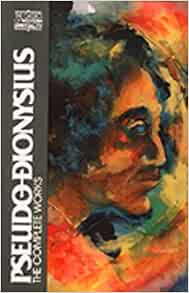
Pseudo-Dionysius: The Complete Works (Classics of Western ...


Most people tend to think of God s a big man on a throne. They judge God by human standards. Like Dawkins argument that God would be more complex than his universe and thus less likely to exit. This is based entirely upon the idea that God is a magnified version of humanity. When I point this out atheists  scoff and insist that most people see God this way we Christian apologists have to as well. When I point out that Paul Tillich had this totally different view of God as being itself they insist that this is not a Christian concept.

Paul Tillich the great theologian of the 20th century, was most noted for his seemly radical idea that God is "Being itself" or the ground of being, just what that means is very hard to put into words. Essentially it means that God is not a being but the basis of what  being is, being itself. There are no good analogies but the best I've come up with is like the difference between architecture and a single house. It is not a house but the basis upon which houses are built. This is important as a distinction because atheists are always trying to judge God by human standards to treat God as though he just magnified humanity. All of the criticisms they make of religious belief revolve around the notion of God as a big man. The true Christian concept of God is more than that; and this the  "true Christian concept" because it is the view of the Orthodox church from a time before the split with the West. Most commentators on Tillich wont say this but I think I have an original observation that Tillich was trying to translate Dionysus the Areopagite into existentialism. That is to say ancinet neo-Platonism into modern existentialism. Notice the similarity in the ideas: compare this with last post.

Dionysus The Areopagite (500)


The Author claims to be Paul’s companion in Acts, but due to the almost complete infusion of neo-Platonism throughout the text, the writings have been placed near the end of the fourth or early part of the fifth century. This is largely due to the influence of pagan philosophers Proclus (lecturing in Athens around 430 AD). The true name of the author is unknown he was probably a monk, believed to have lived in Syria. His writings have been extremely influential; he in essence kicked of the whole tradition of Christian mysticism. He founds the basic foundation for Gregory and Eastern Orthodox figures quoted above. The ideas of “Pseudo Dionysus” as he is most often known in the west, are set down in a long introduction by the translator Clearance Edwin Rolt. Rolt died at thirty-seven and this was his only book, but he had been hailed as one of the finest scholars ever produced by Queens College. Thus I think it only fair that we quote from the man himself. The major concept in which turns all Dionysus has to say is daubed by Rolt as the Super Essential Godhead:

The basis of their teaching is the doctrine of the Super-Essential Godhead (ὑπερούσιος θεαρχία). We must, therefore, at the very outset fix the meaning of this term. Now the word “Essence” or “Being” (οὐσία) means almost invariably an individual existence; more especially a person, since such is the highest type that individual existence can in this world assume. And, in fact, like the English word “Being,” it may without qualification be used to mean an angel. Since, then, the highest connotation of the term “Essence” or “Being” is a person, it follows that by “Super-Essence” is intended “Supra-Personality.” And hence the doctrine of the Super-Essential Godhead simply means that God is, in His ultimate Nature, Supra-Personal.


Now an individual person is one who distinguishes himself from the rest of the world. I am a person because I can say: “I am I and I am not you.” Personality thus consists in the faculty of knowing oneself to be one individual among others. And thus, by its very nature, Personality is (on one side of its being, at least) a finite thing. The very essence of my personal state lies in the fact that I am not the whole universe but a member thereof.

God, on the other hand, is Supra-Personal because He is infinite. He is not one Being among others, but in His ultimate nature dwells on a plane where there is nothing whatever beside Himself. The only kind of consciousness we may attribute to Him is what can but be described as an Universal Consciousness. He does not distinguish Himself from us; for were we caught up on to that level we should be wholly transformed into Him. And yet we distinguish between ourselves and Him because from our lower plane of finite Being we look up and see that ultimate level beyond us. The Super-Essential Godhead is, in fact, precisely that which modern philosophy describes as the Absolute. Behind the diversities of this world there must be an Ultimate Unity. And this Ultimate Unity must contain in an undifferentiated condition all the riches of consciousness, life, and existence which are dispersed in broken fragments throughout the world. Yet It is not a particular Consciousness or a particular Existence. It is certainly not Unconscious, Dead or, in the ordinary sense, non-Existent, for all these terms imply something below instead of above the states to which they are opposed.

We can see in that description several features which correspond to the things Tillich says. One interesting discussion that I close before it is started is the “personal” aspects. I am saving that discussion for its own chapter on Being itself and consciousness. The first point of interest is the connection between being and essence. He defines ousia as either one. Ousia of course is the root words of homoousios. Rolt confirms Tillich’s view in saying that essence refers to a particular existence, but the Super Essential is in contrast to an individual person. God is beyond the consciousness of an individual, but is in fact a universal consciousness that is in all things and can identify with all beings. I’ve already dealt with Tillich’s nix on pantheism; this is not a pantheistic idea. Yet in defining it Rolt deals with many of the aspects of God as being iself expressed by Tillich. God is infinite, God is not one person among others, transcendent of all we know and dwells on a plane beyond our understanding. The term “Super Essential” can be understood as “ground of being” or “Being itself.” They are basically saying the same thing. The Greek phrase he uses for “Super-Essential Godhead” is ‘humperusios Thearkia: Super means “over” or “transcendent” a structure over something else, such as “superstructure.” Thearkia is commonly the term in the NT for “Godhead.” What is being communicated is the notion of transcendence but also the transcendental signifier, the overview to the ordering of meaning and order, that is equivalent to the concept of a ground, of course as pointed out, essential has an affinity with being. Thus we could as well translate it “ground of being.” The concept of God as “Ground of Being” is the concept of “Super Essential” God. I don’t suggest that “ground” would be a good translation as translations go, but I do think it’s hinting at the same idea.

Pseudo Dionysius himself begins by embracing the vita negative, God is beyond our understanding, we don’t try to say what God is, we experience what God is (mystical union) we say what God is not and infer from that the truth, except where we are given clear understanding in Scripture. “We must not then dare to speak, or indeed to form any conception of the hidden Super-Essential Godhead, except those things that are revealed to us from the Holy Scriptures. For a Super-Essential understanding of it is proper to unknowning which lieth at the Super-Essence thereof surpassing discourse, intuition, and Being.” The translator capitalizes being.

The one who is beyond thought surpasses the apprehension of thought; the good which is beyond utterance surpasses the reach of words. Yea, it is a unity which is the unifying source of all unity and a Super-Essential Essence, a Mind beyond the reach of mind and Word beyond utterance, Eluding Discourse, intuition, Name and every kind of being. It is the universal cause of existence while itself existing not for it is beyond all being and such that it alone could give, with proper understanding thereof, a revelation of itself.(52)

Notice that this appears to be where Tillich obtains his usage of the term “existence,” and the distinction that God does not exist. What is puzzling is that while Tillich says God is beyond existence, because existence is for contingent things, and God is Being itself, identifies God with Being, Dionysus says God is beyond being. But then he is a full blown neo-Platonist. For him being is just reality and that is a copy of the true nature of things in which it participates. Tillich seems to move one step over from neo-Platonism toward modern existentialism. Dionysus tells us that we must make no expression or positive statement about the Super-Essential Godhead except those revealed in scripture for these are actually revealed by God. He tells us that “many writers thou wilt find who have declared that it [Super-Essential Godhead] is not only invisible and incomprehensible but also unreachable and past finding out since there is no trace of any that have penetrated the depth of its infinitude.” God reveals “itself” in stages commensurate with the powers of the subject for understanding. The notion that God is so wholly other, so transcendent of understanding is right in line with Tillich’s view. It’s clear Dionysius is a major source for Tillich’s existential ontology.


The upshot is that God transcends mere personhood. God is personal but is not "a person{ but is the origin of the personal. God is universal mind, meaning God is not nature but is the foundation of nature and can speak through nature and is present in nature (though his energies) and beyond it. God cannot be Judged by the standards of anything we know in  nature although God knows each one of us better than we know ourselves.


Source:
-->
Dionysius the Areopagite: on Divine names and the Mystical Theology, trans. Clearance Edwin Rolt , New YorkNew York: Cosmio 2007, from original 1920 publication.  see also online versionChristian Classics Ethereal Library, on line version, The Author and his Influence, trans by, 1920  website URL:  by http://www.ccel.org/ccel/rolt/dionysius.iii.i.html
visited May 13,
[1] Ibid, Introduction, 4-5
[1] Pseudo-Dionysius, On Divine Names, Ibid 52
[1] Ibid, 53
[1] Ibid.