Sunday, May 20, 2018

Schleiermacher's "feeling" as descion making paradigm

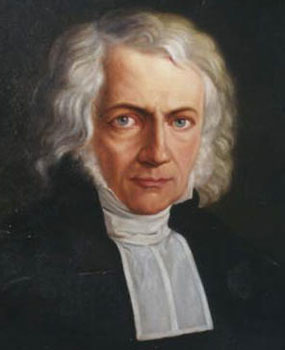
Image result for Friedrich Schleiermacher

Frederich Schleiermacher, (1768-1834) 


Co-determinate: The co-determinate is like the Derridian trace, or like a fingerprint. It's the accompanying sign that is always found with the thing itself. In other words, like trailing the invisible man in the snow. You can't see the invisable man, but you can see his footprints, and wherever he is in the snow his prints will always follow.

We cannot produce direct observation of God, but we can find the "trace" or the co-determinate, the effects of God in the wrold.

The only question at that point is "How do we know this is the effect, or the accompanying sign of the divine? But that should be answered in the argument below. Here let us set out some general parameters. These observations mark the paradigm.

(1) The trace produced content with specifically religious affects

(2)The affects led one to a renewed sense of divine reality, are transformative of life goals and self actualization

(3) Cannot be accounted for by alternate causality or other means


Frederich Schleiermacher, (1768-1834) in On Religion: Speeches to it's Cultured Dispisers, and The Christian Faith .sets forth the view that religion is not reduceable to knowledge or ethical systems. It is primarily a phenomenological apprehension of God consciousness through means of religious affections. Affections is a term not used much anymore, and it is easily confused with mere emotion. Sometimes Schleiermacher is understood as saying that "I become emotional when I pay and thus there must be an object of my emotional feelings." Though he does venture close to this position in one form of the arugment, this is not exactly what he's saying.

In the earlier form of his argument he was saying that affections were indicative of a sense of God, but in the Christian Faith he argues that there is a greater sense of unity in the life world and a snese of the dependence of all things in the life world upon something higher.

What is this feeling of utter dependence? It is the sense of the unity in the life world and it's greater reliance upon a higher reality. It is not to be confused with the stray sky at night in the desert feeling, but is akin to it. I like to think about the feeling of being in my backyard late on a summer night, listening to the sounds of the freeway dying out and realizing a certain harmony in the life world and the sense that all of this exists because it stems form a higher thing. There is more to it than that but I don't have time to go into it. That's just a short hand for those of us to whom this is a new concept to get some sort of handle on it. Nor does "feeling" here mean "emotion" but it is connected to the religious affections. In the early version S. thought it was a correlate between the religious affections and God; God must be there because I can feel love for him when I pray to him. But that's not what it's saying in the better version.


The basic assumptions Schleiermacher is making are Platonic. He believes that the feeling of utter dependence is the backdrop, the pre-given, pre-cognitive notion behind the ontological argument. IN other words, what Anselm tried to capture in his logical argument is felt by everyone, if they were honest, in a pre-cognitive way. In other words, before one thinks about it, it is this "feeling" of utter dependence. After one thinks it out and makes it into a logical argument it is the ontological argument.


"Life world," or Labeinswelt is a term used in German philosophy. It implies the world of one's culturally constructed life, the "world" we 'live in.' Life as we expeirence it on a daily basis. The unity one senses in the life world is intuitive and unites the experiences and aspirations of the individual in a sense of integration and belonging in in the world. As Heidegger says "a being in the world." Schleiermacher is saying that there is a special intuative sense that everyone can grasp of this whole, this unity, being bound up with a higher reality, being dependent upon a higher unity. In other words, the "feeling" can be understood as an intuitive sense of "radical contingency" (int he sense of the above ontological arguments).

He goes on to say that the feeling is based upon the ontological principle as its theoretical background, but doesnt' depend on the argument because it proceeds the argument as the pre-given pre-theoretical pre-cognitive realization of what Anselm sat down and thought about and turned into a rational argument: why has the fools said in his heart 'there is no God?' Why a fool? Because in the heart we know God. To deny this is to deny the most basic realization about reality.

Now don't' think by any stretch of the imagination that I think this proves the existence of God! No, no way. It is not "proof," it is freedom from the need to prove! 

As Robert R. Williams puts it:

There is a "co-determinate to the Feeling of Utter dependence.

"It is the original pre-theoretical consciousness...Schleiermacher believes that theoretical cognition is founded upon pre-theoretical inter subjective cognition and its life world. The latter cannot be dismissed as non-cognative for if the life world praxis is non-cognitive and invalid so is theoretical cognition..S...contends that belief in God is pre-theoretical, it is not the result of proofs and demonstration, but is conditioned solely by the modification of feeling of utter dependence. Belief in God is not acquired through intellectual acts of which the traditional proofs are examples, but rather from the thing itself, the object of religious experience..If as S...says God is given to feeling in an original way this means that the feeling of utter dependence is in some sense an apparition of divine being and reality. This is not meant as an appeal to revelation but rather as a naturalistic eidetic"] or a priori. The feeling of utter dependence is structured by a correlation with its whence." , Schleiermacher the Theologian, p 4.
These observations sum p the paradigm:

(1) There is a pervading sense of unity in the life world

(2) The over all sense of unity produces a sense of the dependence of the whole upon a higher ontological level.

(3) The content of the experince is expressly sublime and evokes the sense of the numinous.

(4)The sense of the numinous is expressly religious and constitutes the co-determinate of the divine.

Wednesday, May 16, 2018

Christianity: Religion and Relationship


Over at the secular outpost Blog Bradly Bowen has announced a 10 year plan to investigate the truth of Christianity. Why do I feel that this is more like a 10 year siege? In any case he had already done one piece on "what is Christianity?" I will answer that on the CADRE blog, but this part 2 I think will be of interest to readers of this Blog.[1] Bowen argues that those who say "Christianity is not a religion but is a relationship with Jesus," are "stupid," (he uses the word. Why does he want Christianity to be a "religion" instead of a relationship? You can't disprove a relationship. He does a bait and switch  replacing religion with system, reading system as philosophical system, then it's disprovable.

I do not think there is a conflict between religion and relationship. Before I get into that let's briefly examine Bowen's case. His argument works in three basic steps: (1) He quotes Paul, "..."the mystery of our religion is great..." .(1 Timothy 3:15-16) [2] The Greek word rendered here as "religion" is εύσεβείας which the Oxford commentary renders "system:" "...the system of belief that inspires piety. [3] So now he can claim Christianity is a religion and religion means system. Then he starts using various dictionaries to define Christianity as religion

"At Cambridge Dictionaries Online, you get a single definition of 'Christianity':
--the ​Christian ​faith, a ​religion ​based on the ​belief in one ​God and on the ​teachings of ​Jesus ​Christ, as set ​forth in the ​Bible."
[4] If we turn to the online Merriam-Webster Dictionary, we get a simple definition of 'Christianity', which is similar to the above definition: the religion that is based on the teachings of Jesus Christ. Bowen says: "What sort of a thing is 'Christianity' according to the Merriam-Webster Dictionary?  It is a 'religion', not a “relationship”. He actually wrote that the dictionary says it's not a relationship but it does not say that, it only says it's a religion but it does not add "and not a relationship." That's his assumption that it can't be both. "No matter what definition of “Christianity” we look at, all definitions in respected dictionaries point to the view that “Christianity is a RELIGION, and not a relationship." He says it a third time too (see fn4).

The assumptions he's working under are used to construct a very complex and learned straw man. He wants Christianity to be a system so he can find the one key point and destroy the system and take out all forms of belief. His reasoning is fallacious.Yes of course it's a religion. Those who say it's not are speaking of "religion" in a different sense than is Bowen or the passage he quotes from Paul. They use the term to mean empty set of rituals legalistic and lifeless, as opposed to an actual transformative phenomenological apprehension of the reality behind the system. 


He quotes a dictionary that says this Greek term implies a system and makes Christianity a system. He needs to line up that use of the term(religion) with the English dictionaries he uses. That wont work because the Oxford definition is contextual to that passage in Paul and Websters et al were not thinking about that passage. That does not make Christianity a system in the sense of Hegelian thought or process thought. (Process theology is a theology not a the basic religion "synonymous with Christian belief").

In modern theological terms religion is a social and spiritual tradition in which one is guided by thought and the experiences of others down certain paths in a way if life. All religions do three things: (1) define the human problematic. (2) provide an ultimate transformational experience that resolves the problematic; (3) mediate between the two through ritual and/or practice, through, prayer, meditation....most liberal theologians suck at step no 2. Intellectual content will very as to the specific analysis and definitions but not the general sense of three, In that view all versions of Christianity are the same: (1) problematic = estrangement from God via sin (2) a personal relationship with Christ although content will very enormously. (3) mediation generally the same although content will very.

Bowen uses Pastoral epistles! think about it. Not by Paul, from a time when the church became more organized and ritualistic (probably early second century). So the use of this term  may purposely not reflect the spontaneous miracle working faith of  the early days. Paul was a theologian, I think that's why God drafted him. He was made to do theology. There is a basis for his argument in understanding Christianity as a system. Of course theology is a major part of the Christian tradition. But it's both, or all three, religion, system and relationship.. But I doubt that Paul would think of systems in our modern sense. Paul was using metaphors about running races and fighting, it was not just an intellectual exercise for him. He also quoted hymns a lot so that might indicate a more experiential or emotionally accessible understanding of faith.

Not that I don't think Christianity is a system but I don't think systems are just intellectual only. Hussel had such a system where it was grounded in philosophical analysis but one was supposed to actually experience it.In the ancient world one's theology as not just a philosophical system but it included the actual lived experiences that went with it. Like Stoicism. Stoics were really, well, you know...stoic.

His dictionary Gambit is pointless because he is not using theological dictionary; except the Oxford and it's used specifically in relation to the context  of  isεύσεβείας (religion) in that one passage. It's not speaking of the soteriological nature of Christianity as a whole. Christianity is a religion and religion in the more positive sense employs a system and fosters a relationship with God. It's not merely words on paper or disembodied ideas, it's a way of life, its a realy one lives and experiences.

The last chapter of my book the Trace of God by Joseph Hinman is about Christianity as an experienced reality and relationship with God. The whole book is about it in the last chapter I deal with lexical help also. The term used for "knowing" in NT, as in  1 John "he who loves knows God.," that word is epigenosko meaning personal experience, know it face to face.[5] that indicates relationship. Of course they don't have aterm for "relationship."

    see additional material in comments
please join me in the comments, do you  think Christianity is a religion, relationship, both? 


Sources

[1] Bradley Bowen What is Christianity part 1, Secular outpost, Blog URL
http://www.patheos.com/blogs/secularoutpost/2016/01/15/what-is-christianity-part-2/

[2] New Revised Standard Version).

[3]  Oxford Bible Commentary, p.1225, (emphasis added--by Bowen)

[4] Definition of Christianity from the Cambridge Academic Content Dictionary © Cambridge University Press)
http://dictionary.cambridge.org/us/dictionary/english
- See more at: http://www.patheos.com/blogs/secularoutpost/2016/01/15/what-is-christianity-part-2/#sthash.KFegtuYw.dpuf

[These are all his words form further definitions]

The online Merriam-Webster Dictionary also provides An even fuller set of definitions of “Christianity” can be found at Dictionary.com:1. the Christian religion, including the Catholic, Protestant, and Eastern Orthodox churches.
2. Christian beliefs or practices; Christian quality or character:
Christianity mixed with pagan elements; the Christianity of Augustine’s thought.
3. a particular Christian religious system:
She followed fundamentalist Christianity.
4. the state of being a Christian.
5. Christendom.
6. conformity to the Christian religion or to its beliefs or practices.
http://dictionary.reference.com/browse/christianity?s=t\
[5] Strong's Exhaustive Concordance to the Bible, "Ginosko," Peabody Mass: Hendrickson Publishers, 2009, word 1097.


see additional material in commemnts
He adds:

Definitions (1), (2), and (3) support the view that Christianity is a religion and not a relationship. Definition (5) is consistent with Christianity being a religion, and does not fit well with the idea of Christianity being a relationship.


Definition (6) is similar to previous definitions we looked at from the Merriam-Webster Dictionary, and it is logically tied to the concept of “the Christian religion”.
Definition (4) is the ONLY definition here that could possibly be connected to the idea of having a relationship with Jesus Christ.  Many Protestants have the view that conversion to Christianity puts one into a “state” in which one has a permanently good relationship with God and Jesus Christ.  From a Catholic point of view, conversion to Christianity puts one  temporarily into a “state” in which one has a good relationship with God and Jesus Christ, but that positive “state” can be damaged or destroyed by sin, especially by serious (i.e. mortal) sins.  From a Catholic point of view, one must be in a good “state” or good relationship with God when one dies in order to obtain eternal life in heaven. - See more at: http://www.patheos.com/blogs/secularoutpost/2016/01/15/what-is-christianity-part-2/#sthash.KFegtuYw.dpuf
- See more at: http://www.patheos.com/blogs/secularoutpost/2016/01/15/what-is-christianity-part-2/#sthash.KFegtuYw.dpuf


However, from a Protestant point of view, one state is the result of the other state.  Accepting Christianity is both a necessary and a sufficient condition for being in a good relationship with God and Jesus Christ.  Thus because there is a relation of dependency between the “state of being a Christian” (or of accepting Christianity) and the state of being in a good relationship with God and Jesus Christ, these must be considered to be two different and distinguishable states.  Therefore, although “Christianity” in sense (4) has a causal or logical connection with having a good relationship with God and Jesus Christ, “Christianity” in sense (4) is something that is different and distinguishable from the state of having a good relationship with God and Jesus Christ.
Thus, from a Catholic point of view as well as from a common Protestant point of view “Christianity” in the sense of “the state of being a Christian” is NOT equivalent to the idea of “the state of being in a good relationship with God and Jesus Christ”.  Furthermore, for both Protestants and Catholics, their views about the connection between “the state of being a Christian” and “the state of being in a good relationship with God and Jesus Christ” is spelled out in central Christian doctrine, is spelled out in their understanding of the Christian faith or “Christianity”.  The religion or theological doctrines that they accept provide them with a point of view about the relationship between these two states.  Catholics and Protestants, obviously, have differing views about the relationship between these two states.  Therefore, from a Catholic as well as from a common Protestant point of view, “Christianity” even in sense (4) is directly connected to a religion, and only indirectly connected to a relationship.
No matter what definition of “Christianity
- See more at: http://www.patheos.com/blogs/secularoutpost/2016/01/15/what-is-christianity-part-2/#sthash.KFegtuYw.dpuf

Monday, May 14, 2018

what is theology good for?

Image result for metacrock's blog rose window

Here is an example of why one needs to read a lot of theology before one deems to criticize it. Let's take the op in the thread that as an example: thread by Skylurker about "what is theology good for." (from CARM--link no longer good--2013)

Theology: The study of the nature of God and religious belief.

this is his definition of what he thinks theology is about. There are two definitions of theology that are used by 99% of people in the field, one is the old one the other is the modern one.

The old one (Anselm) Faith seeking understanding!

The main reason that one is disliked is because it makes theology a matter of concern only for the believer; it would have us think that theology is just the faitful trying to understand their faith.

New version: (John Macquarrie) Participation in in and study of the content of a religious tradition.


That's very different from faith seeking understanding because "participation" doesn't necessarily require faith and it opens it up to a much greater field of inquiry than just "seeking to understand faith." Yet both are very different from the study of the nature of God and religious belief, because nature of God and RB:

(1) leaves out the need to seek understanding

(2) it leaves out the need to sort out problems with faith

(3) leaves out a social scinece understanding of the tradition

(4) it's basically limits theology to doctrine alone.

Skylurker:
The latter "religious belief" seems like a worthy field of study but as i like to maintain more of a sub-field of anthropology or human psychology. 
A sub field of anthropology would be limited to academic objectivity and leave out the need to answer for the faith. It would also mandate certain approaches that would totally limit theologians from most of what they do. While there is a form of thought connected with theology called "anthropology" itis' not the 19th century social science that grew up around the work of Malinowski and August Compt.

Limiting theology to academic anthropology would kill the entire discussion. that's the only way atheists can shut it up. That's the little nasty trick the brain washers have set you to work on, destroy the confidence in technological answers so that the ignorant little nay sayers will be undisturbed in their character assassination of the faith. Why not ust do anthropology? The whole question is just throwing a wrench in the works,

Sky:
The former "nature of God" is the question for this OP. Have they made any progress?
That question asserts that there's some quasi scientific answer they have to come to. As though God is impersonal force like magnetism and we have to understand it in the say way we understand scientific things. there no reason to think this way. this nothing more than an extension of the reductionist dictum that one thing can exist that's the realm of knowledge that we control.
Can someone list the major important products or achievements of this field of study? Any general consensus? 
Well there's yacult yogurt. Yacult is the name of a section of the Talmud, also a rand of yogurt, there;s the joke you see. Trying to treat faith like a commercial product. Unless it has some pragmatic end that can be empirically demonstrated, like better gas mileage or fewer cavities then there's no justification of even considering it. that's nothing more than the comoditifacation of knowledge and the scientfication of reality.

why should there be such a hard cash value to something before it's worth considering? What's the cash value of Shakespeare? What hard tangible product does Beethoven produce? Has there been any progress in writing more symphonies? 

On the other hand if you want to play that game how about the "cash value" in getting your life fixed up? hard tangible results are all on the believer's side.[these are results from reciprocal studies--Wuthnow study and Noble study--used in my book The Trace of God] [1] [2]

less depression 
less mental illness
great sense of well being
overcome drug addiction
greater sense of meaning in life
greater sense of self authentication
greater self actualization
greater happiness
greater physical health
 
Now I am glad there are people exploring this because who knows maybe someday they will make a breakthrough - but so far it seems pretty much like they have drilled dry holes and created elaborate castles in the sky... especially compared to the fields of physical and biological sciences. So chastise me and straightening me out. 
 We will get Dupont on it right away. Maybe we can get something on the market before the next quater.

We are not developing a commercial product. faith is an inward journey. Only the individual can measure it's value. you are not going to do that by making bad analogies to a lame and shallow understanding of science.

The real value of theology is not a matter of  "progress" and can;t be measured  as though it's a race to the moon, It can only be measured by the individual in terms of personal growth, Those who made those comments are speaking the langue of one-dimensional man. At the same time   it needs to be said I had comments from fundamentalists on more than one occasion. One guy in particular began warning the carm board I was a false teacher,why? Because i would rather believe theologians than the Bible! Of course he meant his reading of the bible. They don't understand the value of theology either,

Christian theology has always encompassed all other areas of thought. St, Augustine made major contribution of the philosophy of the self,and set in motion ideas that have led to modern notions of selfhood [3]This was by way of developing his notion of self in the doctrine of the Trinity. Even thatis too close to cash value. In framing those concepts we come closer to understanding ourselves in ways that can't be packaged or tallied in the quarterly earnings.


Sources

[1]Joseph Hinman The Trace of God: A Rational Warrant for Belief, Colorado Springs: Grand Viaduct Publishing, 2014. page on Amazon
https://www.amazon.com/Trace-God-Rational-Warrant-Belief/dp/0982408714

[2] the lists of benifits can be seen on y site religious aprioorio
http://religiousapriori.blogspot.com/2015/11/argument-from-co-determinate.html


States of Univtive Consciousness"

Also called Transcendent Experiences, Ego-Transcendence, Intense Religious Experience, Peak Experiences, Mystical Experiences, Cosmic Consciousness. Sources:

the original sources:
(1) Studies Wuthnow, Robert (1978). "Peak Experiences: Some Empirical Tests." Journal of Humanistic Psychology, 18 (3), 59-75.

Noble, Kathleen D. (1987). ``Psychological Health and the Experience of Transcendence.'' The Counseling Psychologist, 15 (4), 601-614.


Furthermore, Greeley found no evidence to support the orthodox belief that frequent mystic experiences or psychic experiences stem from deprivation or psychopathology. His ''mystics'' were generally better educated, more successful economically, and less racist, and they were rated substantially happier on measures of psychological well-being. (Charles T. Tart, Psi: Scientific Studies of the Psychic Realm, p. 19.)

(2)Long-Term Effects

Wuthnow:

*Say their lives are more meaningful,
*think about meaning and purpose
*Know what purpose of life is
Meditate more
*Score higher on self-rated personal talents and capabilities
*Less likely to value material possessions, high pay, job security, fame, and having lots of friends
*Greater value on work for social change, solving social problems, helping needy
*Reflective, inner-directed, self-aware, self-confident life style

Noble:

*Experience more productive of psychological health than illness
*Less authoritarian and dogmatic
*More assertive, imaginative, self-sufficient
*intelligent, relaxed
*High ego strength,
*relationships, symbolization, values,
*integration, allocentrism,
*psychological maturity,
*self-acceptance, self-worth,
*autonomy, authenticity, need for solitude,
*increased love and compassion

[3] Charles Taylor, Sources of the self

Friday, May 11, 2018

Trump Balance Sheet: What Trump costs us in Lives


factually quantifiable harms already accrued as result of Trump's attack on civilization

*13 million lose health care due to Tax scam


* 13 thousand /year die from air pollution due to roll back of regs on coal fired plants
(Trump's war on breathing: Resistance is not Futile)


*50,000 lives / year lost due to roll back auto emission stadards
(Ibid, see also "Trump  has started the roll back" the Guardian)

* Roll backs on regs that protect drinking water for 117 million
("Trump wrecks nation's clean water," Resistance...)


*cut food and formula for nearly 390,000 participating women, children and infants.()
  1. Proposed slashing the WIC program. President Trump’s proposal to slash funding for the WIC program puts basic food security at risk for thousands of families. At an annual food cost of about $513 per person, the $200 million cut could help pay for a year’s worth of food and formula for nearly 390,000 participating women, children and infants. (100 ways 100 days; center for American Progress)


* 600 lives and prevent more than 900 new cases of silicosis each year.
After more than four decades of development, this rule would protect construction and manufacturing workers from inhaling silica, which can lead to lung cancer, silicosis, chronic obstructive pulmonary disease, and kidney disease. It was projected to save more than 600 lives and prevent more than 900 new cases of silicosis each year.
(Ibid)

*Tried to cut his own taxes by millions of dollars while taking health insurance from tens of millions of Americans. Based on President Trump’s leaked 2005 Tax Return Form 1040, repealing the ACA could give Trump a personal tax cut of more than $2 million. At the same time, the House legislation to repeal the ACA would have taken health insurance from 24 million Americans.


* ended Amnesty for 800,000 immigrants ("dreamers") who have been in country since childhood will lead to mass deportations (NBC News)


sets precedent for destruction of civil rights
After barely eight months in office, President Trump has secured his legacy: If left unchecked, he will undermine civil rights progress in this country more than any president in modern history.
This week has shown previews of this dangerous agenda. And not for the reasons you’re thinking.
While Trump’s back and forth on whether he would condemn the white supremacist groups behind the deadly tragedy in Charlottesville lent the weight of the United States presidency to a racist worldview, we must also focus on the series of actions that prove those remarks are already being translated into an equally oppressive policy agenda.Since beginning his campaign, Trump has fanned the flames of racism, bigotry, and xenophobia – from calling Mexicans rapists, making a border wall one of his central campaign promises, implementing a Muslim travel ban, and using dog-whistle politics to talk in veiled terms about black communities. (The Hill)
* Potential loss of all life on Earthy due to global warming since Trup callsit ahoax and took us outof Paris accords, (see my research on Metacorck's blog)

see the full list of the Center for American progress, 100 ways in 100 days Trump has hurt America,

* Trump DOJ (Sessions) return ti debeter's prisions,Itps illegal to be poor! (https://www.nytimes.com/2017/12/28/opinion/sessions-says-to-courts-go-ahead-jail-people-because-theyre-poor.html?mtrref=l.facebook.com&assetType=opinion

There are debter's prisons. Deters prsions! that;s eighth century! Trump DOJ supports it1 It's acrime to be poor)
Last week, Attorney General Jeff Sessions retracted an Obama-era guidanceto state courts that was meant to end debtors’ prisons, where people who are too poor to pay fines are sent. This practice is blatantly unconstitutional, and the guidance had helped jump-start reform around the country. Its withdrawal is the latest sign that the federal government is retreating from protecting civil rights for the most vulnerable among us....Ferguson [Mo.] used its criminal justice system as a for-profit enterprise, extracting millions from its poorest citizens. Internal emails revealed the head of finance directing policing strategy to maximize revenue rather than ensure public safety. Officers told us they were pressured to issue as many tickets as possible.Even the local judge was in on it, imposing penalties of $302 for jaywalking and $531 for allowing weeds to grow in one’s yard. He issued arrest warrants for residents who fell behind on payments — including a 67-year-old woman who had been fined for a trash-removal violation — without inquiring whether they even had the ability to pay the exorbitant amounts. The arrests resulted in new charges, more fees and the suspension of driver’s licenses. These burdens fell disproportionately on African-Americans.

Wednesday, May 09, 2018

What's it like to be a Property Dualist? Answering Parsons part 2


Parsons dismisses substance dualism's empirical arguments as small in number and moves on to the philosophical arguments.[1] What he leaves out, however, is the fact that what they lose in quantity they make up for in quality. He mentions Mines to blow off his arguments but doesn't actually quote him:
 The existence of conscious agents with these five mental properties[qualia, intentionality, privileged access, non physicality, and free will] therefore provides evidence that there is a God who created them.
QualiaThe hiss of car tyres on a wet road; the smell of jasmine or the taste of avocado; a flash of sunlight on a stormy lake. All these things have a raw qualitative “feel” that is as immediate and undeniable as it is indescribable. Philosophers call these subjective tinctures of sense perception qualia; and in his influential paper What Is It Like to Be a Bat? [2] the eminent philosopher of mind Thomas Nagel argues that they present an insurmountable conceptual challenge to naturalism.[3] 
This is not quite the way Mines sells the argument but it is the basis of the so called "hard  problem." David Chalmers calls  it that because no one has a clue  how to solve it, The problem is basically that we don't know what consciousness is.We all know we have it   none one seriously tries to argue that we are not conscious, But we can't definite it because can't explain what what causes it, The reductionist want to lose the phenomena and pretend it doesn't existParsons treats this like the weak little old philosophical argument but I think is also empirical. We live empirical evidence that consciousnesses is basic. Parsons asserts that NDE  is the only argument but I don't even make reference to it. 

But Parsons rejects consciousnesses as an argument for God, he asserts that if consciousness is not reducible we could still be property duelists and not believe in God. "This seems a bit hasty[evoking God via irreconcilability of mind] and abrupt to me. Even if we conceded that the accepted terms of neuroscience—electrical and chemical happenings in neurons—cannot explain consciousness, could we not adopt a property rather than a substance dualism as a more parsimonious option?"[4] that is following the example of Chalmers who is an atheist. First my point is not argue for God here, I think we could it makes a good argument, I do use it. I think there is a more important argument to be made: that irreducibility  is important for all people, Theist or other wise,Secondly, while property dualism is compatible with either atheism or belief in God,Neither position is mandated by property dualism. Of course my God arguments are about warrant not proof.  Irreducibility mind could still be a good reason to believe in God without mandating belief.

Mines seems to be misquoting Nagel,however,in saying that "Nagel argues that they present an insurmountable conceptual challenge to naturalism.He is an atheist he does not argue against Naturalism.[5] Yet Parsons rejects Negals's argumemt, he has no real logical. Instead he evokes one of Denett's branding arguments labeling the Bat argument as 'an intuition pump." This is very misleading because it dismisses the argument as something less than it is. He's trying to pretend it's only rhetorical and emotive but in reality it is also logical. If in fact experiential knowledge is closed to us except through experience then it's only logical that we not regard facts as full knowledge without the experiential dimension.  But Dennett is merely losing the phenomena one tactic of a certain kind of reductionism. (For a full take down of Dennett's work Consciousness Explained see Doxa) [6]

Parsons goes on and admits that there is a basis to the idea that first person perspective gives a dimension that "Dorothy when she steps from the sepia of Kansas into the technicolor of Oz. Her experience is different in a way that she could not have explained, even if she were thoroughly versed in the physiology of color vision, to the Dorothy that sees only the gray shades of Kansas." [7] Sort of makes Quoting Denmett unnecessary. 

 Parsons major objection to the hard problem (at  least Nagel's Bat) is the idea that first person experience could be physically or nationalistically caused: 
There is nothing in the qualitative content of my consciousness that informs me that such experience could not have been physically produced. Maybe I cannot intuitively see why brain processes would cause qualia (Chalmers’ “hard” problem), but it does not follow that a brain cannot do it. So, the relevant question is not whether there are some items of knowledge that can only be had via first-person consciousness. The important question is whether first person experience can be physically caused. Why not? Nor is there any reason to think that we could not know, in detail, how it was caused. That is what neuroscience does. If neuroscience can explain how my brain produces first-person experience, then such experience is subsumable under a naturalistic ontology.[8]
Again he has reduced consciousness to brain function. Here he says if neuroscience can explain how the brain produces first person, (that  is brain function). If we understood how first person  experience is produced that would not necessarily  tell us what consciousness is, it would tell part of how consciousness is produced but not necessarily what it is  or what it means. Moreover, there are more God arguments to be derived from consciousnesses than just one stemming from cause and effect.

Parsons wants to defeat consciousnesses as a God argument, but there are more versions of that than just knowing the brain functions that produce consciousness. (see my existential version of the argument,[9] see also my TS argument where mind is a crucial part of the argumemt.[10]


Sources


[1] Keith Parsons, "Can you know what it is like to be a bat? Why not?The Secular Outpost, blog, (APRIL 16, 2018)

[2 Thomas Nagle, "What's it like to Be a Bat?"The Philosophical Review, Vol. 83, No. 4 (Oct., 1974), pp. 435-450

This corresponds to Mine;s fn 3: "Nagel’s fascinating essay is only 16 pages. You can read it hereSee also his book Mind and Cosmos: Why the Materialist Neo-Darwinian Conception of Nature Is Almost Certainly False."

[3]Ben Mines "The Argument From Consciousness: Qualia." Thinking Matters, blog  (April 8 2016) http://thinkingmatters.org.nz/2018/04/the-argument-from-consciousness-qualia/
(accessed May 8,2018)

[4]Ibid

[5] Thomas Nagel Mind and Cosmos. Oxford, London:Oxford University press, 2012, 13 

[6] Lantz Miller,  hard sell of  human consciousness, Negations, An Interdisciplinary Journal of Social ail Criticism, issue 3, winder 1998.

scroll down to isssue3winter 98, part I and spriomg 2002 ror part 2


http://www.datawranglers.com/negations/
 scroll to issue 3

[7] Parsoons, Op cit

[8] Ibid

[9] existentiakl arguemt froGod, based upon Gabriel Marcel..
http://www.doxa.ws/experience/Existential.html


[10] Argument from Transcendental Signifies, religious a priori