
Monday, September 30, 2024
Quick note on Trump


Tuesday, September 24, 2024
Occam's razor shaves the Multiverse
Atheists have another favorite tactic and that is to argue that Occam's razor rules out God because God is not the simpler idea. There they are confusing it with Parsimony. Occam was priest and he believed in God he didn't think the razor got rid of God. For that reason I've always been somewhat peeved by their use of this argument. Moreover, what the razor really says is no not multiply entities beyond necessity.[1] The thing is you see, atheists assume that since they don't believe in God then is not necessary so God is multiply beyond necessity. That's the argument made by those who at least know the real version of the argument but they don't know what it means. Let's try to understand it first by understanding Occam's nominalism. four senses of nominalism:
(1) Denial of metaphsyical universals: applies to Occam.
(2) reduce one's ontology to bare minimum, streamline categories: applies to Occam.
(3) Nix abstract entities, depending upon what one means here Occam may or may not have been a nominalist in this sense. he did not believe in mathematical entities but he did believe in abstraction such as whiteness, or humanity.
Ockham removes all need for entities in seven of the traditional Aristotelian ten categories; all that remain are entities in the categories of substance and quality, and a few entities in the category of relation, which Ockham thinks are required for theological reasons pertaining to the Trinity, the Incarnation and the Eucharist, even though our natural cognitive powers would see no reason for them at all. As is to be expected, the ultimate success of Ockham's program is a matter of considerable dispute.[2]
He was not getting rid of God. Occam's razor never allows us to deny what spade calls "putative entities" which would definitely include God. It merely bids us referain from positing them without good reason. Of course the many choruses of atheist propagadna slgoanizing would have it that this does include God,[3] but with my 52 arguments we know better, don't we?[4]In fact for Occam humans can't really know what is necessary, "For Ockham, the only truly necessary entity is God; everything else, the whole of creation, is radically contingent through and through. In short, Ockham does not accept the Principle of Sufficient Reason.."[5] Wait a minute, not a contradiction because all the reasor says is refrain form multiplying entities without good reason, not rub them out of existence. Note that he includes God as the only truly necesasry entity. Thus atheist are violating Occam's razor in trying to use it on God.
Occam did not have a razor:
"The concept of Occam’s razor is credited to William of Ockham, a 13-14th-century friar, philosopher, and theologian. While he did not coin the term, his characteristic way of making deductions inspired other writers to develop the heuristic. Indeed, the concept of Occam’s razor is an ancient one which was first stated by Aristotle who wrote “we may assume the superiority, other things being equal, of the demonstration which derives from fewer postulates or hypotheses.”[6]
Yet this raises the question of the Multiverse. Is the multiverse necessary? It's a matter of empirical question and there is empirical evidence to support it. Claims have been made of hard data proving Multivese, but when investigated they evaporate. Here's a physicist who opposed string theory and multiverse he argues that his evaluation of the papers finds irresolvable problems.
In recent years there have been many claims made for “evidence” of a multiverse, supposedly found in the CMB data (see for example here). Such claims often came with the remark that the Planck CMB data would convincingly decide the matter. When the Planck data was released two months ago, I looked through the press coverage and through the Planck papers for any sign of news about what the new data said about these multiverse evidence claims. There was very little there; possibly the Planck scientists found these claims to be so outlandish that it wasn’t worth the time to look into what the new data had to say about them. One exception was this paper, where Planck looked for evidence of “dark flow”.[7]
If hard evidence turns up for it then we have to deal with that on it's own terms. Until that time Multiverse should be shaved with Occam's razor. We don't need it to explain reality, it's only advanced to keep from having to turn to God. It's naturalistic so it's an arbitrary necessity at best. Arbitrary necessitates are logical impossibilities, contingent things jumped up to the level of necessity to answer a God argument. It's not we are going to disprove the unnecessary entity but we are going refrain from advancing it's existence as an assumption until such a time that real empirical evidence makes it necessary. Therefore, Multiverse should be taken out of the issues of God arguments.
sources
[1]C.K. Brampton, "Nominalism and the Law of Parsimony." The Modern School Men, Volume 41, Issue 3, (March 1964), 273-281. the sentiment of that slogan "don't multiply entities beyond necessity" is in line with Occam's thinking although he didn't actually say that.
[2]Spade, Paul Vincent and Panaccio, Claude, "William of Ockham", The Stanford Encyclopedia of Philosophy (Fall 2011 Edition), Edward N. Zalta (ed.), URL = . Fall 2011 (substantive content change) [new author(s): Spade, Paul Vincent; Panaccio, Claude]
[3] Spade, et al, Ibid.
[4] 42 God arguments on Doxa, and 10 more on Religious A prori.
[5]Spade, Ibid.
[6] FS Farnam Street The Danger of Over Simplification: how to use Occam;s Rzzor without getting cut"
https://fs.blog/2017/05/mental-model-occams-razor/
[7]Peter Woit, Not Even Wrong,May 22, 2013 blog: http://www.math.columbia.edu/~woit/wordpress/ Woit, Ph.D. particle theory form Princeton, Post doctorte in phsyics and math from Berkeley, tught at Columbia since 1989.
Joseph Hinman, "Occam's Razor Shaves the Multiverse," Metacorck's Blog. (June 12, 2013) http://metacrock.blogspot.com/2013/06/occams-razor-shaves-multiverse.html (accessed June 8.2019)
____________________________
God,Science, and ideology,a book by Joseph Hinmman
God.Science, and ideology, by Joseph Hinman, is a great book. Ot argues that positions which teach the superiority of science over religion in such a way as to negate the truth content of the religious is not a scientific position but an ideological one. The books takes down such atheist greats as Dawkins and discusses the strongest God arguments.
This is an important book that spans an immense literature in a balanced and very readable form. For anyone interested in why some believe and others do not, this book will inform you of the entire range of literature in which not only can the proper questions be asked, but the reader can evaluate the often hidden ideological nature in which answers are proposed Ralph W. Hood, Jr., Ph.D.Professor of Psychology and LeRoy A. Martin Distinguished Professor of Religious Studies
"Hinman is highly stimulating, brilliant in places. It is rare to find a book so exuberant yet still rational."
--Lantz Fleming Miller, Ashoka University
https://www.amazon.com/God-Science-Ideology-examining-religious-scientific/dp/0982408765
Sunday, September 22, 2024
No connection between Jesus and Mithra

There is still a strong current of Jesus mythicusm on the net. It used to be much stronger. In the days of Ashayra S. one saw copy cat savior stuff everywhere. We do not see that nonsense as much now but it is stil there. My favorite target to disprove was those who claimed Christianity,and Jesus, were copuied after Pagan sources especially Mithrism.
The Mythic Mysteries are very complex, and the only real similarities to Jesus are minute ones.. Most of these alleged similarities are suspect or unimportant. It is often claimed by skeptics on the Internet that "there is so much similarity" but I find very little. Mithra comes from Persia and is part of Zoroastrian myth, but this cult was transplanted to Rome near the end of the pre-Christian era. Actually the figure of Mithra is very ancient. He began in the Hindu pantheon and is mentioned in the Vedas. He latter spread to Persia where he took the guise of a sheep protecting deity. But his guise as a shepherd was rather minor. He is associated with the Sun as well. Yet most of our evidence about his cult (which apparently didn't exist in the Hindu or Persian forms) comes from Post-Pauline times. Mythric rituals were meant to bring about the salvation and transformation of initiates. In that sense it could be seen as similar to Christianity, but it was a religion and all religions aim at ultimate transformation. He's a total mythical figure he meets the sun who kneels before him, he slays a cosmic bull, nothing is real or human, no sayings, no teachings.
1) no Virginal Conception
Mithra was born of a rock, so unless the rock was a virgin rock, no virginal conception for him.[1] David Ulansey, who is perhaps the greatest Mithric scholar of the age, agrees that Mithras was born out of a rock, not of a virgin woman. He was also born as a full grown adult.[2]
2) No crucifixion or resurrection.
There no story of Mithras death and no references to resurrection. The only similarity about him in this relation is that his shedding of the Bull's blood is said by H.G. Wells (Out Line of World History ) to be the prototype for Jesus sacrifice on the cross. But in reality the only similarity here is blood, and it wasn't even his own. It may even be borrowing form Christianity that made the shedding of blood important in the religion. Gordon says directly, that there is "no death of Mithras"[3]
3) No Savior, no baptism, no Christmas
Moreover, one of the major sources comes from the second century AD and is found in inscriptions on a temple, "and you saved us after having shed the eternal blood." This sounds Christian, but being second century after Christ it could well be borrowed from Christianity [4] "Mithra was the Persian god whose worship became popular among Roman soldiers (his cult was restricted to men) and was to prove a rival to Christianity in the late Roman Empire. Early Zoroastrian texts, such as the Mithra Yasht, cannot serve as the basis of a mystery of Mithra in as much as they present a god who watches over cattle and the sanctity of contracts. Later Mithraic evidence in the west is primarily iconographic; there are no long coherent texts".[5]
4) Most of our sources Post Date Christianity.
(a) Almost no Textual evidence exists for Mithraism
Most of the texts that do exist are from outsiders who were speculating about the cult. We have no information form inside the cult.[6]
David Ulansey (the Major scholar of Mithraism in world):
Owing to the cult's secrecy, we possess almost no literary evidence about the beliefs of Mithraism. The few texts that do refer to the cult come not from Mithraic devotees themselves, but rather from outsiders such as early Church fathers, who mentioned Mithraism in order to attack it, and Platonic philosophers, who attempted to find support in Mithraic symbolism for their own philosophical ideas. "At present our knowledge of both general and local cult practice in respect of rites of passage, ceremonial feats and even underlying ideology is based more on conjecture than fact."[7]
) And Cumont himself observed, in the 50s
"The sacred books which contain the prayers recited or chanted during the [Mithraic] survives, the ritual on the initiates, and the ceremonials of the feasts, have vanished and left scarce a trace behind...[we] know the esoteric disciplines of the Mysteries only from a few indiscretions."[8]
(b) Roman Cult began after Jesus life
Our earliest evidence for the Mithraic mysteries places their appearance in the middle of the first century B.C.: the historian Plutarch says that in 67 B.C. a large band of pirates based in Cilicia (a province on the southeastern coast of Asia Minor) were practicing "secret rites" of Mithras. The earliest physical remains of the cult date from around the end of the first century A.D., and Mithraism reached its height of popularity in the third century.[9]
(c) No Continuity between Ancient Persian past and Roman Cult
Throughout most of the twentieth century Franz Cumont so influenced scholarship that the entire discipline followed in the wake of his assumption that the Roman cult was spread by the Persian cult. In the early 70's David Ulansey did for Mithric scholarship what Noan Chomsky did for linguistics, he totally redefined the coordinates by which the discipline moved. Ulansey showed that the Roman cult was not the continuance of the Persian cult, that there was no real evidence of a Persian cult. He showed that the killing of the great comic bull which latter became the major event in Mithraism, and the parallel from which Jesus Mythers get the shedding of blood and sacrifice, was not known in the Persian era. This would be like showing that the story of the Cross was not known to Christians in the first century. The major likeness to Christianity and the central point of the cult of Mithraism was not known in the time of Christ, in the time Paul, or for at least two centuries after:
There were, however, a number of serious problems with Cumont's assumption that the Mithraic mysteries derived from ancient Iranian religion. Most significant among these is that there is no parallel in ancient Iran to the iconography which is the primary fact of the Roman Mithraic cult. For example, as already mentioned, by far the most important icon in the Roman cult was the tauroctony. This scene shows Mithras in the act of killing a bull, accompanied by a dog, a snake, a raven, and a scorpion; the scene is depicted as taking place inside a cave like the mithraeum itself. This icon was located in the most important place in every mithraeum, and therefore must have been an expression of the central myth of the Roman cult. Thus, if the god Mithras of the Roman religion was actually the Iranian god Mithra, we should expect to find in Iranian mythology a story in which Mithra kills a bull. However, the fact is that no such Iranian myth exists: in no known Iranian text does Mithra have anything to do with killing a bull.[10].
(5) Mithraism Emerged in the west only after Jesus' day
. Mithraism could not have become an influence upon the origins of the first century, for the simple reason that Mithraism did not emerge from its pastoral setting in rural Persia until after the close of the writting of the New Testament canon.[11]
(6) We Don't know what any of it means.
As Ronald Nash said: "No one can be sure that the meaning of the meals and the ablutions are the same between Christianity and Mithraism. Just because the two had them is no indication that they come to the same thing. These are entirely superficial and circumstantial arguments."[12]
(7) Mithraism was influenced by Christianity
a) Roman Soldiers Spread the cult.
Roman soldiers probably encountered Mithraism first as part of Zoroastrianism while on duty in Persia. The Cult spread through the Roman legion, was most popular in the West, and had little chance to spread through or influence upon Palestine. It's presence in Palestine was mainly confined to the Romans who were there to oppress the Jews. Kane tries to imply that these mystery cults were all indigenous to the Palestinian area, that they grew up alongside Judaism, and that the adherents to these religions all traded ideas as they happily ate together and practiced good neighborship.
b) Mithric Roman Soldiers Influenced by Christians in Palestine
But Mithraism was confined to the Roman Legion primarily, those who were stationed in Palestine to subdue the Jewish Revolt of A.D. 66-70. In fact strong evidence indicates that in this way Christianity influenced Mithraism. First, because Romans stationed in the West were sent on short tours of duty to fight the Parthians in the East, and to put down the Jewish revolt. This is where they would have encountered a Christianity whose major texts were already written, and whose major story (that of the life of Christ) was already formed.[13]
There is no real evidence for a Persian Cult of Mithras. The cultic and mystery aspect did not exist until after the Roman period, second century to fourth. This means that any similarities to Christianity probably come from Christianity as the Soldiers learned of it during their tours in Palestine. The Great historian of religions, Franz Cumont was able to prove that the earliest datable evidence for the cult came from the Military Garrison at Carnuntum, on the Danube River (modern Hungary). The largest Cache of Mithric artifacts comes form the area between the Danube and Ostia in Italy.[14]The only real simiarity between mythrism and Christianity is the shedding of blood Both use that image in different ways and it means different things to each. As with most Jesus Myther arguments there is mo basis for the copy cat savior theory based upon upon Mithrism.
Here is a link on my original website Doxa in which I look at other figures said to be Patterns for Jesus. No copy cat savior Notes
[1] Marvin W. Meyer, ed. The Ancient Mysteries :a Sourcebook. San Francisco: Harper, 1987,201,
[2]David Ulansey. The Origins of the Mithraic Mysteries: Cosmology and Salvation in the Ancient World. New York: Oxford U. Press, 1989.
[3] Richard Gordon. Image and Value in the Greco-Roman World. Aldershot: Variorum, 1996.96.
(Meyer, p 206).
[4] M.Meyer, (editor) The Ancient Mysteries : A Source Book , San Francisco: Harper, 1987,170-171,204.
[5]Edwin Yamauchi, "Easter: Myth, Hallucination, or History," https://leaderu.com/everystudent/easter/articles/yama.html
[6] Cosmic Mysteries of Mythras (--visted sept 22, 2024) http://www.mysterium.com/mithras.html
[7] David Ulansey, Mithraic Studies: Proceedings of the First International Congress of Mithraic Studies. Manchester U. Press, 1975,437.
[8] Franz Cumont. The Mysteries of Mithra. New York: Dover, 1950.152)
[9] David Ulansey, Cosmoic Mysteries of Mithras (website) http://www.mysterium.com/mithras.html
[10] Ibid.
[11] Franz Cumont, The Mysteries of Mithra (Chicago: Open Court, 1903), 87ff.
[12] Ronald Nash, "Was the New Testament Influenced by Pagan Religions?" Christian Research Journal, Winter 1994, 8
[13]Franz Cumont, Op Cit 87ff.
[14] David Ulansey, website, op cit..
____________________________
God,Science, and ideology,a book by Joseph Hinmman
God.Science, and ideology, by Joseph Hinman, is a great book. Ot argues that positions which teach the superiority of science over religion in such a way as to negate the truth content of the religious is not a scientific position but an ideological one. The books takes down such atheist greats as Dawkins and discusses the strongest God arguments.
This is an important book that spans an immense literature in a balanced and very readable form. For anyone interested in why some believe and others do not, this book will inform you of the entire range of literature in which not only can the proper questions be asked, but the reader can evaluate the often hidden ideological nature in which answers are proposed Ralph W. Hood, Jr., Ph.D.Professor of Psychology and LeRoy A. Martin Distinguished Professor of Religious Studies
"Hinman is highly stimulating, brilliant in places. It is rare to find a book so exuberant yet still rational."
--Lantz Fleming Miller, Ashoka University
https://www.amazon.com/God-Science-Ideology-examining-religious-scientific/dp/0982408765
Sunday, September 15, 2024
Jeff Lowder fine tuning bait and switch

Jeff Lowder at Secular Outpost, argues against William Lane Craig's fine tuning argument. His objective is to show that even if the argument is valid it doesn't establish probability for God.
Lowdwer's syllogism of the argument:
1. The life-permitting nature of the universe’s initial conditions is either the result of chance, necessity or design. (Premise)
2. It is not the result of chance or necessity. (Premise)
3. Therefore, it is the result of design. (From 1 and 2)
This argument is clearly valid, i.e., the conclusion follows from the premises. We want to know the probability of (3). The probability of (3) will depend upon the probability of (2). If we have a very weak degree of belief that (2) is true, say we think Pr(2)=0.25, then, by itself, this argument only warrants the belief Pr(3)=0.25. N.B. I’m not claiming that (2) has an exact numerical probability equal to 0.25; that value is simply an example to illustrate the point.
Paul Davies:
"You might be tempted to suppose that any old rag-bag of laws would produce a complex universe of some sort, with attendant inhabitants convinced of their own specialness. Not so. It turns out that randomly selected laws lead almost inevitably either to unrelieved chaos or boring and uneventful simplicity. Our own universe is poised exquisitely between these unpalatable alternatives, offering a potent mix of freedom and discipline, a sort of restrained creativity. The laws do not tie down physical systems so rigidly that they can accomplish little, but neither are they a recipe for cosmic anarchy. Instead, they encourage matter and energy to develop along pathways of evolution that lead to novel variety-what Freeman Dyson has called the principle of maximum diversity: that in some sense we live in the most interesting possible universe."
"Some scientists have tried to argue that if only we knew enough about the laws of physics, if we were to discover a final theory that united all the fundamental forces and particles of nature into a single mathematical scheme, then we would find that this superlaw, or theory of everything, would describe the only logically consistent world. In other words, the nature of the physical world would be entirely a consequence of logical and mathematical necessity. There would be no choice about it. I think this is demonstrably wrong. There is not a shred of evidence that the universe is logically necessary. Indeed, as a theoretical physicist I find it rather easy to imagine alternative universes that are logically consistent, and therefore equal contenders for reality." [2]
At this point he's going to pull an interesting bait and switch. He's going to transpose fine tuning into design argument so he can argue the counter design argument. But first he brings up the idea that FT dies not reflect all the data:
Second, such arguments fail to embody all of the relevant, available evidence. .... It may well be the case that, by itself, the life-permitting nature of the universe’s initial conditions does make it more probable than not that the universe is designed. But that doesn’t entail that, all things considered, the total available, relevant evidence makes it more probable than not that the universe is designed. In order to defend that claim, you have to look at all of the evidence, including the evidence of evolution, biological role of pain and pleasure, nonresistant nonbelief, etc. And once you do that, it’s far from obvious that the total evidence favors theism, much less Christian theism.
We also know that so much of our universe is hostile to life due to things such as containing vast amounts of empty space, temperatures near absolute zero, cosmic radiation, and so forth. Given that our universe is life-permitting, the fact that so much of it is hostile to life is much more probable on no-design than on design. So once all of the evidence about cosmic life-permitting conditions has been fully stated, however, it’s far from obvious that facts about cosmic “fine-tuning” favor design over non-design.
on the basis of Purdue University philosopher Paul Draper’s work, Craig’s appeal to cosmic fine-tuning is a textbook example of the fallacy of understated evidence. Let’s assume, for the sake of argument, that the life-permitting conditions of our universe are more likely on design than on no-design. That fact–if it is a fact–hardly exhausts what we know about the habitability of our universe. [4]
see my FT argument on Religious a priori
[1] Jeffery Jay Lowder, "WLC Denies That Anyone Has Ever Died a Sincere Seeker Without Finding God" Secular Out Post, January 2, 2016 (blog URL)
http://www.patheos.com/blogs/secularoutpost/2016/01/02/wlc-denies-that-anyone-has-ever-died-a-sincere-seeker-without-finding-god/ Accessed 1/10/16
all quotations from Lowder will be from this source.
[2] Paul Davies "Physics and The Mind of G: The Tempelton Prize Address,"First Things, August 5 (1995) On line URL:
http://www.firstthings.com/article/1995/08/003-physics-and-the-mind-of-god-the-templeton-prize-address-24 accessed 1/20/16
[3] Andre Linde,"The Self Reproducing Inflationary Universe, Scientifi9c American Nov 19994, 48-55
Now Linde is confident that the new inflationary theires will explain all of this, and indeed states that their purpose is to revolve the ambiguity with which cosmologists are forced to cope. His co-author in inflationary theory. Physicist Paul Steinhardt, had doubts about it as early as his first paper on the subject (1982). He admits that the point of the theory was to eliminate fine tuning (a major God argument), but the theory only works if one fine tunes the constants that control the inflationary period.
John Horgan, “Physicist slams Cosmic Theory he Helped Conceive,” Scientific American Blogs, December 1, 2014. on line, URL http://blogs.scientificamerican.com/cross-check/physicist-slams-cosmic-theory-he-helped-conceive/ accessed 10/5/15. Horgan interviews Steinhardt.
“The whole point of inflation was to get rid of fine-tuning – to explain features of the original big bang model that must be fine-tuned to match observations. The fact that we had to introduce one fine-tuning to remove another was worrisome. This problem has never been resolved."
(Taken from Secular Outpost):
INTRODUCTION: "Paul Draper has usefully identified a fallacy of inductive reasoning he calls the 'fallacy of understated evidence.' According to Draper, in the context of arguments for theism and against naturalism, proponents of a theistic argument are guilty of this fallacy if they 'successfully identify some general fact F about a topic X that is antecedently more likely on theism than on naturalism, but ignore other more specific facts about X, facts that, given F, are more likely on naturalism than on theism.'[1]
Sunday, September 08, 2024
My forgotten Existential Theology
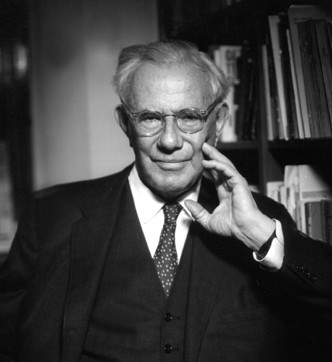
Paul Tillich 1886-1965
Existentialism was huge 60 years ago, it's totally forgotten today, being out of sink with the zeitgeist of scientism. I don't care, I am an existentialist, it give meaning to my life and existentialism with it's self authentication must be prepered to disregard popularity. How do I define the term? Existentialism, is an intellectual movement, essentially a philosophy but it's themes developed beyond philosophy and spread over all hummanties.It centers upon the notion that humans are compelled to be free. It seeks to find one's meaning in the realization of what to do with freedom. It tends to be highly individualistic and not systematic those are reflections of the consequences of freedom which culentates in individuality. It is often associated with niotion of life as meaningless or absurd. Exitentialissm has aso been associated with atheism and it is from the rootless notion of the abyss in place of God that existentialists such as Sartre and Neitzshe base their notions of life as meaningless and absurd.
As an intellectual movement that exploded on the scene in mid-twentieth-century France, “existentialism” is often viewed as a historically situated event that emerged against the backdrop of the Second World War, the Nazi death camps, and the atomic bombings of Hiroshima and Nagasaki, all of which created the circumstances for what has been called “the existentialist moment” (Baert 2015), where an entire generation was forced to confront the human condition and the anxiety-provoking givens of death, freedom, and meaninglessness. Although the most popular voices of this movement were French, most notably Jean-Paul Sartre and Simone de Beauvoir, as well as compatriots such as Albert Camus, Gabriel Marcel, and Maurice Merleau-Ponty, the conceptual groundwork of the movement was laid much earlier in the nineteenth century by pioneers like Søren Kierkegaard and Friedrich Nietzsche and twentieth-century German philosophers like Edmund Husserl, Martin Heidegger, and Karl Jaspers as well as prominent Spanish intellectuals José Ortega y Gasset and Miguel de Unamuno. The core ideas have also been illuminated in key literary works. Beyond the plays, short stories, and novels by French luminaries like Sartre, Beauvoir, and Camus, there were Parisian writers such as Jean Genet and André Gide, the Russian novelists Leo Tolstoy and Fyodor Dostoevsky, the work of Norwegian authors such as Henrik Ibsen and Knut Hamsun, and the German-language iconoclasts Franz Kafka and Rainer Maria Rilke. The movement even found expression across the pond in the work of the “lost generation” of American writers like F. Scott Fitzgerald and Ernest Hemingway, mid-century “beat” authors like Jack Kerouac, Allen Ginsburg, and William S. Burroughs, and the self-proclaimed “American existentialist,” Norman Mailer (Cotkin 2003, 185).[1]I was strongly drawn to existentialism when I was an atheist, when I became a Christian I was naturally interested in findig out about Christian existetialism.I had heard of it, it seemed silly to me from an atheist point of view. Wth religious experience it suddenly made a lot of sense I began to define myself as a christian existntaist.To me this means an empnasis upon personal relationship with God,meakomga leap of faith, placing above systematic theology and chruch authority, although it's not an excuse to ignore either. It also means an awareness of God as the source of meaning and rationality in life.
Free Will and The Leap Of Faith: The Christian Existentialist philosopher Karl Jaspers: (1883-1969) argued that the concept of Free Will makes all Faith essentially (pun intended) Existential: that one is ultimately free to choose or not choose faith, or, for that matter, which or what faith to choose from: you must choose whether to be a Catholic, or a Baptist, or a Hindu, or a Muslim, or an atheist. Ultimately, you and you alone are responsible for this choice.[2]Soren Kierkegaard(1813-1855). SK is super nuanced and provides the reader witha rich world one could spend one's life in his writtings,I aca only toucj the surface SK lived in a society where everyone was a christian,what that meant in his setting was that everyone went to chruch follow teachings by wrote and never had to think about it the ret 0f the week, For Kierkegaard this was abhorrent,for his faith was an individual choice based upon a leap of faith.[3]
In 1846, Kierkegaard wrote, "The leap becomes easier in the degree to which some distance intervenes between the initial position and the place where the leap takes off. And so it is also with respect to a decisive movement in the realm of the spirit.[4]
Twp Other major christian existentialists are Paul Tillich (1886-1965) and Reinhold Neibhur. Tillich was a major thinker of the 20th century and led the way in Christian eistential thought. He was German and came to America in the 30s to escape the Nazis.His popularizing work on Christian existentialism is The Courage to Be.[5] But one of my favorite books from which on can learn a great deal about theology, including the existential, is Tillilch's History of Christian Doctrine.[6]Tilluch jas been ny favrite theologian for a long time,I am especially drawn to his notions about God as tye object of humanities ultimate concern. Out of this notion that God is being itself. He also put that as God is the ground of being.
Niebuhr (1892=1971) was German American. He is best known for his great great book Moral Man, and immoral Society.[7] One doesn't hear much of Neibuhr now days but he was a major figure in the 20th cetntury.He was oneof the firt acadmics to oppose the war in Vietnam.Two things I like about his thought: (2) People can be moral but in group and as society they have a harder time, it's much easier to be carried away by class interests in the group. (2) He translated the literal view of doctrines like the Genesis creation myth in terms of Anxiety broughto y sekf transcedence is what leads to sin. One finds this in his major work, The Nature and Destiny of Man, in two volumes.[8]
NOTES
[1] Kevin Aho, "Existentialism", The Stanford Encyclopedia of Philosophy(Summer 2023 Edition), Edward N. Zalta & Uri Nodelman (eds.), URL =
[2] "Christian And Theological Existentialism," University of Idaho, no date https://www.webpages.uidaho.edu/engl_258/lecture%20notes/christian_existentialism.htm
[3]Ibid.
[4] Soren Keirkegaard,"concludig unscientific post script to Philosophical fragments....," Translated from the Danish by David F. Swenson, Princeton: Princeton University Press, 1941, pp. 326–327.
[5] Paul Tillich, The courage to be,New Haven: Yale University Press, 1959.
[6]______________, the history of christian thought, New York City:Touchstone books, 1972.
[7]Reinhold Niebuhr, Moral Man and Immoral Society two volumes,Louisville, Kentucky: Westminster John Knox Press, 2013, originally published by Scribner in 1932
. [8]_______________, The Nature and Destiny of Man, vol I, and II, Louisville, Kentucky: Westminster John Knox Press; 1996/ first published 1943 taken from his Gilford lectures.
Friday, August 30, 2024
Hebrew Roots of Trinity Doctrine
Before getting started we need to define some words:
'Memra'-- is the Aramaic for 'word.' Intervhangeable for Jews of 1 century with logos
Targum-- second century Aramaic translation of Hebrew Scriptures.
Targumim (translations into Aramaic for use in worship services)
One of the most common beliefs among Pagan cultures was in a trinity of gods. We find this among the Egyptians, Indians (of India), Japanese, Sumarians, Chaldeans, and of course, the Babylonians, to where historians trace the roots of trinitarism.This view is bunck. I find little evidence that these pagan notions were a real Trinity like the Christian Trinity (three perona in one esence) and not just three gods closely identififed. More importantly, all the intellectual material necessary to formulate the doctrien is present in Judaism and no need need to appeal to pagan ideas.
Church history shows a gradual assimilation of Pagan ideas into Christianity, brought about mostly by the Roman or Western Church, which became a political/religious extension of the Roman Empire. Foremost among the pagan ideas was the adoption of the trinity doctrine into the dogma of the church. Pagan holidays (holy days) were also incorporated into tradition by “Christianizing” them, thus we end up with Christmas being celebrated on Dec 25th; Easter, which combined the resurrection of Christ with the pagan goddess Ester, and Halloween combined with All Saint’s Day.[1]
Turnig to the works of Kaufmann Kohler:
Despite the fact that the Doctrine was formulated by the church over several centuries, the basic elements of it can be seen clearly in the New Testament. Several verses actually dipict the there persona of the Godhead working together at the same time, in concert but distinctively seperaate.In fact, a formula of the Trinity can be seen in many passages:
Matthew 28:19
Father, Son, holy spirit
1 Corinthians 12:4-6
Spirit, Lord, God
2 Corinthians 13:14
Christ, God, holy spirit
Galatians 4:4-6
God, Son, spirit of his Son
Ephesians 4:4-6
Spirit, Lord, God
1 Peter 1:2
God, Spirit, Jesus Christ
Kufmann Kohler:
"The Word," in the sense of the creative or directive word or speech of God manifesting His power in the world of matter or mind; a term used especially in the Targum as a substitute for "the Lord" when an anthropomorphic expression is to be avoided.II.Hebrew Emanations embedded in Trinity.
The point starting here,ryhhing thorughit the essay, is that John was not reaching to paganism but tryig to express in Greek an older idea from Judaism, that of the emeinationsof God.god, the Logos means word. This is going to be hard to understand. The word of God is distinct frm God and yet is God. Logos means word the logos is the word of God.
—Biblical Data:
In Scripture "the word of the Lord" commonly denotes the speech addressed to patriarch or prophet (Gen. xv. 1; Num. xii. 6, xxiii. 5; I Sam. iii. 21; Amos v. 1-8); but frequently it denotes also the creative word: "By the word of the Lord were the heavens made" (Ps. xxxiii. 6; comp. "For He spake, and it was done"; "He sendeth his word, and melteth them [the ice]"; "Fire and hail; snow, and vapors; stormy wind fulfilling his word"; Ps. xxxiii. 9, cxlvii. 18, cxlviii. 8). In this sense it is said, "For ever, O Lord, thy word is settled in heaven" (Ps. cxix. 89). "The Word," heard and announced by the prophet, often became, in the conception of the seer, an efficacious power apart from God, as was the angel or messenger of God: "The Lord sent a word into Jacob, and it hath lighted upon Israel" (Isa. ix. 7 [A. V. 8], lv. 11); "He sent his word, and healed them" (Ps. cvii. 20); and comp. "his word runneth very swiftly" (Ps. cxlvii. 15).[2]
Personification of the Word.
—In Apocryphal and Rabbinical Literature:
While in the Book of Jubilees, xii. 22, the word of God is sent through the angel to Abraham, in other cases it becomes more and more a personified agency: "By the word of God exist His works" (Ecclus. [Sirach] xlii. 15); "The Holy One, blessed be He, created the world by the 'Ma'amar'" (Mek., Beshallaḥ, 10, with reference to Ps. xxxiii. 6). Quite frequent is the expression, especially in the liturgy, "Thou who hast made the universe with Thy word and ordained man through Thy wisdom to rule over the creatures made by Thee" (Wisdom ix. 1; comp. "Who by Thy words causest the evenings to bring darkness, who openest the gates of the sky by Thy wisdom"; . . . "who by His speech created the heavens, and by the breath of His mouth all their hosts"; through whose "words all things were created"; see Singer's "Daily Prayer-Book," pp. 96, 290, 292). So also in IV Esdras vi. 38 ("Lord, Thou spakest on the first day of Creation: 'Let there be heaven and earth,' and Thy word hath accomplished the work"). "Thy word, O Lord, healeth all things" (Wisdom xvi. 12); "Thy word preserveth them that put their trust in Thee" (l.c. xvi. 26). Especially strong is the personification of the word in Wisdom xviii. 15: "Thine Almighty Word leaped down from heaven out of Thy royal throne as a fierce man of war." The Mishnah, with reference to the ten passages in Genesis (ch. i.) beginning with "And God said," speaks of the ten "ma'amarot" (= "speeches") by which the world was created (Abot v. 1; comp. Gen. R. iv. 2: "The upper heavens are held in suspense by the creative Ma'amar"). Out of every speech ["dibbur"] which emanated from God an angel was created (Ḥag. 14a). "The Word ["dibbur"] called none but Moses" (Lev. R. i. 4, 5). "The Word ["dibbur"] went forth from the right hand of God and made a circuit around the camp of Israel" (Cant. R. i. 13).
A. Hebrew view of God is emanation theory.
This concept is more often found in the Kabala, where it is more explicit, but it can be seen in the Torah and in Rabbinical writings too. In the Intertestamental period, Philo the Jewish philosopher uses the term Logos (as Edersheim documents, op. cit) to refer to the emanation of God's presence in the world. The notion of memra is used in that way as well. Emanation is like light from the sun, or form a light bulb, the light is emanating out in continuous manifestations. We cannot go into the origins of Kabalism here, but even though the actual Kabala was written in the middle ages, the ideas contained in it, and the basic style of mysticism, go back to intertestamental times. Many, both Jews and Gentiles are suspicious of it, because it is basically the Jewish occult. But one of the oldest if not the earliest Kbalaistic works, Yetsirah, shows us something of the use of this term Memra. Kabalism contains influences of Hellenization through Platonism mixed with Hebrew mysticism. The basic question here is, according to Edersheim, God's connection with his creation. That connection is an emanation. God is emanating through the Sephiroth, realms which make up the world.[3]
"These 10 Sephiroth occur everywhere and the sacred number 10 is that of perfection. Each of these Sephiroth flows from its predecessor and in this manner the divine gradually evolves. This emanation of the 10 Sephiroth then constitutes the substance of the world; we may add it constitutes everything else. In God in the world everywhere we meet these 10 Sephiroth at the head of which is God manifest or the Memra "(Logos or Word). From the Book of Yetsirah Edersheim quotes Mishnah 5: "The Sephiroth Belimah--their appearance like the sheen of lighteing (reference here to Ez. 1:14) and their outgoing (goal) that they have no end, His Word is in them (The Logos Manifest in the Sephiroth), in running and in returning and at his word like storm wind they peruse and before his throne they bend in worship." [Edersheim--693]
Note: This is not to say that the Jews thought of these things as a "Trinity." If one says Memra, to a Jew, he/she does not say "ah, yes the second person of the Jewish Trinity." There is no Jewish Trinity. To a Rabbi this is just a word for God's presence. But the Messianic Rabbis do take a similar approach to my own in their understanding of Trinity. After all, This self revealing presence of God is what John was driving at in his use of the term "logos" just as a Word reveals, so is the Logos the revelation of God.
B. Hebrew Emanations at the root of Trinity.
Hebrew emanation theories influence upon the Trinitarian doctrine. The doctrine of the Trinity is too complex to cover in full here, but it can be sufficed to say that in seeking meaning within the Pagan world, early Christian theologians borrowed from Middle Platonism which committed them to a view of three persons in one essence. However, even this view borrows from emanations views already within Platonism, and earlier Jewish notions. "Middle Plantonism can be described as emmanationist, predominately Binartarian, and possibly subordinationist. Not much needs to be said about the middle platonist preference for emanation theory in its theology of origin, partly because such imagery remains just as much at home in the Christian binartarian and Trinitarian theology..."[4]. According to this same article there may also be some influence from Philo's Middle Platonism directly upon Christian thinkers.
The first Christian theologian to coin the term "Trinity" was Tertullian, and the analogy he used was that the sun, it's rays dappled and visible as three separate shafts but all of the same substance and emanating form the same source. Classified list of passages in which the term Memra occurs in the Targum Pseuo-Johanthan on the Pentateuch
C. Edersheim's List of uses of Memra.
Edersheim complied an amazing list of several hundred instances of the use of Memra in Targimum translations:
(From Edersheim, p 663--partial list) Gen. 2: 8, 3: 8, 10, 24, ; 4: 26; 5: 2; 7: 16, 9:12, 13, 15, 16,17; 11:8; 12:17; 15:1; 17: 2, 7,10, 11; 18: 5; 19: 24;20: 6, 18;21:20, 22, 23, 33, 22: 1; 24: 1,3; 26: 3, 24,28; 27: 28,31; 28: 10,15,20; 29: 12; 31: 3,50; 35: 3, 9; 39: 2,3, 21,23; 41: 1, 46:4; 48: 8,21; 49: 25, 1,20;
Exodus 1: 21; 2: 5, 3:12; 7: 25; Lev. 1:1; 6: 2; 8: 35...
Examples: Gen 2:8 "Now The Lord God had planted a Garden in the East and there he put the man he had formed." (presumably Lord God is Memra).
Gen. 7:16 "And the animals going in were 2 of every kind as the Lord God had comanded."
(The original list is 16 rows long) The Notions on Memra and especially on the Kabala are very complex. Edersheim goes into it in much more detail. We do not have the space to follow this in that sort of detail. But I urge anyone who understands Hebrew and is familiar with Hebrew writings to get Edersheim's Book and read this section and contemplate it deeply. In fact I urge them to read and contemplate the whole book deeply.
The Point of all of this:
1) John uses Logos as the Greek for Memra.
Through looking at the way in which the Targumim translate certain words for God's presence as "memra," and the interchangeability of Memra and logos, we can understand the way that John used Logos in his Gospel; he used it in the way that the Targums use Memra. In other words, the logos is an emanation of God's presence.
The point here is John was not reaching to paganism but trying to express in Greek an older idea from Judaism, that of the emeinations of God.
Spources:
[1] Ed Torrence, "Pagan Roots of the Trinity Doctrinem" Bibical Unitarian, wevsite, 2024m from Rediscovering Original Christian Theology,” Pagan Roots of Trinity Doctrine by Ed Torrence © 2002 https://www.biblicalunitarian.com/articles/pagan-roots-of-the-trinity-doctrine-ed-torrence-2002
[2] Kaufmann Kohler, "MEMRA (= Ma'amar' or 'Dibbur,' 'Logos'"Jewish Encycloedia, website,1897 https://www.jewishencyclopedia.com/articles/10618-memr%CE%B1 Kaufmann Kohler (born May 10, 1843, Fürth, Bavaria [Germany]—died Jan. 28, 1926, New York, N.Y., U.S.) was a German-American rabbi, and one of the most influential theologians of Reform Judaism in the United States. [3]Alfred Edersheim, Life and Times ofJesus the Mssiah,Andesite Press (August 8, 2015) The life and times of Jesus the Messiah. by: Edersheim, Alfred, 1825-1889. Publication date: 1907. Topics: Jesus Christ. Publisher: New York
Alfred Edersheim (7 March 1825 – 16 March 1889) was a Jewish convert to Christianity and a Biblical scholar known especially for his book The Life and Times of Jesus the Messia .He was a major scholar in late 19th century teaching at both Oxford and Cambrige at the same time. His faily was wealthy he was trained to be a rabbi while growing up up but and to went college in Eourpe he became a christian.
[4]"Trinity" Westminster's Dictionary of Christian Theology p582).
God,Science, and ideology, by Joseph Hinmman
This is an important book that spans an immense literature in a balanced and very readable form. For anyone interested in why some believe and others do not, this book will inform you of the entire range of literature in which not only can the proper questions be asked, but the reader can evaluate the often hidden ideological nature in which answers are proposed
Ralph W. Hood, Jr., Ph.D.
Professor of Psychology and LeRoy A. Martin Distinguished Professor of Religious Studies
Hinman is highly stimulating, brilliant in places. It is rare to find a book so exuberant yet still rational.
Lantz Fleming Miller, Ashoka University
https://www.amazon.com/God-Science-Ideology-examining-religious-scientific/dp/0982408765
Order book on Amazon: https://www.amazon.com/God-Science-Ideology-examining-religious-scientific/dp/0982408765
Tuesday, August 27, 2024
Friday, August 23, 2024
Debunking the Atheist Fortress of Facts Part 2

Karl Popper
footnote numbers taken over from part 1.
Not Facts but Verisimilitude:
Karl Popper (1902-1994) is one of the most renewed and highly respected figures in the philosophy of science. Popper was from Vienna, of Jewish origin, maintained a youthful flirtation with Marxism, and left his native land due to the rise of Nazism in the late thirties. He is considered to be among the ranks of the greatest philosophers of the twentieth century. Popper is highly respected by scientists in a way that most philosophers of science are not.[15]
He was also a social and political philosopher of considerable stature, a self-professed ‘critical-rationalist’, a dedicated opponent of all forms of scepticism, conventionalism, and relativism in science and in human affairs generally, a committed advocate and staunch defender of the ‘Open Society’, and an implacable critic of totalitarianism in all of its forms. One of the many remarkable features of Popper's thought is the scope of his intellectual influence. In the modern technological and highly-specialised world scientists are rarely aware of the work of philosophers; it is virtually unprecedented to find them queuing up, as they have done in Popper's case, to testify to the enormously practical beneficial impact which that philosophical work has had upon their own. But notwithstanding the fact that he wrote on even the most technical matters with consummate clarity, the scope of Popper's work is such that it is commonplace by now to find that commentators tend to deal with the epistemological, scientific and social elements of his thought as if they were quite disparate and unconnected, and thus the fundamental unity of his philosophical vision and method has to a large degree been dissipated.[16]
Unfortunately for our purposes we will only be able to skim the surface of Popper’s thoughts on the most crucial aspect of this theory of science, that science is not about proving things but about falsifying them.
Above we see that Dawkins, Stenger and company place their faith in the probability engineered by scientific facts. The problem is probability is not the basis upon which one chooses one theory over another, at least according to Popper. This insight forms the basis of this notion that science can give us verisimilitude not “facts.” Popper never uses the phrase “fortress of facts,” we could add that, science is not a fortress of facts. Science is not giving us “truth,” its’ giving something in place of truth, “verisimilitude.” The term verisimilar means “having the appearance of truth, or probable.” Or it can also mean “depicting realism” as in art or literature.”[17] According to Popper in choosing between two theories one more probable than the other, if one is interested I the informative content of the theory, one should choose the less probable. This is paradoxical but the reason is that probability and informative content very inversely. The higher informative content of a theory is more predictive since the more information contained in a statement the greater the number of ways the statement will turn out to fail or be proved wrong. At that rate mystical experience should be the most scientific view point. If this dictum were applied to a choice between Stenger’s atheism and belief in God mystical God belief would be more predictive and have less likelihood of being wrong because it’s based upon not speaking much about what one experiences as truth. We will see latter that this is actually the case in terms of certain kinds of religious experiences. I am not really suggesting that the two can be compared. They are two different kinds of knowledge. Even though mystical experience per se can be falsified (which will be seen in subsequent chapters) belief in God over all can’t be. The real point is that arguing that God is less probable is not a scientifically valid approach.
Thus the statements which are of special interest to the scientist are those with a high informative content and (consequentially) a low probability, which nevertheless come close to the truth. Informative content, which is in inverse proportion to probability, is in direct proportion to testability. Consequently the severity of the test to which a theory can be subjected, and by means of which it is falsified or corroborated, is all-important.[18]
Scientific criticism of theories must be piecemeal. We can’t question every aspect of a theory at once. For this reason one must accept a certain amount of background knowledge. We can’t have absolute certainty. Science is not about absolute certainty, thus rather than speak of “truth” we speak of “verisimilitude.” No single observation can be taken to falsify a theory. There is always the possibility that the observation is mistaken, or that the assumed background knowledge is faulty.[19] Uneasy with speaking of “true” theories or ideas, or that a corroborated theory is “true,” Popper asserted that a falsified theory is known to be false. He was impressed by Tarski’s 1963 reformulation of the corresponded theory of truth. That is when Popper reformulated his way of speaking to frame the concept of “truth-likeness” or “verisimilitude,” according to Thronton.[20] I wont go into all the ramifications of verisimilitude, but Popper has an extensive theory to cover the notion. Popper’s notions of verisimilitude were critixized by thinkers in the 70’s such as Miller, Tichy’(grave over the y) and Grunbaum (umlaut over the first u) brought out problems with the concept. In an attempt to repair the theory Popper backed off claims to being able to access the numerical levels of verisimilitude between two theories.[21] The resolution of this problem has not diminished the admiration for Popper or his acceptance in the world of philosophy of science. Nor is the solution settled in the direction of acceptance for the fortress of facts. Science is not closer to the fact making business just because there are problems with verisimilitude.
Science doesn’t prove but Falsifies
The aspect of Popper’s theory for which he is best known is probably the idea of falsification. In 1959 He published the Logic of Scientific Discovery in which he rigorously and painstakingly demonstrated why science can’t prove but can only disprove, or falsify. Popper begins by observing that science uses inductive methods and thus is thought to be marked and defined by this approach. By the use of the inductive approach science moves from “particular statements,” such as the result of an experiment, to universal statements such as an hypothesis or theories. Yet, Popper observes, the fallacy of this kind of reasoning has always been known. Regardless of how many times we observe white swans “this does not justify the conclusion that all swans are white.”[22] He points out this is the problem of universal statements, which can’t be grounded in experience because experience is not universal, at least not human experience. One might observe this is also a problem of empirical observation. Some argue that we can know universal statements to be true by experience; this is only true if the experiences are universal as well. Such experience can only be a singular statement. This puts it in the same category with the original problem so it can’t do any better.[23] The only way to resolve the problem of induction, Popper argues, is to establish a principle of induction. Such a principle would be a statement by which we could put inductive inferences into logically acceptable form. He tells us that upholders of the need for such a principle would say that without science can’t provide truth or falsehood of its theories.[24]
The principle can’t be a purely logical statement such as tautology or a prori reasoning, if it could there would be no problem of induction. This means it must be a synthetic statement, empirically derived. Then he asked “how can we justify statement on rational grounds?” [25] After all he’s just demonstrated that an empirical statement can’t be the basis of a universal principle. Then to conclude that there must be a universal principle of logic that justifies induction knowing that it ahs to be an empirical statement, just opens up the problem again. He points out that Reichenbach[26] would point that such the principle of induction is accepted by all of science.[27] Against Reinchenback he sties Hume.[28] Popper glosses over Kant’s attempt at a prori justification of syetnic a priori statements.[29] In the end Popper disparages finding a solution and determines that induction is not the hallmark of science. Popper argues that truth alludes science since it’s only real ability is to produce probability. Probability and not truth is what science can produce. “…but scientific statements can only attain continuous degrees of probability whose unattainable upper and lower limits are truth and falsity’.”[30] He goes on to argue against probability as a measure of inductive logic.[31] Then he’s going to argue for an approach he calls “deductive method of testing.. In this case he argues that an hypothesis can only be empirically tested and only after it has been advanced. [32]
What has been established so far is enough to destroy the fortress of facts of idea. The defeat of a principle of induction as a means of understanding truth is primary defeat for the idea that science is going about establishing a big pile of facts. What all of this is driving at of course is the idea that science is not so much the process of fact discovery as it is the process of elimination of bad idea taken as fact. Science doesn’t prove facts it disproves hypotheses.. Falsifying theories is the real business of science. It’s the comparison to theory in terms of what is left after falsification has been done that makes for a seeming ‘truth-likeness,’ or verisimilitude. Falsification is a branch of what Popper calls “Demarcation.” This issue refers to the domain or the territory of the scientists work. Induction does not mark out the proper demarcation. The criticism he is answering in discussing demarcation is that removing induction removes for science it’s most important distinction from metaphysical speculation. He states that this is precisely his reason for rejecting induction because “it does not provide a suitable distinguishing mark of the empirical non metaphysical character of a theoretical system,”[33] this is what he calls “demarcation.”
Popper writes with reference to positivistic philosophers as the sort of umpires of scientific mythology. He was a philosopher and the project of the positivists was to “clear away the clutter” (in the words of A.J. Ayer) for science so it could get on with it’s work. Positivistic philosophers were the janitors of science. Positivists had developed the credo that “meaningful statements” (statements of empirical science) must be statements that are “fully decided.” That is to say, they had to be both falsifiable and verifiable. The requirement for verifiable is really a requirement similar to the notion of proving facts, or truth. Verifiability is not the same thing as facticiy or proof it’s easy to see how psychologically it reinforces th sense that science is about proving things. He quotes several positivists in reinforcing this idea: Thus Schlick says: “. . . a genuine statement must be capable of conclusive verification” Waismann says, “If there is no possible way to determine whether a statement is true then that statement has no meaning whatsoever. For the meaning of a statement is the method of its verification.”[34] Yet Popper disagrees with them. He writes that there is no such thing as induction. He discusses particular statements which are verified by experience just opens up the same issues he launched in the beginning one cannot derive universal statements from experience. “Therefore, theories are never theories are never empirically verifiable. He argues that the only way to deal with the demarcation problem is to admit statements that are not empirically verified.[35]
But I shall certainly admit a system as empirical or scientific only if it
is capable of being tested by experience. These considerations suggest
that not the verifiability but the falsifiability of a system is to be taken as a
criterion of demarcation. In other words: I shall not require of a
Scientific system that it shall be capable of being singled out, once and
for all, in a positive sense; but I shall require that its logical form shall
be such that it can be singled out, by means of empirical tests, in a
negative sense: it must be possible for an empirical scientific system to be refuted by experience.[36]
What this means in relation to the “fortress of facts” idea is that it transgresses upon the domain of science. Compiling a fortress of facts is beyond the scope of science and also denudes science of it’s domain.
He deals with the objection that science is supposed to give us positive knowledge and to reduce it to a system of falsification only negates its major purpose. He deals with this by saying this criticism carries little weight since the amount of positive information is greater the more likely it is to clash. The reason being laws of nature get more done the more they act as a limit on possibility, in other words, he puts it, “not for nothing do we call the laws of nature laws. They more they prohibit the more they say.”[37]
[15] Steven Thornton, “Karl Popper,” The Stanford Encyclopedia of Philosophy. Winter 2011 edition Edward N. Zalta Editor, URL: http://plato.stanford.edu/archives/win2011/entries/popper/ vested 2/6/2012
[16] ibid
[17] Miriam-Webster. M-W.com On line version of Webster’s dictionary. URL: http://www.merriam-webster.com/dictionary/verisimilar?show=0&t=1328626983 visited 2/7/2012
[18] Thornton, ibid.
[19] ibid
[20] ibid
[21] ibid
[22] Karl Popper, The Logic of Scientific Discovery. London, New York:Routledge Classics, original English publication 1959 by Hutchison and co. by Routldege 1992. On line copy URL: http://www.cosmopolitanuniversity.ac/library/LogicofScientificDiscoveryPopper1959.pdf digital copy by Cosmo oedu visited 2/6/2012, p4
[23] ibid
[24] ibid
[25] ibid, 5
[26] Hans Reinchenbach (1891-1953) German philosopher, attended Einstein’s lectures and contributed to work on Quantum Mechanics. He fled Germany to escape Hitler wound up teaching at UCLA.
[27] Popper, ibid, referece to , H. Reichenbach, Erkenntnis 1, 1930, p. 186 (cf. also pp. 64 f.). Cf. the penultimate paragraph of Russell’s chapter xii, on Hume, in his History of Western Philosophy, 1946,
p. 699.
[28] ibid, Popper, 5
[29] ibid, 6
[30] ibid 6
[31] ibid, 7
[32] ibid
[33] ibid 11
[34] ibid, 17, references to Schlick, Naturwissenschaften 19, 1931, p. 150. and Waismann, Erkenntnis 1, 1903, p. 229.
[35] Ibid 18
[36] ibid
[37] ibid, 19 the quotation about laws is found on p 19 but the over all argument is developed over sections 31-46 spanning pages 95-133.
God.Science, and ideology, by Joseph Hinman, is a great book. Ot argues that positions which teach the superiority of science over religion in such a way as to negate the truth content of the religious is not a scientific position but an ideological one. The books takes down such atheist greats as Dawkins and discusses the strongest God arguments.
This is an important book that spans an immense literature in a balanced and very readable form. For anyone interested in why some believe and others do not, this book will inform you of the entire range of literature in which not only can the proper questions be asked, but the reader can evaluate the often hidden ideological nature in which answers are proposed
Ralph W. Hood, Jr., Ph.D.
Professor of Psychology and LeRoy A. Martin Distinguished Professor of Religious Studies
"Hinman is highly stimulating, brilliant in places. It is rare to find a book so exuberant yet still rational."
--Lantz Fleming Miller, Ashoka University
https://www.amazon.com/God-Science-Ideology-examining-religious-scientific/dp/0982408765