Showing posts with label naturalism. Show all posts

Friday, February 19, 2016

Are all Cosmologists Atheists? Answering Sean Carroll (2)

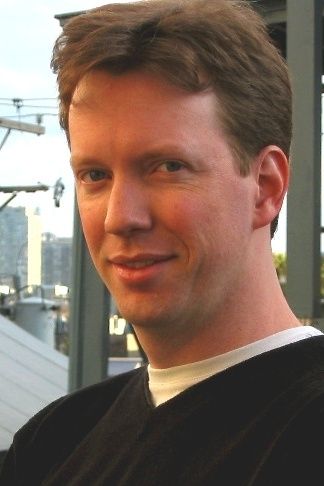
 photo sean1_zpsfgdmyuzw.jpg
Sean Carroll


Last time I brought up Sean Carroll's "Why Most Cosmologists Are Atheists."[1]  I established that his title is an opinion not the result of research. I showed that his thinking is ideologically inclined; it is revealing in that it shows the atheist ideology of reductionism in action. They create a system of explanation which they claim is complete (it's only potentially complete) and then just assert there can't be anything more. When gaps in their coverage of nature arise they fend them off with atheism of the gaps. In this blog spot I will focus on certain issues, The article is way too long to deal with all of it.


He's going to try show that atheism (which he speaks of as science) is better at explaining the world than is theism. He's setting up the comparisons between science and religion as though atheism is synonymous with science. So he plays science off against religion. Then he reduces reality to his scientific paradigm thus the comparison is between theism and science and the test is which world view best delivers science. Got to be science (science is better at being science than is religion). Of course he passes this off as "the most complete view." It's not complete at all it's a truncated reality that is reduced to one form of knowledge, the form he controls.

world view

He tries to set up a comparison between world views. He hasn't bothered to listen to religious people or study their ideas so he doesn't really understand their world view. This is apparent when he tries to define the terms. He finds the Theistic terminology too variable, too much diversity. There's no nice convent little number crunching to do. As part of his selective comparison he chooses aspects of science that are empirical and display a long standding history of resolution to create the idea that it's such a complete description with no ambiguity. collapses reality into four "elements" (really sub disciplines of physics). (1) formal mathematical structure. (2) Laws of nature that can be described in numbered sequences. (3) "we need boundary conditions which specify the specific realization of the pattern." (4) "we need a way to relate this formal system to the world we see: an 'interpretation.'”

The materialist thesis is simply: that’s all there is to the world. Once we figure out the correct formal structure, patterns, boundary conditions, and interpretation, we have obtained a complete description of reality. (Of course we don’t yet have the final answers as to what such a description is, but a materialist believes such a description does exist.) In particular, we should emphasize that there is no place in this view for common philosophical concepts such as ”cause and effect” or ”purpose.” From the perspective of modern science, events don’t have purposes or causes; they simply conform to the laws of nature. In particular, there is no need to invoke any mechanism to ”sustain” a physical system or to keep it going; it would require an additional layer of complexity for a system to cease following its patterns than for it to simply continue to do so...... According to the materialist worldview, then, structures and patterns are all there are — we don’t need any ancillary notions. [emphasis mime]
Not only are there no causes but n time's arrow. This is wildly amusing because it sounds like Alan Sokal's parody of Postmodernism. [2] Talk about ideology, going to such absurd lengths to deny God. Denying all Cause and effect so as not to have to admit the universe needs a cause.

There are two levels of reality we are dealing with here. The first level is the physical No doubt science (real science) explains that aspect of reality better than does religion because that is not the function of religion. But even that level is far from complete. Carroll tries to suggest completeness but only because he wants to ignore what he can't explain. There are many aspect would could bring up, I will mention three. I am going to makes four criticisms:

(1) abandons Cause and effect

It is ridiculous to suggest that there is no cause and effect. I suspect that he mean s that in a very specialized sense; like when physicists speak of "nothing:" in terms of origin they really don't mean actual nothing. Yet it seems clear part of the reason avoiding cause/effect is to keep from having to admit that the universe needs a cause/ We need to move beyond the dichotomy of prescriptive vs descriptive laws that does not mean, however, that we can abandon c/e. There are clearly consequences to actions, For more see my article on the prescriptive vs descriptive laws. [3]

(2) He glosses over real disagreements regarding such issues

Carroll is not forthright about the diversity of opinion in science. He would have us believe that there is certainty about the physical world (with no causes) but there are major camps that disagree about the issue of causes,[4] The Hume-influenced camp (Humeans) support Hume's view and argue that all we can o is describe correlations because we can't see cause md effect. But scientific essentialists and realists believe that there is cause and effect. Essentially realism means that the aspects of physics such as slingalruty and the phenomena described in physics are real and actually there, while the anti-realists and Humeans have a large variation on the theme that sees these objects as theoretical the result of verisimilitude; the theoretical placeholders for our calculations, in other words, “constructs.” Just to make things more confusing I know atheists with phsyics degrees who style themselves in the anti-realist camp but hwo mock and riedicule constructivists such as Thomas Kuhn. [5]

When it comes to trying to define theism of course he makes it seem chaotic and lack of theological education doesn't help any. He finds the wider world of thought more complex and harder to navigate than he dreamed it's daunting nature s no doubt why he wants to control reality by paring it down to just his methods. He tries to spin the diversity and complexity to make it seem a fault rather the n a virtue. His definition is essentially a big man in the sky:
 I will take it to mean some being who is not bound by the same patterns we perceive in the universe, who is by our standards extremely powerful (not necessarily omnipotent, although that would count), and in some way plays a crucial role in the universe (creating it, or keeping it going, etc.). By a ”being” I mean to imply an entity which we would recognize as having consciousness — a ”person” in some appropriately generalized sense (as opposed to a feature of reality, or some sort of feeling). [6]
He even be bothered to do light reading on modern concepts of God. He's choosing a straw God. There are two major theories about God since the 20th century: (1) Process theology which sees
God as impersonal, dipolar (consisting of a concrete pole in which God is part of the temporal process and a potential pole incehi9ch God is transcendent of time and change). The major thinkers involved in process thought are Alfred North Whitehead who helped Bertrand Russell with Principia Mathematicus, and Charles Hartshorne who brought back the modal argument.[7] The second major theory is the phenomenological ontology of Paul Tillich and the notion that God is the ground of being or being itself. In that view, which is embraced by many major theologians and Vatican  II, God is no0t impersonal but transcends our concept of personhood. In the theology Tillich
god is not "a being' and that Carroll uses that phrase shows not only theological illiteracy but is a major error in Tillichian terms.

The God of theological theism is a being beside others and as such part of the whole of reality. He certainly is considered its most important part, but as a part and therefore subject to the structure of the whole. He is supposed to be beyond the ontological elements and categories which constitute reality. But every statement subjects him to them. He is seen as a self which has a world, as an ego which is related to a thou, as a cause which is separated from its effect as having a definite space and an endless time. He is a being not being itself. As such he is bound to the subject/object structure of reality, he is an object for us as subjects and this decisive for the necessity of transcending theological theism. [8]

(3) Ignores other kinds of questions and other ways of answering them (other kinds of knowledge)

Religion is predicated upon answering the I=big questions, why am I hear, is there meaning in life, Is there a God. These questions are beyond science because they are only tangentially reflated to the workings of the physical world. While science does shed light on aspect's of them it cannot answer them. Hans Urs Von Balthasar (1905-1988) (Swiss Catholic Theologian)is an example of another major theologian who supported ideas about God as being itself and also asked major questions of this type.Balthasar’s overall theological project centers upon the dualities between human conflict with ourselves and our place in being. Examples of the dualities that fascinate Balthasar include: our own contingency and that of the world around us in contrast to the sense of being itself. Our place in being, science can't asked if the question  makes sense.One must do philosophy just to reject it. Balthasar was very emphatic about the personal nature of God [9]
Photobucket
Von Balthasar

Balthasar example of both the sophisticated view of Go0d and the kind of question science can't answer.

(4) Ignores direct counter evidence such as miracles and religious experience.


part 2: A Medical Historian Searches Vatican
Medical historian Jaclyn Duffin finds evidence of miracles
and resurrection searching the Vatican archives. The Empircal
Supernatuarl is not about miracles but mystical experience. Yet
there is evidence that "supernatural effects" my include miracles.[10]
part 3: Medical Historians examine Lourdes Miracles.
In peer reviewed academic journal, medical histoirans find Lourdes
miracles still unexplained.[11]
Of courser the materialists will complain that these things aren't real. They are part of the description of the universe and since there are no physical laws for them to violate the only real argument against them materialists can muster is "I have not see  this," I have, thus materialism does not offer a complete view.


sources

[1] Sean Carroll, "Why (Almost All) Cosmologists are Atheists;" On line resource, Prepared for God and Physical Cosmology: Russian-Anglo American Sean M. CarrollConference on Cosmology and Theology, Notre Dame, January/February 2003. Published in Faith and Philosophy 22, 622 (2005). See also the pdf version. URL:http://preposterousuniverse.com/writings/nd-paper/  accessed Feb 12, 2016.
Carroll is at the California Institute of Technology.

[2] Alan Sokal Social Text #46/47, pp. 217-252 (spring/summer 1996).

In the 1996 physicist Alan Sokal embarrassed post modernists by making silly statements such as "physicists no longer think in terms of a world beyond our own minds." The idea that there is no time's arrow or cause and effects the kind of nonsense of which  his parody consisted, The Postmodern began using it as back up then he srung the

[3] Joe Hinman.. "Physical laws: Beyond the prescriptive/descriptive dichotomy,: Religious a priori
no date, Link

[4] Brian Ellis, in Sankey, op cit, “Caual Powers and Laws of Nature” 19-34

[5] Chakravartty, Anjan, "Scientific Realism", The Stanford Encyclopedia of Philosophy (Summer 2011 Edition), Edward N. Zalta (ed.), URL = .

[6] Carroll op. cit.

[7] Donald Viney, "Process Theism", The Stanford Encyclopedia of Philosophy (Spring 2014 Edition), Edward N. Zalta (ed.), URL = <http://plato.stanford.edu/archives/spr2014/entries/process-theism/>.

[8] Paul Tillich, The Courage to Be. London and Glasgow: Collins, the Fontana library 1974, ninth impression. First published by Nisbet, 1952, 178.

Also see my article "Paul Tillich and The Personal God" Metacrock's Blog, March 14, 2011, URL:
http://metacrock.blogspot.com/2011/03/paul-tillich-and-personal-god-was.html

[9] Joel Graver, “a Short Biography,” website:Hans Urs Von Balthasar, an Internet Archieve. URL sighted: http://www.lasalle.edu/~garver/bio.htm (visited 12/3/10).

also see my article "Hans Urs Von Balthasar: Being Itself and The Personal God." Metacrock's Blog
March 12, 2014
URL: http://metacrock.blogspot.com/2014/03/hans-urs-von-balthasar-being-itself-and.html

[10] Joseph Hinman, "Medical Miracles: Doctors, Saints and Healing: Medical Miracles in the Modern World. ,"  Religious a priori an online resource for Christian apologetics. no dater4
URL: http://religiousapriori.blogspot.com/2012/11/medical-miracles-doctors-saints-and.html

[11] Ibid., "Medical Historians Agree Lourdes Cures are Unexplainable,"
URL http://religiousapriori.blogspot.com/2012/11/medical-historians-agree-lourdes-cures.html

Wednesday, February 17, 2016

Are all Cosmologists Atheists? Answering Sean Carroll (1)


Photobucket - Video and Image Hosting


In the previous post I commented on Sean Carroll, astro-physicist and atheist soldier who wave the banner of scientism. He writes an article:Why (Almost All) Cosmologists are Atheists [1] Actually, he offers no data on the views of cosmologists. I offered reasons in the previous post as to why I think the title here is hyperballe. Good data shows that the majority of scientists believe in God [2]  While it may not be true of cosmologists I have no reason to believe it is not. But this is not the real issue. he real issue is that Carroll's arguments are merely ideological/ all he's doing is imposing a naturalistic ideology upon epistemology and then insisting that he has the mystique of science to back  it up. In other word it's just propaganda.

Let's start with his conclusion:

The question we have addressed is, ”Thinking as good scientists and observing the world in which we live, is it more reasonable to conclude that a materialist or theist picture is most likely to ultimately provide a comprehensive description of the universe?” Although I don’t imagine I have changed many people’s minds, I do hope that my reasoning has been clear. We are looking for a complete, coherent, and simple understanding of reality.
That seems ok so far but here's where he wants to wind up:

 Given what we know about the universe, there seems to be no reason to invoke God as part of this description. In the various ways in which God might have been judged to be a helpful hypothesis — such as explaining the initial conditions for the universe, or the particular set of fields and couplings discovered by particle physics — there are alternative explanations which do not require anything outside a completely formal, materialist description. I am therefore led to conclude that adding God would just make things more complicated, and this hypothesis should be rejected by scientific standards. It’s a venerable conclusion, brought up to date by modern cosmology; but the dialogue between people who feel differently will undoubtedly last a good while longer.

The problem is "what we know" means what we know by the methods that I choose, those methods are chosen because they yield the results I want; other forms of  knowledge I do not have to regard. He argues for a self contained paradigm and true to Thomas Kun's theory he absorbs anomalies into the paradigm so as not to admit that they are contradictions and he defends the paradigm like a political regime. My overall argument is that his rejection of theism is ideological not scientific.

In his abstract to the article he makes his purpose clear, that purpose I to rule out belief in God by moving it of the map as an issue. The way to do that is to assert science's role as the only form of knowlege:
Abstract
Science and religion both make claims about the fundamental workings of the universe. Although these claims are not a priori incompatible (we could imagine being brought to religious belief through scientific investigation), I will argue that in practice they diverge. If we believe that the methods of science can be used to discriminate between fundamental pictures of reality, we are led to a strictly materialist conception of the universe. While the details of modern cosmology are not a necessary part of this argument, they provide interesting clues as to how an ultimate picture may be constructed. [emphasis mine] [3]
Why would we be led to be led to a meticulously materialist view just because we believe that the methods of science can be used to discriminate between fundamental views? It sounds like he is saying that science can determine the truth between differing views. He actually says ifwe believe that it can He's aware that it can't. He knows all he's really doing is just advocating an ideological view point that blinds itself to other possibilities.

As further evidence of his commitment as a solider of atheism he opposes any sort of peaceful coexistence between science and religion:

One increasingly hears rumors of a reconciliation between science and religion. In major news magazines as well as at academic conferences, the claim is made that that belief in the success of science in describing the workings of the world is no longer thought to be in conflict with faith in God. I would like to argue against this trend, in favor of a more old-fashioned point of view that is still more characteristic of most scientists, who tend to disbelieve in any religious component to the workings of the universe.[4]


He disavows any claim to statistical accuracy in the title saying, "The title ''Why cosmologists are atheists'' was chosen ...simply to bring attention to the fact that I am presenting a common and venerable point of view, not advancing a new and insightful line of reasoning." [5] That's a new one, I can make false claims about support because I don't mean them and somehow the fact that I'm advocating traditional views guarantees it's veracity. Talk about propaganda! This "common and venerable view" is outmoded and has been left behind by many in scientific circles. Stpehen J, Guild with his non overlapping magisteria found peace with religion by recognizing that religion and science have different purposes.[6] The National Science Teachers Association echos the same concept that science and religion cover differing domains of knowledge. “Explanations involving non-naturalistic or supernatural events, whether or not explicit reference is made to a supernatural being, are outside the realm of science and not part of a valid scientific curriculum.” [7]

"Essentially I will be defending a position that has come down to us from the Enlightenment, and which has been sharpened along the way by various advances in scientific understanding. In particular, " No scientific understanding has ruled out God. He's appealing to tradition and the emotional investment he's made in enlightenment thinking. "Since very early on, religion has provided a certain way of making sense of the world -- a reason why things are the way they are." I suspect that what he means by that is that religion offered an explanation of the workings of the physical world, such as the river floods because God is mad at us. I have a hard time thinking that Carroll really has a conception of what religion is about.  part of what I base that upon is the the things he thinks beat it out:
In modern times, scientific explorations have provided their own pictures of how the world works, ones which rarely confirm the pre-existing religious pictures. Roughly speaking, science has worked to apparently undermine religious belief by calling into question the crucial explanatory aspects of that belief; it follows that other aspects (moral, spiritual, cultural) lose the warrants for their validity. I will argue that this disagreement is not a priori necessary, but nevertheless does arise as a consequence of the scientific method,

Of course before one can say "X has overcome Y" she/he must know what Y is about. Since science doesn't talk about existential or phenomenological matters one cam only conclude that he must think religion is about explaining where the sun came from and why it rains. This especially so since view he is juxtaposing is cosmology. So he must think that understanding the nature of reality is jus a matter of understanding the cosmic layout, planets and stars.
The essence of materialism is to model the world as a formal system, which is both unambiguous and complete as a description of reality. A materialist model may be said to consist of four elements. First, we model the world as some formal (mathematical) structure. (General relativity describes the world as a curved manifold with a Lorentzian metric, while quantum mechanics describes the world as a state in some Hilbert space.
Complete as a description of reality? That assumes of course that your methods are up to the task of probing all of reality. He speaks of a complete description and yet look at all that he leaves out/, First I refer the reader to my recent essay "can science prove the basis of modern physics?" [8] How can he claim a complete description when it can't tell us what the basic building blocks are made out of? Materialism has to rule out miracles. It will rule them out as a matter of course. That is an ideological imperative. Then in a move of pure circular reasoning it will appeal to it's own authority in declaring miracles to be scientifically disproved. All that really means is that they conflict with the ideological scheme of things. Miracles are a part of my reality. They are paert of other people's observations and have been documented scientifically.[9] [10]Any description of the universe that rules them out without genuinely disproving them is incomplete. Then of course there are issues of phenomenological and existential import.


sources

[1] Sean M. Carroll, "Why (Almost All) Cosmologists are Atheists;" On line resource, Prepared for God and Physical Cosmology: Russian-Anglo American Conference on Cosmology and Theology, Notre Dame, January/February 2003. Published in Faith and Philosophy 22, 622 (2005). See also the pdf version. URL:http://preposterousuniverse.com/writings/nd-paper/  accessed Feb 12, 2016.

Carroll is at the California Institute of Technology.

[2] Neil Gross and Solon Simmons, “How Religious Are America's College and University Professors.” SSRC, (published feb. 2007), PDF URL, accessed 9/4/15 The Author 2009. Published by Oxford University Press on behalf of the http://religion.ssrc.org/reforum/Gross_Simmons.pdf Association for the Sociology of Religion.

They present a bar graph that show about 35% professor's ar elite research universities believe in God with no doubt. About 27% believe but sometimes have doubts. About 38% are atheists. That actually means that 60% are not atheists. True that's not cosmologists but there is good reason to think the majority of cosmologists are not atheists. The most atheistic groups in the study were psychologists (61%), biologists (about 61%), and mechanical engineers (50%), not physicists (among whose ranks cosmologists number). Contrary to popular Opinion, atheists and agnostics do not comprise a majority of professors..."

[3] Carroll, op. cit.

[4] Ibid. "Introduction."

[5] Ibid. all further quotes by Carroll are from this article.

[6]  Stephen Jay Gould. Rocks of Ages: Science and Religion in the Fullness of Life. New York: Ballantine Books. ,2002,

[7] Statement on Teaching Evolution, National Association of Biology Teachers (NABT). Adopted by the NABT Board of Directors on March 15, 1995. no page given, in Three Statememts in Support of Teaching Evolution From Science and Science Education Organizations, A National Science Teachers Association Position Statement (see fn 4) online URL http://www.nap.edu/read/5787/chapter/11#127 (accesed 1/26/2016)

[8] Joe Hinman, Can Science prove the basis of modern Physics?" Metacrock's blog, Feb. 1, 2016, URL:http://metacrock.blogspot.com/2016/02/can-science-really-prove-basis-of.html accessed 2/14/16.
[9] Bernard Francis et al, “The Lourdes Medical Cures Re-visited,” Journal of the History of Medicine and Allied Sciences, Oxford: Oxford University Press. (10.1093/jhmas/jrs041) 2012 pdf downloaded SMU page 1-28  all the page numbers given are from pdf

Bernard Francis is former professor Emeritus of medicine, Unversite Claude Bernard Lyon. Elisabeth Sternberg taught at National Institute of Mental Health and The National Institutes of Health, Bethesda, Maryland. Elisabeth Fee was at National Library of Medicine and National Institutes of Health, Bethesda, Maryland.

[10] Jacalyn Duffin, Medical Miracles: Doctors, Saints and Healing: Medical Miracles in the Modern World. Oxford University Press; 1 edition (November 21, 2008

from Bio on Amazon.com
 Jacalyn Duffin, M.D. (Toronto 1974), FRCP(C) (1979), Ph.D. (Sorbonne 1985), is Professor in the Hannah Chair of the History of Medicine at Queen's University in Kingston where she has taught in medicine, philosophy, history, and law for more than twenty years. A practicing hematologist, a historian, a mother and grandmother, she has served as President of both the American Association for the History of Medicine and the Canadian Society for the History of Medicine. She holds a number of awards and honours for research, writing, service, and teaching. She is the author of five books, editor of two anthologies, and has published many research articles. Her most recent book is an analysis of the medical aspects of canonization, Medical Miracles; Doctors, Saints, and Healing in the Modern World, Oxford University Press, 2009. It was awarded the Hannah Medal of the Royal Society of Canada...

See also Doxa. miracles pages

Part 2