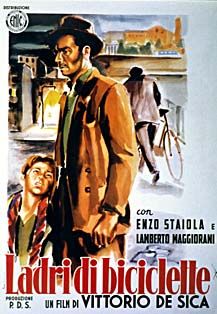
Showing posts with label film fest friday. Show all posts

Friday, November 13, 2015

Norman Foster and Brighty of the Grand Canyon (fun filled friday friday)


 photo 
220px-Norman_Foster1_zpsd1dce364.jpg

Norman Foster (December 13, 1903-July 7, 1976)


I love it when I discover a new director. It's frustrating when I can't get to see the new director's stuff. This case is very odd becuase I've already seen a dozen of his films and didn't know, yet I can't get at the two that might well be valid great arts films. Norman Foster, even though I didn't it before recently, directly most of the Charlie Chan movies, most of the Mr. Motto movies, and the most Schlocky thing of all time, Batman tv show! So even though I've seen a lot of his work until recently I had only seen his shlock, although fun shlock. I love the Motto movies I love the chan movies, but they are not great art. There's a good chance that Journey into fear and Navajo are great art films. I can't get them. He was hand picked by Orson Wells to direct Journey into fear (1943).

Foster supported independent film and directed them at a time (50s and 60s) then they were not popular, at a time when "indie" meant "cheap" not "chick" not "cool" not "intellectual."  Yet his 1952 film Navajo  sounds like a great art film. It's about  Navajo boy who is forced into a white man's school were they seek to eradicate his culture from his thinking to press him into a mold, and his struggle to learn more about his culture and to remain Navajo. Those works are hard to find and I can't get them.I would love to see them.

Foster was born John Hoeffer December 13, 1903 (died July 7, 1976 (aged 72). He began his professional career as an actor. He was married to actress Claudette Colbert a major box office draw at the time. They had a violent breakup and for some reason after that he turned director. That married was from 1928 50 1935. He began directing the Motto films (he was not the first to direct them) his films were enormously popular. He was on the only B movie director to always finnished on time and under budget. He had a reputation for getting the job done, which may be why Wells selected him. The Charlie Chan movies were very popular too.

The only one of his independent films I've been able to find is "Brighty of the Grand Canyon." A story about a Donkey.
:
 photo 51u2BaxSwsuL_SY344_PJlook-inside-v2TopRight10_SH20_BO1204203200__zps4309d2a6.jpg


Cast

Cast overview:
Jiggs the Donkey ...
Brighty
Joseph Cotten ...
Jim Owen
Pat Conway ...
Jake Irons
Dick Foran ...
Old Timer, the Prospector
Karl Swenson ...
Dandy Curran ...
Homer Hobbs
 (from the IMBd page)


 Based upon Marguerite Henry's 1953 novel of the same title. The story is set in 1905, Teddy Roosevelt is a character in the film. He makes a speech about the great canyon needs to be preserved. The high profile star (the only one) in the film is Joseph Cotton, the same who co-starred in The Third Man with Orson Wells. Cotton was a major star in the 30s and 40s, he was old and by Hollywood standards of the time forgotten by the time he made Brighty. The best actor in the film by far he turns out to steal the show in the end. Pat Conway who played the murderer also does an excellent job. Both are so good and effortless I never even though about their acting. It never occurred to me "hey they can act" I just watched them. The boy I boy I said "He's not a professional actor." Teddy Roosevelt I said 'He's not doing a bad job. With those two I just watched the film. The old Timer was not too corny. He's a corn ball character in the first place (the crusty old timer prospector), the actor did a good job of trying to pull off an uncorny corn ball character.

This is not a  great art film. It's nice, it's better than a Disney movie but not far above the Swiss Family Robinson or something. I would rate it "a fine film." Not a great film but very nice to watch.

The old timer is Brighty's Human companion. Every review says he is only known by that name and the IMBD only lists him as such but the scrip clearly referees to him more an once as Hezekiah Appleyeard. You can't really say he "owns" the Donkey, the system was not for prospectors at the Canyon to own their own donkey and keep them in a pen at their house. The Old Timer just grabs whatever Donkey is near and uses him as a pack mule for a wile then let's him go. When he needs another he gets which one is handy. The Old Timer always tells Brighty "you can go run and play now, just come when I need you." He always did. They met when the young Donkey got his face full of cactus needles trying to eat a cactus. The old man pulled the needles out and they were fast friends and stayed together.

The Joseph Cotton character  know as "uncle Jim" ran a trading post and acted as tour guide to this hunting mountain lions. He guides TR in a hunt in the film, and listens to him say "bully" and make speeches about the Canyon around the camp fire. the President gives him a rifle with a name plate on the stock saying "from President Teddy Roosevelt to Jim Whatever.. blah blah."

The Old Timer discovered a major gold strike. He is working the claim as an escaped criminal (Jake Irons played by Pat Conway) who accepted his hospitality around the fire one night, follows him to see where the strike is. He murders the old man and begins to work the claim himself.  The Donkey is heart broken. He wanders about with the old man's hat in his mouth, which he found lying around, and seeks the old man's body braying terribly as if  crying. He knows he crook did it and he will not near him even though the crook keeps drafting him to work as a pack animal and beating him to make him work. At one point Brighty jumps out of a ferry cages to an icy river 30 feet below. The boy who works at Uncle Jim's story and Uncle Jim begin to suspect the old man is murdered. He never shows up, they find his camp deserted. They see Brighty alone with the old man's hat. They alert the sheriff and the word goes out to look for a murderer although they do not know who to look for.

Eventually the murderer turns up at the store. The boy truges in the snow as it's coming down to the store to warn Uncle Jim that the murderer is has been spotted (an escaped convict). Jim returns form hunting to find the convict ransacking is store and stealing his TR rifle. The boy, the convict and the Uncle are all snow bound in the store with the Donkey who is sick. They see that the convict has the old man's watch, his Donkey, other things that belonged to him and they coax him into saying incriminating things. Jim slips the Donlkey's medicine to the convict in his tea and he get's sick they force him to reveal that he did kill the old man. The convict hits Jim and knocks him out and escapes. Jim hunts him down in the snow and finds him hanging off a cliff. He saves him but he also takes him back to face trail for murder. I wont tell the reader about the Donkey being shot at the end so as to leave some surprise.

All in all it's a movie made for 12 year old boy in the 1950s. It's not a bad little movie. I'm anxious to see Navajo that's the one I really wont to find. Until then I'm happy for having seen Brighty.


Friday, May 23, 2014

Film Fest Friday: Back to Italy with Vittorio De Sica's The Bicycle Thief

 photo Ladri3_zps8b20dcea.jpg


Again, as with the other films I've been discussing, this is one of the greatest movies of all time. It's been honored more than almost any other movie of the 20th century. It was deemed the greatest film of all time by 1999 poll of filmakers and critics for Sight and Sound magazine [1] Honarary academy award in 1950, just four years after it came out. If anyone cares it's no  3 on my top 10 of all time.[2] I have mentioned Itallian neo-realism and how it important it was in the post war era. Fillini was famous for pulling away from it. This is the height of neo-realism.

The introduction t the Criterion collection says of neo-relaism:

The neorealist movement began in Italy at the end of World War II as an urgent response to the political turmoil and desperate economic conditions afflicting the country. Directors such as Roberto Rossellini, Vittorio De Sica, and Luchino Visconti took up cameras to focus on lower-class characters and their concerns, using nonprofessional actors, outdoor shooting, (necessarily) very small budgets, and a realist aesthetic. The best-known examples remain De Sica’s Bicycle Thieves, a critical and popular phenomenon that opened the world’s eyes to this movement, and such key earlier works as Rossellini’s Open City, the first major neorealist production. Other classics of neorealism include De Sica’s Umberto D. and Visconti’s La terra trema, but the tendrils of the movement reach back to De Sica’s The Children Are Watching Us and forward to Rossellini’s The Flowers of St. Francis, as well as to some filmmakers who did their apprenticeships in this school, Michelangelo Antonioni and Federico Fellini—and far beyond.[3]
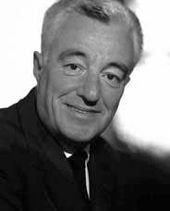
 photo 7738_de-Sica-Vittorio_zps24def4a8.jpg
De Sica

Vittorio De Sica (1901-1974) Grew up in Naples, started life as an office clerk. He was poor and tried to support his family on a clerk's job, but was increasingly drawn to acting. He began acting in his teens and became matinee idol. He was a famous Italian leading man romantic type. He began directing in 1940, mostly light comedies at first. His 1944 release "The Children are Watching us" was the first hint of his depth as a serious director. [4] His "shoeshine" (1946) and the Bicycle Thief were "heartbreaking studies of poverty in postwar Italy which won special Oscars before the foreign film category was officially established."[5]  He also directed one of my favorite comedies, which is an hilarious film, late 60s, with Peter Sellers, "After The Fox." He still knew how to make comedies.

Review below IMBd cast page.

Director: Vittorio De Sica
1948.

Adapted for the screen by Cesare Zavattini
from a novel by Luigi Bartolini,

from IMBd page
Cast
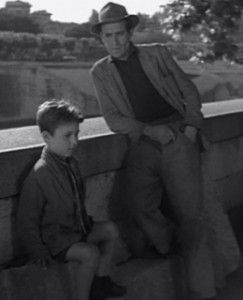
Complete credited cast:
Lamberto Maggiorani ...
Enzo Staiola ...
Lianella Carell ...
Maria Ricci
Gino Saltamerenda ...
Baiocco
Vittorio Antonucci ...
The Thief
Giulio Chiari ...
The Beggar
Elena Altieri ...
The Charitable Lady
Carlo Jachino ...
A Beggar
Michele Sakara ...
Secretary of the Charity Organization
Emma Druetti
Fausto Guerzoni ...
Amateur Actor
  photo bicycle-thief2-243x300_zps9570b397.jpg
 There seems to be a law that the greatest films don't look like much on the surface. I've observed this with The Seventh Seal, which looks a bunch of high school kids filmed he senior play, and with "La Dulce Vita" which seems to be about a bunch of rich Italian lay about with nothing to say. With this film we have a story about a guy whose bicycle is stolen, he looks for it, can't find it, and life goes on. It's in black and white, it's got subtitles. As I've said before the true Cinefile thrives on this. These are not negatives for a great foreign film. This is truly a great film. It's a heart rending study of a man caught in sheer desperation; between fear of letting his family starve while he can't find work, on the one hand, and the total frustration on the other. Since the Italian is actually plural,  The Bicycle Thieves is actually about not only the guy whose bicycle was stolen but about the guy who took it. We only see him in one scene but we can easily imagine the kind of anguish and desperation went into his career as a bicycle thief as went into the decision to attempt it on the part of his victim.
As the story opens we see a huge crowd of men around the door of some kind of ware house buildign. A man comes out and starts reading names and handing out assignments for work. He called out "Antonio Ricci" (Lamberto Maggiorani) the guy doesn't answer. He's not only across the street he's down the block. Someone has to go get him. He's till thrilled to have a job at last. Obviously he's been unable to find one for a long time. He's give up  he's not even there for the assignments here he has one. One problem. He has to have a Bike. He mumbles something about how it needs fixing, the guy says Ok do you have one or not? You have to a bike for this mob. He says "Yes I have it." He goes home he's proud, he's thrilled. The Cramdon's on the Honeymooners, if you thought their apartment was sparse, it was "comfortable." These guys live in squealer. The plaster is cracking, the walls are crumbling adobe, the lights are bare, never heard of a lampshade. Furniture is really cheap and falling apart. It's all dirty, no crib for the baby. The baby stays on the  parent's bed bewteen two pillows.
His wife takes him to some lame psychic who is clearly a fraud, this shows desperate they are. They go back home and he's telling her how needs the bike. So she sells the last of her find linen that came with her dowry. This is truly the last ditch effort to make good. The next he goes out on his gotten out of hock by selling the sheets. He's assigned to put up posters. It's hard to put them up right at first. Hes' struggling to make one smooth. He's up on a ladder the bike is about 20 feet away. This guy walks by and just jumps on it and peddles like all hell is after him. He gets out in traffic immediately and loses himself in a lot of other bikes. Ricci gets a ride on a running board and thy go after it. He's being helped by two strangers, but they grab the wrong guy when they pull him over they see it's the wrong bike. So it's gone. He's just devastated. It took him so long to get that job. He dreads going home, he cant' bring himself to tell the kid by he took the bus home. When he does tell his wife he says he will get help.

Eventually things work out to a point where he and his son are looking for the bike. That takes up most of the film. It's the next day he's gone with the "help" (a friend of position in a union) they go to places where stolen bikes might be parted out. So they examining frames and parts of bike. The kid knows all about it, he has the cereal number memories. The kid, Bruno, (Enzo Staiola) is amazing. He would make a great running back in American foot ball. The runs after the father keeping up with his longer stride, always at his side. He is slipping in mud puddles and falling down in the street and the father plays along and the kid fights to keep up. He's in a hair's breath of being run over twice.

The father sees a guy on a bike that he thinks is the thief and the bike looks like his. In realty it's not. They are both miles off. The guy is obsessed. He can't follow the guy on the bike but he sees him talk to an old man. The look for him but he vanished around a corner. So combing the neighborhood they find an old man who he thinks the guy was talking to, but it may not be at all. He's convinced he is even though the old man denies knowing what he's talking about. They chase him into a church. They disrupting the service. People keeping telling them to keep still. Finally the old man loses them and they are kicked out of the chruch. The kid gets on the father's nerves and the father slaps him. He's been through rain and mud and almost ran over, but he was in there with the Dad fighting, suddenly he thinks the father doesn't care about his contribution, they are not really father and son working together he's unappreciated it. He becomes petulant and runs away. The father seeks him down by a river under the bridge. He hears people shouting that a boy is drawing. It sinks in and he become alarmed that it's Bruno. He rushes to see. It's too big this kid is a teen. So he's relived then he sees Bruno way up at the top of the stairs. They reunite. The kid has sort of firgiven him. He wants to gab him in his arms but there's a macho thing there preventing it. He just messes up the kid's hair and says let's go eat.

The relationship between father  and son is priceless. The kid is a real trooper, willing to go anywhere the Dad goes, snapping at his heals, falling down, almost being ran over, always staying faithfully underfoot. He's like a little adult, he even has the details of he bike memorized. Out of thousands of bikes in Rome that all look alike he can pick theirs out of a crowd. The father is too distracted, he's in total agony. De Sica is said to have filmed the human soul in action. The performances are perfect. It's also a beautiful film. Even though it's in black and white the sights and sounds of Rome are overwhelming. In spite of it all they go on and face each day in spite of the desperation. True to the nature of neo-realism we are watching the human spirit face the human condition.

watch the entire film on YOUTUBE
 [1] Ebert, Roger (March 19, 1999). "The Bicycle Thief / Bicycle Thieves (1949) review". Chicago Sun-Times. Archived from the original on July 20, 2010. Retrieved July 20, 2010.
 [2] Seventh Seal (Ingmar Bergman)
La Dulce Vita (Federico Fellini)
The Bicycle Thief (Vittorio De Sica)
Wild Strawberries (Bergman)
The Virgin Spring (Bergman)

Rashomon, (Akira Kurosawa)
The Seven Samurai, (Akira Kurosawa)
La Strada (Federico Fellini)
Dr. Strangelove, (Stanly Kubrick)
Ordet (Carl Drayer)
 [3] The Criterion Collection. "Themes: Italian Neo-Realism." on line resource: 


[5] Ibid.

Friday, March 07, 2014

Norman Foster and Brighty of the Grand Canyon (film fest friday)

  photo 
220px-Norman_Foster1_zpsd1dce364.jpg

Norman Foster (December 13, 1903-July 7, 1976)

  I love it when I discover a new director. It's frustrating when I can't get to see the new director's stuff. This case is very odd becuase I've already seen a dozen of his films and didn't know, yet I can't get at the two that might well be valid great arts films. Norman Foster, even though I didn't it before recently, directly most of the Charlie Chan movies, most of the Mr. Motto movies, and the most Schlocky thing of all time, Batman tv show! So even though I've seen a lot of his work until recently I had only seen his shlock, although fun shlock. I love the Motto movies I love the chan movies, but they are not great art. There's a good chance that Journey into fear and Navajo are great art films. I can't get them. He was hand picked by Orson Wells to direct Journey into fear (1943).

 Foster supported independent film and directed them at a time (50s and 60s) then they were not popular, at a time when "indie" meant "cheap" not "chick" not "cool" not "intellectual."  Yet his 1952 film Navajo  sounds like a great art film. It's about  Navajo boy who is forced into a white man's school were they seek to eradicate his culture from his thinking to press him into a mold, and his struggle to learn more about his culture and to remain Navajo. Those works are hard to find and I can't get them.I would love to see them.

Foster was born John Hoeffer December 13, 1903 (died July 7, 1976 (aged 72). He began his professional career as an actor. He was married to actress Claudette Colbert a major box office draw at the time. They had a violent breakup and for some reason after that he turned director. That married was from 1928 50 1935. He began directing the Motto films (he was not the first to direct them) his films were enormously popular. He was on the only B movie director to always finnished on time and under budget. He had a reputation for getting the job done, which may be why Wells selected him. The Charlie Chan movies were very popular too.

 The only one of his independent films I've been able to find is "Brighty of the Grand Canyon." A story about a Donkey.


 photo 51u2BaxSwsuL_SY344_PJlook-inside-v2TopRight10_SH20_BO1204203200__zps4309d2a6.jpg


Cast

Cast overview:
Jiggs the Donkey ...
Brighty
Joseph Cotten ...
Jim Owen
Pat Conway ...
Jake Irons
Dick Foran ...
Old Timer, the Prospector
Karl Swenson ...
Dandy Curran ...
Homer Hobbs
 (from the IMBd page)


 Based upon Marguerite Henry's 1953 novel of the same title. The story is set in 1905, Teddy Roosevelt is a character in the film. He makes a speech about the great canyon needs to be preserved. The high profile star (the only one) in the film is Joseph Cotton, the same who co-starred in The Third Man with Orson Wells. Cotton was a major star in the 30s and 40s, he was old and by Hollywood standards of the time forgotten by the time he made Brighty. The best actor in the film by far he turns out to steal the show in the end. Pat Conway who played the murderer also does an excellent job. Both are so good and effortless I never even though about their acting. It never occurred to me "hey they can act" I just watched them. The boy I boy I said "He's not a professional actor." Teddy Roosevelt I said 'He's not doing a bad job. With those two I just watched the film. The old Timer was not too corny. He's a corn ball character in the first place (the crusty old timer prospector), the actor did a good job of trying to pull off an uncorny corn ball character.

This is not a  great art film. It's nice, it's better than a Disney movie but not far above the Swiss Family Robinson or something. I would rate it "a fine film." Not a great film but very nice to watch.

The old timer is Brighty's Human companion. Every review says he is only known by that name and the IMBD only lists him as such but the scrip clearly referees to him more an once as Hezekiah Appleyeard. You can't really say he "owns" the Donkey, the system was not for prospectors at the Canyon to own their own donkey and keep them in a pen at their house. The Old Timer just grabs whatever Donkey is near and uses him as a pack mule for a wile then let's him go. When he needs another he gets which one is handy. The Old Timer always tells Brighty "you can go run and play now, just come when I need you." He always did. They met when the young Donkey got his face full of cactus needles trying to eat a cactus. The old man pulled the needles out and they were fast friends and stayed together.

The Joseph Cotton character  know as "uncle Jim" ran a trading post and acted as tour guide to this hunting mountain lions. He guides TR in a hunt in the film, and listens to him say "bully" and make speeches about the Canyon around the camp fire. the President gives him a rifle with a name plate on the stock saying "from President Teddy Roosevelt to Jim Whatever.. blah blah."

The Old Timer discovered a major gold strike. He is working the claim as an escaped criminal (Jake Irons played by Pat Conway) who accepted his hospitality around the fire one night, follows him to see where the strike is. He murders the old man and begins to work the claim himself.  The Donkey is heart broken. He wanders about with the old man's hat in his mouth, which he found lying around, and seeks the old man's body braying terribly as if  crying. He knows he crook did it and he will not near him even though the crook keeps drafting him to work as a pack animal and beating him to make him work. At one point Brighty jumps out of a ferry cages to an icy river 30 feet below. The boy who works at Uncle Jim's story and Uncle Jim begin to suspect the old man is murdered. He never shows up, they find his camp deserted. They see Brighty alone with the old man's hat. They alert the sheriff and the word goes out to look for a murderer although they do not know who to look for.

Eventually the murderer turns up at the store. The boy truges in the snow as it's coming down to the store to warn Uncle Jim that the murderer is has been spotted (an escaped convict). Jim returns form hunting to find the convict ransacking is store and stealing his TR rifle. The boy, the convict and the Uncle are all snow bound in the store with the Donkey who is sick. They see that the convict has the old man's watch, his Donkey, other things that belonged to him and they coax him into saying incriminating things. Jim slips the Donlkey's medicine to the convict in his tea and he get's sick they force him to reveal that he did kill the old man. The convict hits Jim and knocks him out and escapes. Jim hunts him down in the snow and finds him hanging off a cliff. He saves him but he also takes him back to face trail for murder. I wont tell the reader about the Donkey being shot at the end so as to leave some surprise.

All in all it's a movie made for 12 year old boy in the 1950s. It's not a bad little movie. I'm anxious to see Navajo that's the one I really wont to find. Until then I'm happy for having seen Brighty.