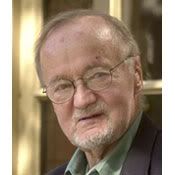
 Toulmin
 Kane Augustus
The standard to which I argue my God arguments is to prove that belief in God is warranted, not to prove that God actually exists. That should be pretty self evident, there's a good reaosn to believe in God, or to bleieve there "might be" a God, but I have to actually prove it. Atheists have demonstrated that they are totally baffled by this concept and the phrase "ratinoal warrant." As though it's some big sneaky trick. In fact I will quote an atheist in a bit who calls it that. I usually leave criticism of atheist for my blog "Atheist Watch" and do positive pro God and Spiritual life stuff here. This is not really so much at attack on atheists as it is at attack on fuzzy understanding of logic.
a guy calling himself
Kane Augustus on the blog Saints and Cynics ("Rational Warrant, a Critique") writes:
An
argument for belief in God attempts to establish credible evidence for a
divine overseer orchestrating, or being aback of, the universe. The
direction of all argumentation concerning God's existence is to
start with what we do know and extrapolate outward to the best possible
conclusion concerning things we don't know.
For example, the
Cosmological Argument
proposes that from matter we can extrapolate that there must have been a
designer because all of what is, is contingent (i.e., dependent on
other material things). That everything material is contingent
necessitates that there must have been one non-contingent, or wholly
independent beginning to everything else. This wholly independent thing
is often referred to as "God."...
Which brings us to the point of this article: I do not consider rational
warrant to be anything more than begging the question (circular
reasoning), or a cheap rhetorical trick that ends in relativism.
In calling it a cheap trick he's really saying "I don't have the slightest idea what rational warrant is." He's juxtopposing it to cosmological argument which he takes to be a valid arguemnt, although I'm sure he would argue that it fails to prove that God exists. The problem is that rational warrant is nothing more than a step in logic that all arguments must include, one that merely says "there's good reason to believe that X is the case." So the cosmological argument could be put over as arguing to the warrant rather than as a proof. That means only that one stops short of trying to prove that God's existence is the case and just leaves it at the point where there's a good reason to think so. Now Kane may have actually understood this at some level and tired to head it off at the pass with the opening quotation: "The existence of God is not subjective. He either exists or he
doesn't. It's not a matter of opinion. You can have your own opinions.
But you can't have your own facts." ~Ricky Gervais.
If that's the case that he does understand warrant then then why is he talking about it in terms totally foreign to what warrant is? As for the Gervias quote it has no real application, even though it implies an understanding that warrant is a logical step that doesn't follow through to proof. That quote is silly because belief in God is based upon subjective grounds, in fact there are no objective grounds in human thinking ability to base it upon. We are not capable of being truly objective. Yes either God exists or he does not that's totally different form an understanding of God's existence among creatures who are not capable of thinking objectively in an absolute sense. We can think less subjectively at some times than others that's the point of appealing to logic.
Kane puts forth an argument that is supposed to demonstrate the cheap trick nature of warrant. In so doing he is telling us he knows nothing about it because rational warrant the result of the argumentation theories of one the most highly respected logicians of the 20th century, Stephen Toulmin.
Stephen Edelston Toulmin, (born March 25, 1922, London, Eng.—died Dec. 4, 2009, Los Angeles, Calif., U.S.), English philosopher and educator noted for his study of the history of ideas. In his work on ethics,
Toulmin was concerned with describing prescriptive language—that is,
imperative sentences and value judgments used for ethical
statements—while holding that ethics, or the logical study of moral language, cannot be reduced to subjective or objective facts but is a unique expression of duty or right.
I will discuss Toulmin's theory now in order to show what rational warrant really is then I will deal with Kane's specific arguments nest time in part 2.
Skeptics usually argue for a level of absolute proof. Some
skeptics may claim that they don't demand absolute proof, but the level of most
God arguments and most discussions about those arguments is undertaken with an
assumption that the argument has to actually prove its objective, that God
exists. At least that's taken to be the objective. I understood things that way
myself, yet my friends and I in our collegiate and undergraduate settings, our
coffee shops and debate squad discussions always hinted at a notion that there
are levels of proof. I used to describe this in terms of "not mathematical
level of proof but something more on a practical level." After doctoral
work, in which I had not really thought about the issue for a long time, I discovered
the internet war between atheists and theists and jumped in with both fists
flying. I didn't really understand how or why but for some reason it occurred
to me (almost instantly) that that second order of proof was the rational
warrant belief. There was an article that I can't even find now, I don't
remembered who wrote it, but it talked about propositions as things in which to
place confidence rather than "prove" and the ability to place
confidence in a partially proved hypothesis. The basis in justification
for doing this is the "rational warrant." This soon became my
standard position. I do not argue to prove the existence of God but to
demonstrate
the rationally warranted nature of
belief.
The levels of the term proof
that I've discussed, in my internet sojourn, are "absolute" and
'practical." Rational warrant is any logical argument that warrants a
belief, or a sense of placing confidence in a proposition. "rational"
means there are logical reasons to support it, being a "warrant"
means it's a reason to believe something. Warrant is permission. so the aspect
of an argument that logically demonstrates a reason to believe something is a
warrant. Rationally warranted belief is confidence placed in a proposition (the
belief) that is well placed as demonstrated by the warrant; the warrant is a
sort of "permission" to believe or to place confidence. The
permission is grounded in inference supplied by data, backing, proof, or demonstration.
The practical level of proof
as I said
is based upon the daily needs of life while the absolute sense of proof is just
that, that which can be demonstrated to be 100% proved. There really are almost
no things in this life that can be proved that way. One of the big games the
atheist play is to confuse the issue of belief by constantly demanding 100%
absolute proof then denying that is their standard when pressed with the
impossibly of the task. Practical level of belief is confidence placed in a
proposition on the basis of an ad hoc or incomplete basis. We might also call
it the "Thomas Reid level." That is, life is not going to stop and
give us a chance to try out every single theory we can think of before we get
back to make a decision about God belief. Life is moving on and we are going to
die before we find out why we are here if we are waiting around for absolute
proof. So the practical level is one that is rationally warrant, in which we
can place confidence in a proposition because the proposition is justified
logically even though we do not have absolute proof.
Rational warrant is nothing
more than what logicians call 'warrant.' it's an established aspect of a
logical argument. Attaching the Word
rational to it only means that it's
arrived at through reason. There's nothing magic about the term, it’s not some
ontological principle that has to be true no matter what, it's just a good old
fashioned warrant for an argument. The only real difference in this and what
people usually construe as logical argument is that the Aristotelian version of
logic seems to demand necessity. That which is logically true is necessitated
by logic as the mandatory conclusion. Rationally warranted conclusions,
however, are more or less permissive rather than mandatory, in that they do not
compel through absolute demonstration but provide permission for belief through
the offering of a valid reason to believe. That is to say they are justified in
so far as logic goes, but they are not necessarily the only logical conclusion.
Atheists are always asking me "does this mean atheism could be rationally
warranted too?" Theoretically it does, sure! It's still their burden of
proof to show that it is. Atheists are always treating rational warrant as
though it’s some sort of freak idea I made up myself that no logician would
ever support. In fact all kinds of major logicians support it and it' easy to
see that it's just a standard concept. If one just does a modicum of research
one will see that logicians talk about warrant all the time.
Stephen
Toulimin [1](March 25, 1922-December 4,
2009) was a major logician of the 20th century who can be singled out as a
major figure in the development of a permissive sort of warrant principle. He
was one of the major thinkers of the twentieth century, important developing
logic, ethics, moral reasoning. He was most famous for the Toulmin diagram
which was a way of diagramming an argument to understand its logic, similar to
a vin diagram only more complex.
[2]
William Keith and David Beard tell us:
"The article discusses the
argument of Stephen Edelston Toulmin concerning the misunderstandings of
warrant as emphasized in composition and communication literature. According to
the author, Toulmin believes that a good argument can be followed by providing good
justification to a claim that can support to criticism and earn a positive
verdict. In The Uses of Argument (1958), Toulmin proposed a layout on warrant
for analyzing arguments. Toulmin stresses that warrant is the statement that
authorizes the movement from the data to the claim. The author notes that
Toulmin's argument has created confusion to scholars with their understanding.
The author suggests to study the first book of Toulmin "Reasons in
Ethics" to fully understand the argument using Toulmin's model."
[3]
Toulmin stresses that warrant is the statement that authorizes the movement
from the data to the claim. That's just what I said about it. I said that
before I found this article. The argument has a permissive nature but this does
not mean that the ordinary burdens of logical inference are removed.
A theory of reasoning must define a
principle that allows movement; in formal logic this principle is represented
by the material conditional.1 Toulmin claimed, in The Uses of Argument (1958),
that not all argument was reducible to logic. He offered an alternative to the
material or formal conditional; he envisaged a different inference principle,
which he called a warrant. He insisted that warrants, rather than being
abstractions like conditionals, were bounded by institutional and disciplinary
constraints, contextual boundaries he called fields. As Foss, Foss, and Trapp
summarize, "the warrant assesses whether or not the trip from grounds to
claim is a legitimate one" (11)--within those institutional and
disciplinary constraints. In a sense, Toulmin is subtly moving ninety degrees
from the classical tradition of logic. In classical logic, the term Aristotle
uses to describe the character of logical inference in the syllogism,
anagkhaios, is usually translated as necessary, but it might also be rendered
as constrained or compulsory; in a valid syllogism the reasoner "needs
to" draw the conclusion. In contrast, in a Toulmin argument, she is
allowed to draw the conclusion. A warrant, normally, is permission to do
something, and that permission is conditional.2 The common use of the term
"warrant" in law is the prototype: a warrant to search a home is
permission to search it. In many secondary texts on Toulmin's model, the
warrant is called an "inference license." Despite the innovation of
Toulmin's response to classical logic and the popularity of his model for
argumentation theory, a problem still remains: Scholars are not in agreement on
what a warrant is or how to identify it, either Philosophy and Rhetoric,.
[4]
In Toulmin's concept of argument the claim is the statement you
are asking to be accepted. As I put it above the "hypothesis" in
which one is asked to place confidence.
Grounds (according to Toulmin)
The grounds (or data) is the
basis of real persuasion and is made up of data and hard facts, plus the
reasoning behind the claim. It is the 'truth' on which the claim is based.
Grounds may also include proof of expertise and the basic premises on which the
rest of the argument is built.
The actual truth of the data may be less that 100%, as all data are based on
perception and hence there is some element of assumption about it.
It is critical to the argument that the grounds are not challenged because, if
they are, they may become a claim, which you will need to prove with even
deeper information and further argument.
For example:
Over 70% of all people over 65 years
have a hearing difficulty.
Information is usually a very powerful
element of persuasion, although it does affect people differently. Those who
are dogmatic, logical or rational will more likely to be persuaded by factual
data. Those who argue emotionally and who are highly invested in their own
position will challenge it or otherwise try to ignore it. It is often a useful
test to give something factual to the other person that disproves their
argument, and watch how they handle it. Some will accept it without question.
Some will dismiss it out of hand. Others will dig deeper, requiring more
explanation. This is where the warrant comes into its own.
[5]
Warrant links the data and other grounds to the claim (Ibid). The
Warrant legitimizes the Claim by showing the relevance. The Warrant can be
simple or complex, it can be merely implied or explicitly stated. The warrant
is further supported by "backing" additional information which adds
support to the warrant. Two more terms need expliantion:
Qualifier
The qualifier (or modal qualifier)
indicates the strength of the leap from the data to the warrant and may
limit how universally the claim applies. They include words such as 'most',
'usually', 'always' or 'sometimes'. Arguments may thus range from strong
assertions to generally quite floppy or largely and often rather uncertain
kinds of statement.
For example:
Hearing aids help most people.
Another variant is the reservation,
which may give the possibility of the claim being incorrect.
Unless there is evidence to the
contrary, hearing aids do no harm to ears.
Qualifiers and reservations are much
used by advertisers who are constrained not to lie. Thus they slip 'usually',
'virtually', 'unless' and so on into their claims.
Rebuttal
Despite the careful construction of the
argument, there may still be counter-arguments that can be used. These may be
rebutted either through a continued dialogue, or by pre-empting the
counter-argument by giving the rebuttal during the initial presentation of the
argument.
For example:
There is a support desk that deals
with technical problems.
Any rebuttal is an argument in itself,
and thus may include a claim, warrant, backing and so on. It also, of course
can have a rebuttal. Thus if you are presenting an argument, you can seek to
understand both possible rebuttals and also rebuttals to the rebuttals.(Ibid)
(see alsoToulmin, S. (1969). The Uses of Argument, Cambridge,
England: Cambridge
University Press).
[6]
The aspects will be present in most arguments and will be built into a good
argument, or they might be implicit, but they will be part a good
argument. Thus we can see for those who accuse my view point of being
made up that it is not made by me, but it is made up at all it was made up by
one of the major logicians of the twentieth century. The crucial distinction
between the rational warrant and an ordinarily Aristotelian argument is that
the conclusion is not so mandatory as permissive. This means one need to
demonstrate beyond all doubt that God exits but in demonstrating the rational
warrant for belief one has shown that good logical reasons allow for belief
while they don't prove beyond a doubt that God must exist. This is very
important in light of the realization that God is not given in scientific data,
and being beyond human understanding cannot be demonstrated to be real, and in
a Paul Tillich since is beyond existence anyway. Therefore the demonstration of
a rational warrant should be valid enough to logically justify belief. That
means there is no basis upon which to argue that religion is irrational or
stupid. Since it is rational and not irrational or stupid this should be
understood as a practical proof. That is to say, in a practical sense something
as proof has been supplied, a prima facie case has been made. It is now the skeptic’s
burden to show that the warrant is not rational.
When I have
tested this idea on the internet I find that skeptics most often attack it by
making the unwarranted assumption that it could be used to warrant anything. Or
at the very least they assume that the warrant will eventually be disproved. The
idea of rational warrant as a decision making paradigm does not mean the
unsupported warranting of just any old idea. The “rational” part means it’s
reasoned, it’s logical, it can be supported at least to significant extent with
reason; a prima facie case can be made. The “warrant” aspect means logical
permission. We don’t have to wait for absolute proof (in the case of God we
will be waiting forever because God is never going to become fodder for
reductionism and empirical methods. That is not more the case that this can
warrant anything that it would mean that logical proves anything. To argue that
it might someday be disproved is true of all knowledge.
Sources
[1] Stephen E. Toulmin,
Introduction
to Reasoning. New York:
Macmillon Publishing
company.1984
[2] William Grimes,
New
York Times, (December 11, 2009)
Online version: URL http://www.nytimes.com/2009/12/11/education/11toulmin.html?_r=1
Order The Trace of God (by Joseph Hinman--My book) on Aamazon


