Showing posts with label William Lane Craig. Show all posts

Monday, February 29, 2016

The Euthyphro dilemma and the arbitrariness objection’: Amnswering Wes Morriston

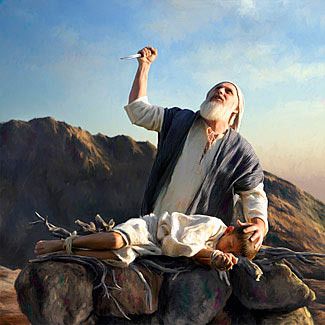
 photo haj1-18L_zpsqhqhno0l.jpg
God commanded Abraham to sacrifice Isaac, had God not
relented would it have been right to kill Isaac since God
commanded it?


Wes Morriston, philosopher from University of Colorado, Boulder, writes an excellent [1] paper against divine command theory and specifically attacking William Lame Craig. The guys over at secular outpost (or as I like to call it, "Kill Bill's ideas) link to that article. Divine command theory in it's simple direct form says that what is good is that which God commands and it is good because God commands it. The paper is very long and covers a lot of ground, I have isolated what I think is one of the  key points and i will deal with just that small but important section: the ground of moral duty as grounded in the divine.

Craig is answwering the Euthyphro dilemma, This is a problem raised by Plato in the from of Socrates question to Euthyphro, " is found in Plato's dialogue Euthyphro, in which Socrates asks Euthyphro, "Is the pious (τὸ ὅσιον) loved by the gods because it is pious, or is it pious because it is loved by the gods?"  [2] The answer Craig takes to it is one I have also argued for years, that the good flows out of God's character so it's neither arbitrary now does it constitute a standard above God.

Morriston takes issue with Craig at the point where he says the good "flows out of God's character.

One might wonder about the phrase ‘flow necessarily from his moral nature’. Does it mean that each divine command is necessitated by God’s moral nature – that God’s moral nature makes it impossible for him not to command what he does in fact command? Or does it mean merely that it is necessary that all divine commands flow from God’s moral nature, where the ‘flow from’ relation is understood in a weaker sense ?Craig doesn’t say.[3]

He's really conflating two different issues here: (1) do all commands flow equally from God's nature (2) could god chose to violate his nature? The question here is still veg because we are talking about Biblical commands? Or, are we talking about the human capacity to be moral itself? The latter is the kjey to the answer. Paul tells us the moral law is written on the heart (Romans 2:6-14). C.S. Lewis shows a great harmony in many Axial age civilizations as far flung as Briton and China. Although there are problems will will bracket them for fn.[4] These similarities of course don't prove divine inspiration but they may indicate that if human moral nature is God given then God's commands must be generally flowing through that basic moral nature and even though filtered through cultural constructs the basic sense of moral goodness grounded in agapic sense of human dignity is possible universally. So the latter "weaker sense" would come closer to the answer, although I would not think of it as "weaker."

But whatever the details, it’s clear that the main point of the claim that God’s commands ‘flow necessarily from his moral nature’ is to head off a familiar objection to the divine command theory. It will be convenient to refer to it as ‘ the arbitrariness objection’. It goes something like this. Either God has good reasons for his commands or he does not. If he does, then those reasons (and not God’s commands) are the ultimate ground of moral obligation. If he does not have good reasons, then his commands are completely arbitrary and may be disregarded. Either way, the divine command theory is false.[5]
That's a fair assessment of the dilemma, and the answer is all moral motions ultimately point to love. God's character is love, thus there is warrant for the assertion that Divine love stands behind morality that God's  commands are neither arbitrary nor are they stemming from a source higher than God. "Those reasons" are bound up in God's character, They are of concern to God because he is love. Obviously they are not "completely arbitrary since they arise out of the same basic aspect of who and what God is. The question about the goodness of reasons is transgression upon the concept of the transcendental signified. Truth is what is and the basis of what is is the ground being ie God). Thus God's reasons are a priori good not because they arbitrarily manufacture good via command but because they stem from the nature of God which is the ground of being. This idea that God's commands are arbitrary ( the "arbitrariness objection") is regarded as an ace in the hole by many skeptical philosopjhers.

Some philosophers think the arbitrariness objection is decisive (Shafer-Landau (2004), 80–81). But Craig thinks his version of the divine command theory is completely untouched by it. To see why, consider the duty to be generous to those in need. On Craig’s account, we can endorse all three of the following claims.

(A) God has a good reason for commanding generosity: generosity is good.

(B) Generosity is good because, and only because, God is (essentially) generous.

(C) Nevertheless, it takes a divine command to turn generosity into a duty for us.
Given (A), it might be thought that there is nothing objectionably arbitrary about God’s commanding generosity. Given (B), the goodness of God’s reason for issuing this command is rooted in his moral nature; it is not therefore independent of God. (C), finally, assures us that it is God’s command, and not merely the goodness of generosity, that raises it to the level of a moral imperative.[6] 
I take issue with the last sentence and with B to which it refers. "Generosity is good because, and only because, God is (essentially) generous." Basically true but it requires some tweaking that zi think matters. It's not just that God is generous so requires that we be generous but that generosity is a of love, it's an expression of love in the agapic sense., The reason It is played that generosity is good only because God is generous is to avoid the prospect of atheists claiming they can be generous without God. Of course that's  begging the question unless it's answering a certain kind of moral argument for God. If God exists it's legitimate to think that goodness flows from God's nature, If there is no God we are just Whistling in the dark anyway. From a purely metaethical standpoint generosity could be grounded in any number of things such as social contract theory, but they would all have a hard time establishing an ought denontologically without going teleological. It would be more certain to assume grounding in God. But switching from answering Euthephro a God argument would change the trajectory of the answers.

"Many questions remain. Could God have failed to command generosity? Could generosity have failed to be a duty ? Just what degree of generosity is required ? And why did God choose to require just that degree of generosity rather than some other ? " If love is the background of the moral universe, as is my assumption, (ala Joseph Fletcher) [7] then the direct proximity of God's will to a specific command might be less important in terms of metaethical theory than understanding the nature of love. In other words, rather than seeking to pin down a list of rules we need to be seeking ways to learn to love people. Of course that doesn't mean it's unimportant that God issues a particular command. Yet the important thing is not keeping rules but internalizing values of the good.

At this point he moves on to a second objection. If God turned around tomorrow and ordered something that is now evil such as eating children would it then become good to do so? Craig says can't happen it's opposed to God's nature.[8] That should be enough for rational people. But if you are an atheist looking to throw a wrench in the works of belief, or a philosopher, no it's not. If you are both well better start looking for that eye of the needle. "Even if such commands are incompatible with God’s nature, isn’t it still true that according to the divine command theory eating our children would be morally obligatory if – per impossible – God commanded it?" It's another version of  can God make a rock so big he can't lift it? The answer I've always given to that is "why should we expect God to do non sense.?"  It's a cleaver question for skeptics to ask because it's a perfect double bind. If we do say "well theoretically if God did command even God would be wrong," we have relativized God's authority. If we say no we relativize his goodness. Either way we make belief in higher power seem silly.

Morriston kind of concedes that the question doesn't make sense and thus it doesn't matter what is said but he still concludes in such a way as to raise doubt with the oblivious:

Remember that for Craig God is, necessarily, a perfect being. If that is understood, then it really doesn’t matter to Craig’s position whether it’s impossible for a perfect being to command such a thing. Why ? Because if a perfect being commanded it, the being would have a morally sufficient reason for doing so; and if – per impossibile, perhaps – a perfect being had a morally sufficient reason for commanding us to eat our children, we should do it. If I am right about this, then Craig’s divine command theory escapes refutation – not for the reason he gives, but rather because the alarming-sounding counterpossibles implied by it turn out to true! 10 What’s so special about being God-like? Given fairly standard assumptions about God’s moral nature, [9]

The real problem is that the skeptics have underrated the scope of God's relation to reality. We are not just talking about the most powerful being. They approach it like the question is "this powerful guy is not like this but what if he was.?" It's not about the will of a powerful guy. It's about the nature of reality and trust and the relationship of that to love itself. Like the rock issue I refuse to believe that truth can be stumped by nonsense. Truth is what is (a simplified version of correspondence theory) and God is Being itself. Love is the background of the moral universe because God is love and God is the basis of reality. Thus if God is love, truth, and being. Thus morality is an extension of the good, and the good is wrapped up with the nature of truth and being. We must understand particular moral codes as best we can having filtered moral motions through culture. There is a reality back there behind it all that can't be cheated by questions like the one about the rock.


[1] Wes Morriston, "God and the ontological foundation of morality," Religious Studies,   Cambridge University Press 2011 (2012) 48, 15–34 f doi:10.1017/S0034412510000740 URL:
http://spot.colorado.edu/~morristo/DoesGodGround.pdf  accessed 2/27/2016.

 WES MORRISTON Department of Philosophy, University of Colorado, Boulder, CO 80309-0232 email: Wes.Morriston@Colorado.EDU

[2]Plat, "Euthephro," Five Dialogues, 10a, or see on line copy, see "Euthephro" by Plato,  Translated by Benjamin Jowet, Internet archieve UROL:http://classics.mit.edu/Plato/euthyfro.html

[3] Morriston, op. cit. 18.

[4] C.S. Lewis, The Abolition of man: With Reflection on Education With Special Reference to The Teaching of English in the Upper Forms of Schools. New York, NY: Harper One, 1971, 83.
The problem with this is that it's limited to a segment of history from a period known as the Axial age, roughly from the 900 to 200 BC. The term is from Karl Jaspers. It excludes new world, Africa, Russian steppes and times before and after. Bit it is probably the best attempt to show universal moral sense. It does at least show large segments of humanity share similar moral motions.

[5] Morriston, op.cit., 18-19

[6] Ibid. 19-20

[7] Joseph Fletcher, Situation Ethics The new Moraloty.Louisville, Lomdon:  Westminster John Knox Press. 1966,    58.
Fletcher discusses the same dilemma but not by the name "Euthephro." He discusses the nominalist position and argues that modern ethical thinking is nominalist and that is what's wrong with it. That's why philosophers ask questions about this dilemma because they can't ground moraloity in love since they are reductionists and can't understand values.

[8] Morriston, op cit.,20-21

[9] Ibid

Wednesday, November 11, 2015

Resurrection of Christ: Historical or History Making?


Photobucket


Jurgen Moltman


I affirm the literal resurrection of Christ, as I affirm the Nicene creed. Unfortunately, affirming it and proving it are two different things. Many apologists try to use the Resurrection as proof in itself that Jesus was the Son of God. The problem is, the event itself has to be proven, and is of equal dispute to the claims of Christ deity. Thus, I doubt that it makes a great tool for verifying the claims of the faith, since it is itself such a claim. On the other hand, let us ask ourselves, "was the true purpose of the resurrection as a proof of Jesus validity?" I think not. I think the true purpose was not offer modern scientific "courtroom evidence" of the event, but to confirm in a religious way, for insiders, by provision of an important symbol. Tillich says that a symbol participates in the thing it symbolizes. Thus a bull fighter dying young is a symbol of darning courage going awry, but a non specific figure like the American flag is not a symbol but an emblam. Thus the resurrection of Christ can be a theological symbol and stil be a real event! Thus the true importance of the event is its theological significance and not its market place value as an apologetical tool.

Atheists have argued, but more importantly historians have argued, that a view like that of the resurrection of Christ can't be understood as a historical event, thus can't be proved by historical evidence becuase history is intrinsically naturalistic. Historians must make naturalistic assumptions thus miracle can't play role in history. The first thing to notice about this argument is that far from contradicting what I've said, it supports my position in that I argue that atheist's only have ideological objections to the resurrection. There's no historically based disproof. If untrained non-historian apologists mistakenly argue "this is historical" they atheists objects are not based upon disproving the historically based evidence they are only based upon ideological assumptions. Evoking the rules of hsitory is also ideological assumption.

Secondly, I don't say "O I'm going to prove the resurrection historically." In the heat of argument I may have said words to that effect, but my actual position is not "yes we definitely prove the resurrection." There is no way to prove something that hapepned 2000 years ago, at least not to the point of making it indubitable. The only way to do that would be to go back in time and watch it happen. It's as unfair a requirement that it be "historical" as it is to say we are going to prove it historically. Either way is an unfair requirement becuase it's not something that can be proved. The prohibition on supernatural evidence in history not withstanding it's unrealistic, and therefore, unfair, to expect it to be proved. Be that as it may all is not lost for the historically minded apologist. There is still a good argument to be made for the resurrection and it invovles historically-based evidence.

The better decision making paradigm is not "proof," that is unrealistic, but "warrant." If we don't claim we proving historical events but rather that understanding an event in a certain way (as true) is warranted by the evidence, then we are not imposing the unrealistic burden of proof nor are we evoking the category of "history" to explain it thus we are not transgressing historical protocols. Rather we are finding that the placing of confidence in a hypothesis for private belief is warranted by the evidence. Toward this end we need to see text as an artifact. So rather than say "this is true becasue so and so says it,"we are saying "this is what the early community of faith believed as evidence by their texts. To the extent that we can trust their testimony we can place confidence in the hypothesis that this belief may communicate a truth. Thus private belief that this is the case is warranted. Thus the resurrection, not put in the cateroy of "historical fact" is nevertheless understood as both a religious symbol and a likely event.
Religious Symbol and Historical Likelihood.

Be that as it may, the event of Christ's resurrection offers more to the unbeliever and the cause of Christian apologetics than one might think given what I wrote. Rather than give up on it as an argument, we need to put it into a different context: we need to abandon the "court room" model of proof in apologetics, and take up a historian's perspective. The point is not that we can prove the resurrection "really happened." The importance of historical evidence surrounding resurrection is its possibility as a history making event. By that I mean, it's not as important to prove "conclusively" that it happened, as it is to show that the perimeters shaped by the evidence still leave open the validity of the possibility that such an event occurred, once one clears away the ideological clutter of naturalism. The evidence need only point to the fact that the belief tenet is still "in the running" as a possibility, not that it actually happened, although we believe, as Christians, that it did happen. The event described cannot included as a historical event, because history as a modern social science is constructed upon naturalistic assumptions; but it can be understood as a history making event, one that shaped the nature of our society and culture.

Away with the Court Room Model


So much past apologetics has been based upon the model of a court room debate, then declared to "prove history." We see this most especially in McDowell's Evidence that Demands a Verdict (the classic case). We also see it in the works of a vast array of apologists who say things like, "the man who invented rules for court room evidence (Simon Greenleaf--1783-1953 ) argued for the Resurrection, and he was a smart lawyer, so he must be right." But historians do not "prove" historical 'arguments' by holding courtroom debates! If we are going to make historical claims for the resurrection, we have to think like historians, and not like lawyers. We have to hold the evidence to the perimeters of historical evidence, not to those of jurisprudence.

History is probability. It's not mathematical probably, but it is probabilistic. One cannot go back in time and verify the assumptions of historians, all we can do is argue from extrapolated data as to the most likely conclusion based upon the "facts." But how are these "facts" ascertained? They are not derived from debate, they are not derived from physical artifacts, and they are certainly not given in any kind of absolute certainty. Many skeptics place the level of confirmation they seek on a par with a TV camera recording an event it happens. History is documents! History is not a documentary featuring live footage, although such material is no doubt going to be included in future historical records. But history is the impression we find most likely as a probabilistic guess based upon the data we find available in written documents of the past. Historians do debate documents, but they do not say things like, "would this be accepted in a courts of law?" Historians don't a flying spit wad about what is accepted in a court of law (but one hears that phrase in apologetics quite a bit). Thus, in accessing the prospects for the validity of the resurrection, one cannot worry about courtrooms, or about exact proof as though we could take a TV camera to the tomb and watch the angel move the stone. The best we can ever do is to access the possibility and its place int he likelihood of events, given our world view assumptions vis a vie, supernatural events.

The History Making Concept.

In his great ground breaking work, Theology of Hope (1964) Jurgen Moltmann did something radical. It suited Moltmann to be radical because he was one of the major influences upon radical theology of the 60s, including liberation theology. Being German Moltmann took the structures of historical scholarship very seriously. He knew that historiography of the nineteenth century had ruled out any but naturalistic assumptions in the category of "historical." Moltmann argues, the rules of history exclude the miraculous. This is because historians, as heirs to the enlightenment, automatically exclude the supernatural. For this reason the resurrection cannot be seen as historical, a priori, for the rules of making history are set by an ideology of metaphysical assumptions which dogmatically exclude anything miraculous. History must be predicated upon the assumption of a coherent natural world, therefore, the supernatural cannot be part of history (176). Yet he felt it was important to make a place for the resurrection in modern thought. So he argued for changing the rules. Rather than calling the resurrection "historical" he calls it "history making." The belief itself has shaped the outline of historical event. This is apart from the question of its truth content, the fact of belief in it made history what it is. This introduces the concept of understanding the belief as history making thus the evidence that supports the belief is also history making. His solution: change the rules. We wont call it "historical" but "history making."

"The resurrection of Christ does not mean a possibility within the world and its history, but a new possibility altogether for the world, for existence, and for history. Only when the world can be understood as contingent creation out of the freedom of God...does the rising of Christ become intelligible as nova create [new creation]. ...it is necessary to expose the profound irrationality of the rational cosmos of the tech scientific world." (179)

"The resurrection of Christ is without prattle in the history known to us. But it can be for that very reason regarded as a 'history making event' in the light of which all other history is illumined, called into question and transformed." (180)

Skeptics are too quick to argue that the resurrection is not historical fact. Before they jump into this fray, they should first ask themselves about the nature of historical facts. Most historical "facts" are not proven. "History" (whatever that is) says that Davy Crockett died at the Alamo, yet evidence indicates he did not.* History, like science is a social construct, and is determined by those with the clout to write history. In modernity we have gained an anti-supernatural bias, and so the believer is forced to ask rhetorical questions like "did Jesus raise form the dead?" and then to answer them rhetorically. The German Theologian Jurgen Moltmann changes the rules. Rather than ask if the resurrection is "historical" he merely argues that it doesn't have to be, it is history making. We change the rules of the debate because predicated upon the preaching of the resurrection is one of the most profound developments of world history; the growth of the Christian faith which has shaped the entire Western tradition. We view the Resurrection of Christ as history making because the belief in it did change history, the doctrine of it has made history, and belief today shapes the basis of all Christian doctrine. We put aside the hypocritical skepticism of naturalistic circular arguments and allow ourselves to accept the verdict of a history that has been made by faith in the event, in light of the fact that there is enough there to base faith upon. (see Jurgen Moltmann, The Crucified God, 1968).

The doctrine furnishes the basis for hope, when grasped in faith, that offers a much more profound answer to any of questions about life and death than any form of skepticism or pride in confusion ever could. Rather than merely declare a rules change, I will argue that this rules change is warranted based upon the evidence. In other words, not that the resurrection can be "proven" in the same sense that any other aspect of historical research can be proven, but that the resurrection evidence is credible enough that one can feel confident in asserting its truth as a tenet of faith. The actual case can never be proven, or disproved, but the evidence allows one to believe with impunity.

In keeping with my policy of enlightening the reader about my sources, I must point out that I do lean heavily upon two major evangelical sources here: F.F. Bruce, and William Lane Craig. Bruce is, however, one of the most highly respected Evangelical scholars, even among the liberal camp, and Craig is renown as a highly credible and effective apologist. The other sources such as D. E. H. Whiteley, Stephen Neil, Gaalyah Cornfeld, and Luke Timothy Johnson are basically liberal or moderate.A few major liberal theologians, such as Moltmann and Wolfhart Pannenberg have defended faith in the resurrection.


Historical Verdict Reversed


"The real case for skepticism of the resurrection of Christ was actually developed by 19th century liberal theology, and though they don't know it, the objections of most Internet skeptics today are echoes of those arguments. But in the postwar era even major liberal theologians began to defend the resurrection. Ernst Kasemann, student of Bultmann, at Marburg in 1953 argued that Bultmann's skepticism toward the historical Jesus was biased and Kasemann re-opened a new Quest for the historical Jesus. The great modern liberal theologian Wolfheart Paennberg argued for the resurrection of Jesus. Hans Grass argued that the resurrection cannot be dismissed as mere myth, and Hans Freiherr von Campenhausen defended the historical credibility of Jesus empty tomb." (in William Lane Craig, "Contemporary Scholarship and The Historical Evidence for the Resurrection of Jesus Christ," Truth, 1 (1985): 89-95. "Equally startling is the declaration of one of the world's leading Jewish theologians Pinchas Lapid, that he is convinced on the basis of the evidence that Jesus of Nazareth rose from the dead. Lapide twits New Testament critics like Bultmann and Marxsen for their unjustified skepticism and concludes that he believes on the basis of the evidence that the God of Israel raised Jesus from the dead." (Craig, Ibid.)

"According to Jakob Kremer, "By far most exegetes hold firmly to the reliability of the biblical statements concerning the empty tomb" and he furnishes a list, to which his own name may be added, of twenty-eight prominent scholars in support. I can think of at least sixteen more names that he failed to mention. Thus, it is today widely recognized that the empty tomb of Jesus is a simple historical fact. As D. H. van Daalen has pointed out, "It is extremely difficult to object to the empty tomb on historical grounds; those who deny it do so on the basis of theological or philosophical assumptions." But assumptions may simply have to be changed in light of historical facts.:"(Ibid.)

Before the apologist can even posit the turth of the resurrection, his truth is refuted by the very nature of historical "facts" as modern thought construes them; supernatural events cannot be part of history. But Moltmann turns this around on the nature of modern thought by arguing that before modern thought can posit a naturalistic history, the content of history is already shaped by supernatural claims.

In response to the issue that history must make naturalistic assumptions, thus miracles must be excluded.


Yes but that's just a simple matter of you not understanding my argument. I"m not saying "this is true because they say it is." I'm saying:

(1) Gospels are historical artifact that ques us in to a historically validated set of readigns that can be understood as even older artifacts.

(2) these artifacts testify to the early nature of the empty tomb as a belief of the community.

(3) community contained eye witnesses. so this fact would have been screened out if it as false.

(4) It was spread about from an early time thus we can infer form it that the eye witnesses to the situation approved.

(5)not proof but it is a good reason to assume it's valid as a belief.It has historical verisimilitude.

The standard I set my arguments:The Resurrection was a history making event. Whatever truly happened, the actual events which are make by the claims of witnesses and faith in the veracity of those witnesses, the upshot of it all is that the historical probabilities suggest the likelihood of an event, and that event shaped the nature of history itself. The faith claims cannot be historical claims, but they don't have to be. The faith itself is justified, it cannot be ruled out by history, but instead lies at the base of modern history in some form. We can suggest throughout the strength of the evidence that those actual events were the very events attested to in the Gospels. We cannot prove this claim with absolute certainty, but the warrant provided by the evidence itself is strong enough to make the historical nature of the religious hope valid. Some religious hopes are just ruled out by the facts. For example, the idea that the Native Americans are part of the 10 lost tribes of Israel; this can be dispelled by genetics as well as dentistry. The Resurrection, on the other hand, can be accepted as likely Given the suspension of ideological objections of Naturalism.

*Crockett died at the Alamo the evidence clearly indicates that (I would have to assert it anyway,I am rom Texas). The point is it's not something we can prove. We call it "fact" but it's only assumption based upomn perponderence of the evidence.


Monday, April 28, 2014

Resurrection of Christ, Historical or History Making?


Photobucket
Jurgen Motlmann

 Atheists have argued, but more importantly historians have argued, that a view like that of the resurrection of Christ can't be understood as a historical event, thus can't be proved by historical evidence becuase history is intrinsically naturalistic. Historians must make naturalistic assumptions thus miracle can't play role in history. The first thing to notice about this argument is that far from contradicting what I've said, it supports my position in that I argue that atheist's only have ideological objections to the resurrection. There's no historically based disproof. If untrained non-historian apologists mistakenly argue "this is historical" they atheists objects are not based upon disproving the historically based evidence they are only based upon ideological assumptions. Evoking the rules of hsitory is also ideological assumption.

Secondly, I don't say "O I'm going to prove the resurrection historically." In the heat of argument I may have said words to that effect, but my actual position is not "yes we definitely prove the resurrection." There is no way to prove something that hapepned 2000 years ago, at least not to the point of making it indubitable. The only way to do that would be to go back in time and watch it happen. It's as unfair a requirement that it be "historical" as it is to say we are going to prove it historically. Either way is an unfair requirement becuase it's not something that can be proved. The prohibition on supernatural evidence in history not withstanding it's unrealistic, and therefore, unfair, to expect it to be proved. Be that as it may all is not lost for the historically minded apologist. There is still a good argument to be made for the resurrection and it invovles historically-based evidence.
 The better decision making paradigm is not "proof," that is unrealistic, but "warrant." If we don't claim we proving historical events but rather that understanding an event in a certain way (as true) is warranted by the evidence, then we are not imposing the unrealistic burden of proof nor are we evoking the category of "history" to explain it thus we are not transgressing historical protocols. Rather we are finding that the placing of confidence in a hypothesis for private belief is warranted by the evidence. Toward this end we need to see text as an artifact. So rather than say "this is true becasue so and so says it,"we are saying "this is what the early community of faith believed as evidence by their texts. To the extent that we can trust their testimony we can place confidence in the hypothesis that this belief may communicate a truth. Thus private belief that this is the case is warranted. Thus the resurrection, not put in the cateroy of "historical fact" is nevertheless understood as both a religious symbol and a likely event.
 Religious Symbol and Historical Likelihood.


I affirm the literal resurrection of Christ, as I affirm the Nicene creed. Unfortunately, affirming it and proving it are two different things. Many apologists try to use the Resurrection as proof in itself that Jesus was the Son of God. The problem is, the event itself has to be proven, and is of equal dispute to the claims of Christ deity. Thus, I doubt that it makes a great tool for verifying the claims of the faith, since it is itself such a claim. On the other hand, let us ask ourselves, "was the true purpose of the resurrection as a proof of Jesus validity?" I think not. I think the true purpose was not offer modern scientific "courtroom evidence" of the event, but to confirm in a religious way, for insiders, by provision of an important symbol. Tillich says that a symbol participates in the thing it symbolizes. Thus a bull fighter dying young is a symbol of darning courage going awry, but a non specific figure like the American flag is not a symbol but an emblem. Thus the resurrection of Christ can be a theological symbol and still be a real event! Thus the true importance of the event is its theological significance and not its market place value as an apologetic tool.

Be that as it may, the event of Christ's resurrection offers more to the unbeliever and the cause of Christian apologetics than one might think given what I wrote. Rather than give up on it as an argument, we need to put it into a different context: we need to abandon the "court room" model of proof in apologetics, and take up a historian's perspective. The point is not that we can prove the resurrection "really happened." The importance of historical evidence surrounding resurrection is its possibility as a history making event. By that I mean, it's not as important to prove "conclusively" that it happened, as it is to show that the perimeters shaped by the evidence still leave open the validity of the possibility that such an event occurred, once one clears away the ideological clutter of naturalism. The evidence need only point to the fact that the belief tenet is still "in the running" as a possibility, not that it actually happened, although we believe, as Christians, that it did happen. The event described cannot included as a historical event, because history as a modern social science is constructed upon naturalistic assumptions; but it can be understood as a history making event, one that shaped the nature of our society and culture.

 Away with the Court Room Model


So much past apologetics has been based upon the model of a court room debate, then declared to "prove history." We see this most especially in McDowell's Evidence that Demands a Verdict (the classic case). We also see it in the works of a vast array of apologists who say things like, "the man who invented rules for court room evidence (Simon Greenleaf--1783-1953 ) argued for the Resurrection, and he was a smart lawyer, so he must be right." But historians do not "prove" historical 'arguments' by holding courtroom debates! If we are going to make historical claims for the resurrection, we have to think like historians, and not like lawyers. We have to hold the evidence to the perimeters of historical evidence, not to those of jurisprudence.

History is probability. It's not mathematical probably, but it is probabilistic. One cannot go back in time and verify the assumptions of historians, all we can do is argue from extrapolated data as to the most likely conclusion based upon the "facts." But how are these "facts" ascertained? They are not derived from debate, they are not derived from physical artifacts, and they are certainly not given in any kind of absolute certainty. Many skeptics place the level of confirmation they seek on a par with a TV camera recording an event it happens. History is documents! History is not a documentary featuring live footage, although such material is no doubt going to be included in future historical records. But history is the impression we find most likely as a probabilistic guess based upon the data we find available in written documents of the past. Historians do debate documents, but they do not say things like, "would this be accepted in a courts of law?" Historians don't a flying spit wad about what is accepted in a court of law (but one hears that phrase in apologetics quite a bit). Thus, in accessing the prospects for the validity of the resurrection, one cannot worry about courtrooms, or about exact proof as though we could take a TV camera to the tomb and watch the angel move the stone. The best we can ever do is to access the possibility and its place int he likelihood of events, given our world view assumptions vis a vie, supernatural events.

 The History Making Concept.

In his great ground breaking work, Theology of Hope (1964) Jurgen Moltmann did something radical. It suited Moltmann to be radical because he was one of the major influences upon radical theology of the 60s, including liberation theology. Being German Moltmann took the structures of historical scholarship very seriously. He knew that historiography of the nineteenth century had ruled out any but naturalistic assumptions in the category of "historical." Moltmann argues, the rules of history exclude the miraculous. This is because historians, as heirs to the enlightenment, automatically exclude the supernatural. For this reason the resurrection cannot be seen as historical, a priori, for the rules of making history are set by an ideology of metaphysical assumptions which dogmatically exclude anything miraculous. History must be predicated upon the assumption of a coherent natural world, therefore, the supernatural cannot be part of history (176). Yet he felt it was important to make a place for the resurrection in modern thought. So he argued for changing the rules. Rather than calling the resurrection "historical" he calls it "history making." The belief itself has shaped the outline of historical event. This is apart from the question of its truth content, the fact of belief in it made history what it is. This introduces the concept of understanding the belief as history making thus the evidence that supports the belief is also history making. His solution: change the rules. We wont call it "historical" but "history making."

"The resurrection of Christ does not mean a possibility within the world and its history, but a new possibility altogether for the world, for existence, and for history. Only when the world can be understood as contingent creation out of the freedom of God...does the rising of Christ become intelligible as nova create [new creation]. ...it is necessary to expose the profound irrationality of the rational cosmos of the tech scientific world." (179)

"The resurrection of Christ is without prattle in the history known to us. But it can be for that very reason regarded as a 'history making event' in the light of which all other history is illumined, called into question and transformed." (180)

Skeptics are too quick to argue that the resurrection is not historical fact. Before they jump into this fray, they should first ask themselves about the nature of historical facts. Most historical "facts" are not proven. "History" (whatever that is) says that Davy Crockett died at the Alamo, yet evidence indicates he did not. History, like science is a social construct, and is determined by those with the clout to write history. In modernity we have gained an anti-supernatural bias, and so the believer is forced to ask rhetorical questions like "did Jesus raise form the dead?" and then to answer them rhetorically. The German Theologian Jurgen Moltmann changes the rules. Rather than ask if the resurrection is "historical" he merely argues that it doesn't have to be, it is history making. We change the rules of the debate because predicated upon the preaching of the resurrection is one of the most profound developments of world history; the growth of the Christian faith which has shaped the entire Western tradition. We view the Resurrection of Christ as history making because the belief in it did change history, the doctrine of it has made history, and belief today shapes the basis of all Christian doctrine. We put aside the hypocritical skepticism of naturalistic circular arguments and allow ourselves to accept the verdict of a history that has been made by faith in the event, in light of the fact that there is enough there to base faith upon. (see Jurgen Moltmann, The Crucified God, 1968).

The doctrine furnishes the basis for hope, when grasped in faith, that offers a much more profound answer to any of questions about life and death than any form of skepticism or pride in confusion ever could. Rather than merely declare a rules change, I will argue that this rules change is warranted based upon the evidence. In other words, not that the resurrection can be "proven" in the same sense that any other aspect of historical research can be proven, but that the resurrection evidence is credible enough that one can feel confident in asserting its truth as a tenet of faith. The actual case can never be proven, or disproved, but the evidence allows one to believe with impunity.

In keeping with my policy of enlightening the reader about my sources, I must point out that I do lean heavily upon two major evangelical sources here: F.F. Bruce, and William Lane Craig. Bruce is, however, one of the most highly respected Evangelical scholars, even among the liberal camp, and Craig is renown as a highly credible and effective apologist. The other sources such as D. E. H. Whiteley, Stephen Neil, Gaalyah Cornfeld, and Luke Timothy Johnson are basically liberal or moderate.A few major liberal theologians, such as Moltmann and Wolfhart Pannenberg have defended faith in the resurrection.


Historical Verdict Reversed


"The real case for skepticism of the resurrection of Christ was actually developed by 19th century liberal theology, and though they don't know it, the objections of most Internet skeptics today are echoes of those arguments. But in the postwar era even major liberal theologians began to defend the resurrection. Ernst Kasemann, student of Bultmann, at Marburg in 1953 argued that Bultmann's skepticism toward the historical Jesus was biased and Kasemann re-opened a new Quest for the historical Jesus. The great modern liberal theologian Wolfheart Paennberg argued for the resurrection of Jesus. Hans Grass argued that the resurrection cannot be dismissed as mere myth, and Hans Freiherr von Campenhausen defended the historical credibility of Jesus empty tomb." (in William Lane Craig, "Contemporary Scholarship and The Historical Evidence for the Resurrection of Jesus Christ," Truth, 1 (1985): 89-95. "Equally startling is the declaration of one of the world's leading Jewish theologians Pinchas Lapid, that he is convinced on the basis of the evidence that Jesus of Nazareth rose from the dead. Lapide twits New Testament critics like Bultmann and Marxsen for their unjustified skepticism and concludes that he believes on the basis of the evidence that the God of Israel raised Jesus from the dead." (Craig, Ibid.)

"According to Jakob Kremer, "By far most exegetes hold firmly to the reliability of the biblical statements concerning the empty tomb" and he furnishes a list, to which his own name may be added, of twenty-eight prominent scholars in support. I can think of at least sixteen more names that he failed to mention. Thus, it is today widely recognized that the empty tomb of Jesus is a simple historical fact. As D. H. van Daalen has pointed out, "It is extremely difficult to object to the empty tomb on historical grounds; those who deny it do so on the basis of theological or philosophical assumptions." But assumptions may simply have to be changed in light of historical facts.:"(Ibid.)

Before the apologist can even posit the turth of the resurrection, his truth is refuted by the very nature of historical "facts" as modern thought construes them; supernatural events cannot be part of history. But Moltmann turns this around on the nature of modern thought by arguing that before modern thought can posit a naturalistic history, the content of history is already shaped by supernatural claims.


Conclusion


The standard I set my arguments:The Resurrection was a history making event. Whatever truly happened, the actual events which are make by the claims of witnesses and faith in the veracity of those witnesses, the upshot of it all is that the historical probabilities suggest the likelihood of an event, and that event shaped the nature of history itself. The faith claims cannot be historical claims, but they don't have to be. The faith itself is justified, it cannot be ruled out by history, but instead lies at the base of modern history in some form. We can suggest throughout the strength of the evidence that those actual events were the very events attested to in the Gospels. We cannot prove this claim with absolute certainty, but the warrant provided by the evidence itself is strong enough to make the historical nature of the religious hope valid. Some religious hopes are just ruled out by the facts. For example, the idea that the Native Americans are part of the 10 lost tribes of Israel; this can be dispelled by genetics as well as dentistry. The Resurrection, on the other hand, can be accepted as likely Given the suspension of ideological objections of Naturalism.

Monday, April 22, 2013

Necessary Being is not Impossible

 photo pWorlds.png


It seems to me that the accurate position of the Christian (or any other theist) is that it is necessary that God possess some contingent property or other, but there is no particular contingent property that God possesses necessarily. Am I going in the right path, or am I missing some important aspect of your argument? Thank you for taking the time to read this. (letter to William Lane Craig)[1]


....I'm always running into atheists who try to argue that necessary being is impossible. The other day I saw an atheist on a message board who was wondering "why do Christians mess around with this absurd idea of God as necessary? Why don't they just say God is contingent, it's so much more logical since God in the Bible is contingent?" In trying to clarify this mystery for him he plunged deeper into the unknown and asserted that a necessary God can't exist becuase being necessary would mean he can't create or do anything. Intrigued by this bit of whimsy I had to find out why. The logic is pretty straight forward: If God creates something he becomes creator. If he becomes creator then his status as creator is contingent upon his having done it. That makes God contingent: The argument might look like this:
....The problem is this is totally wrong, in fact he's wrong on both counts: it would be absurd to posit that God is contingent, then he wouldn't be God anymore, and it would be it is false to say that God become contingent if he does an act. Psalm 90:2 declares: "Before the mountains were born or you brought forth the whole world, from everlasting to everlasting you are God." God is eternal. While Colossians 1:16 says: "For in him all things were created: things in heaven and on earth, visible and invisible, whether thrones or powers or rulers or authorities; all things have been created through him and for him."
....In other words, God is eternal and creator of all that is. That means all that is is contingent upon God who has always been, thus having never been created and not being dependent upon other things God is not contingent but necessary. God's necessary status is not only based upon being NON-contingent but upon being necessary to all that is as the lynch pen and origin of it's existence. This has been the basic Christian concept since before Christianity: the Hebrew faith had it first (Genesis 1:1 for example). The one major thing that sets God of the Bible apart from all other concepts of God is the fact that it is based upon God as necessary and all things as contingent upon God. Zeus and Thor and Ishtar and all the gods of mythology are contingent, they are all produced by parents or the abyss or some such thing that preceded their existence and brought them into being. Not so with the God of the Bible he is the one and only God-figure who is necessary creator, non contingent himself but maker of all that is. It would be a super idiotic move to bail out of the whole tradition and render God on a par with all the godages of mythology who have only recently found new fan clubs.
....It's also wrong to assert that action makes God contingent. In all the message board fracases of which I've been apart I've gathered three basic concepts of contingent: that which can fail or cease to exist; that which is dependent upon something else (ontologically higher up the ladder of hierarchy) for its existence, or that which is not contradictory if the term is substituted for another. This last one is the counterpoint to logical necessity: All husbands are married men is a logically necessary sentence. If you change the terms; all Texans are married men, it becomes a matter of empirical nature. Perhaps only married men do live in Texas, we have to go check. But the concept of "married man" is descried as "husband" thus all husbands are married men and we know that just by knowing the meaning of the word. Yet this last version of contingency can be ruled out because we are not discussing the ontological argument thus I have not argued that God's existence can be understood from the nature of the terms. The other two versions can be collapsed into one thing: that which can cease or fail to exist, does so because the conditions that make it so could have changed or could change in future. So really contingency is basically about dependence for existence upon something else.
....Once we understand this we can see that God can't be contingent. If he was that would make him a creature then he would not be form everlasting to everlasting nor would he be the creator of all things. He would be mere demiurge. The creator of God would be God and there would still be a God so the atheist's purpose in argument would still be frustrated. Moreover, the doing of actions such as creation does not render God contingent. This argument really depends upon treating treating contingency like a virus. If God is contingent in one respect, such as his title as creator, then he becomes wholly contingent. That's only a title. God's actions do not make him what he is. His actions are an extension of who he is they dont' determine who he is. Contingency is not like a disease that spreads to the whole being. God's actions are contingent, they are contingent upon God's essence as necessary being.
....The atheist letter writer addressing William Lane Craig, speaks of contingent "proprieties" of God (at the top). I don't think contingency is a property. Its' a mode of being. It corresponds to the modal operators, such a necessity and contingency. In this case it's not the mode of being for God himself, not his essence, that thing that makes him what he is, his divine nature, but the mode of being for his title as creator, for example. So God can be contingent in title as creator but so what? Had God not created he would still be. The things he created would not be but he would still be. Therefore, God does not become contingent being if he becomes does contingent acts.
.... The standard concept for which I argue is always that God is being itself not merely "a being." This concept would help us here too. To the letter writer, Craig could have said (if using this concept) that since he acknowledges that some form of being must be that basic acknowledges God since God is the term we take to the concept of being itself or the ground of being. That is what is being expressed "Bede Rundle's position that it is necessary that something or other exist (namely, some physical Universe or other), but nothing in particular exists necessarily." That does not exclude God if God is being itself. IF God is a particular localized being, one of many then it might exclude him but how could it exclude the ground of being?


[1] Letter to William Lane Craig, "Must Some Contingent Being or Other exist?" Q and A Reasonable Faith website URL: http://www.reasonablefaith.org/must-some-contingent-being-or-other-exist
The issues with Craig's letter are much more complex then the one's I present here.


Monday, May 14, 2012

Resurrection of Christ, Historical or History Making?


Photobucket
Jurgen Motlmann


 Atheists have argued, but more importantly historians have argued, that a view like that of the resurrection of Christ can't be understood as a historical event, thus can't be proved by historical evidence becuase history is intrinsically naturalistic. Historians must make naturalistic assumptions thus miracle can't play role in history. The first thing to notice about this argument is that far from contradicting what I've said, it supports my position in that I argue that atheist's only have ideological objections to the resurrection. There's no historically based disproof. If untrained non-historian apologists mistakenly argue "this is historical" they atheists objects are not based upon disproving the historically based evidence they are only based upon ideological assumptions. Evoking the rules of hsitory is also ideological assumption.

Secondly, I don't say "O I'm going to prove the resurrection historically." In the heat of argument I may have said words to that effect, but my actual position is not "yes we definitely prove the resurrection." There is no way to prove something that hapepned 2000 years ago, at least not to the point of making it indubitable. The only way to do that would be to go back in time and watch it happen. It's as unfair a requirement that it be "historical" as it is to say we are going to prove it historically. Either way is an unfair requirement becuase it's not something that can be proved. The prohibition on supernatural evidence in history not withstanding it's unrealistic, and therefore, unfair, to expect it to be proved. Be that as it may all is not lost for the historically minded apologist. There is still a good argument to be made for the resurrection and it invovles historically-based evidence.

 The better decision making paradigm is not "proof," that is unrealistic, but "warrant." If we don't claim we proving historical events but rather that understanding an event in a certain way (as true) is warranted by the evidence, then we are not imposing the unrealistic burden of proof nor are we evoking the category of "history" to explain it thus we are not transgressing historical protocols. Rather we are finding that the placing of confidence in a hypothesis for private belief is warranted by the evidence. Toward this end we need to see text as an artifact. So rather than say "this is true becasue so and so says it,"we are saying "this is what the early community of faith believed as evidence by their texts. To the extent that we can trust their testimony we can place confidence in the hypothesis that this belief may communicate a truth. Thus private belief that this is the case is warranted. Thus the resurrection, not put in the cateroy of "historical fact" is nevertheless understood as both a religious symbol and a likely event.
 Religious Symbol and Historical Likelihood.


I affirm the literal resurrection of Christ, as I affirm the Nicene creed. Unfortunately, affirming it and proving it are two different things. Many apologists try to use the Resurrection as proof in itself that Jesus was the Son of God. The problem is, the event itself has to be proven, and is of equal dispute to the claims of Christ deity. Thus, I doubt that it makes a great tool for verifying the claims of the faith, since it is itself such a claim. On the other hand, let us ask ourselves, "was the true purpose of the resurrection as a proof of Jesus validity?" I think not. I think the true purpose was not offer modern scientific "courtroom evidence" of the event, but to confirm in a religious way, for insiders, by provision of an important symbol. Tillich says that a symbol participates in the thing it symbolizes. Thus a bull fighter dying young is a symbol of darning courage going awry, but a non specific figure like the American flag is not a symbol but an emblem. Thus the resurrection of Christ can be a theological symbol and still be a real event! Thus the true importance of the event is its theological significance and not its market place value as an apologetic tool.

Be that as it may, the event of Christ's resurrection offers more to the unbeliever and the cause of Christian apologetics than one might think given what I wrote. Rather than give up on it as an argument, we need to put it into a different context: we need to abandon the "court room" model of proof in apologetics, and take up a historian's perspective. The point is not that we can prove the resurrection "really happened." The importance of historical evidence surrounding resurrection is its possibility as a history making event. By that I mean, it's not as important to prove "conclusively" that it happened, as it is to show that the perimeters shaped by the evidence still leave open the validity of the possibility that such an event occurred, once one clears away the ideological clutter of naturalism. The evidence need only point to the fact that the belief tenet is still "in the running" as a possibility, not that it actually happened, although we believe, as Christians, that it did happen. The event described cannot included as a historical event, because history as a modern social science is constructed upon naturalistic assumptions; but it can be understood as a history making event, one that shaped the nature of our society and culture.

 Away with the Court Room Model


So much past apologetics has been based upon the model of a court room debate, then declared to "prove history." We see this most especially in McDowell's Evidence that Demands a Verdict (the classic case). We also see it in the works of a vast array of apologists who say things like, "the man who invented rules for court room evidence (Simon Greenleaf--1783-1953 ) argued for the Resurrection, and he was a smart lawyer, so he must be right." But historians do not "prove" historical 'arguments' by holding courtroom debates! If we are going to make historical claims for the resurrection, we have to think like historians, and not like lawyers. We have to hold the evidence to the perimeters of historical evidence, not to those of jurisprudence.

History is probability. It's not mathematical probably, but it is probabilistic. One cannot go back in time and verify the assumptions of historians, all we can do is argue from extrapolated data as to the most likely conclusion based upon the "facts." But how are these "facts" ascertained? They are not derived from debate, they are not derived from physical artifacts, and they are certainly not given in any kind of absolute certainty. Many skeptics place the level of confirmation they seek on a par with a TV camera recording an event it happens. History is documents! History is not a documentary featuring live footage, although such material is no doubt going to be included in future historical records. But history is the impression we find most likely as a probabilistic guess based upon the data we find available in written documents of the past. Historians do debate documents, but they do not say things like, "would this be accepted in a courts of law?" Historians don't a flying spit wad about what is accepted in a court of law (but one hears that phrase in apologetics quite a bit). Thus, in accessing the prospects for the validity of the resurrection, one cannot worry about courtrooms, or about exact proof as though we could take a TV camera to the tomb and watch the angel move the stone. The best we can ever do is to access the possibility and its place int he likelihood of events, given our world view assumptions vis a vie, supernatural events.

 The History Making Concept.

In his great ground breaking work, Theology of Hope (1964) Jurgen Moltmann did something radical. It suited Moltmann to be radical because he was one of the major influences upon radical theology of the 60s, including liberation theology. Being German Moltmann took the structures of historical scholarship very seriously. He knew that historiography of the nineteenth century had ruled out any but naturalistic assumptions in the category of "historical." Moltmann argues, the rules of history exclude the miraculous. This is because historians, as heirs to the enlightenment, automatically exclude the supernatural. For this reason the resurrection cannot be seen as historical, a priori, for the rules of making history are set by an ideology of metaphysical assumptions which dogmatically exclude anything miraculous. History must be predicated upon the assumption of a coherent natural world, therefore, the supernatural cannot be part of history (176). Yet he felt it was important to make a place for the resurrection in modern thought. So he argued for changing the rules. Rather than calling the resurrection "historical" he calls it "history making." The belief itself has shaped the outline of historical event. This is apart from the question of its truth content, the fact of belief in it made history what it is. This introduces the concept of understanding the belief as history making thus the evidence that supports the belief is also history making. His solution: change the rules. We wont call it "historical" but "history making."

"The resurrection of Christ does not mean a possibility within the world and its history, but a new possibility altogether for the world, for existence, and for history. Only when the world can be understood as contingent creation out of the freedom of God...does the rising of Christ become intelligible as nova create [new creation]. ...it is necessary to expose the profound irrationality of the rational cosmos of the tech scientific world." (179)

"The resurrection of Christ is without prattle in the history known to us. But it can be for that very reason regarded as a 'history making event' in the light of which all other history is illumined, called into question and transformed." (180)

Skeptics are too quick to argue that the resurrection is not historical fact. Before they jump into this fray, they should first ask themselves about the nature of historical facts. Most historical "facts" are not proven. "History" (whatever that is) says that Davy Crockett died at the Alamo, yet evidence indicates he did not. History, like science is a social construct, and is determined by those with the clout to write history. In modernity we have gained an anti-supernatural bias, and so the believer is forced to ask rhetorical questions like "did Jesus raise form the dead?" and then to answer them rhetorically. The German Theologian Jurgen Moltmann changes the rules. Rather than ask if the resurrection is "historical" he merely argues that it doesn't have to be, it is history making. We change the rules of the debate because predicated upon the preaching of the resurrection is one of the most profound developments of world history; the growth of the Christian faith which has shaped the entire Western tradition. We view the Resurrection of Christ as history making because the belief in it did change history, the doctrine of it has made history, and belief today shapes the basis of all Christian doctrine. We put aside the hypocritical skepticism of naturalistic circular arguments and allow ourselves to accept the verdict of a history that has been made by faith in the event, in light of the fact that there is enough there to base faith upon. (see Jurgen Moltmann, The Crucified God, 1968).

The doctrine furnishes the basis for hope, when grasped in faith, that offers a much more profound answer to any of questions about life and death than any form of skepticism or pride in confusion ever could. Rather than merely declare a rules change, I will argue that this rules change is warranted based upon the evidence. In other words, not that the resurrection can be "proven" in the same sense that any other aspect of historical research can be proven, but that the resurrection evidence is credible enough that one can feel confident in asserting its truth as a tenet of faith. The actual case can never be proven, or disproved, but the evidence allows one to believe with impunity.

In keeping with my policy of enlightening the reader about my sources, I must point out that I do lean heavily upon two major evangelical sources here: F.F. Bruce, and William Lane Craig. Bruce is, however, one of the most highly respected Evangelical scholars, even among the liberal camp, and Craig is renown as a highly credible and effective apologist. The other sources such as D. E. H. Whiteley, Stephen Neil, Gaalyah Cornfeld, and Luke Timothy Johnson are basically liberal or moderate.A few major liberal theologians, such as Moltmann and Wolfhart Pannenberg have defended faith in the resurrection.


Historical Verdict Reversed


"The real case for skepticism of the resurrection of Christ was actually developed by 19th century liberal theology, and though they don't know it, the objections of most Internet skeptics today are echoes of those arguments. But in the postwar era even major liberal theologians began to defend the resurrection. Ernst Kasemann, student of Bultmann, at Marburg in 1953 argued that Bultmann's skepticism toward the historical Jesus was biased and Kasemann re-opened a new Quest for the historical Jesus. The great modern liberal theologian Wolfheart Paennberg argued for the resurrection of Jesus. Hans Grass argued that the resurrection cannot be dismissed as mere myth, and Hans Freiherr von Campenhausen defended the historical credibility of Jesus empty tomb." (in William Lane Craig, "Contemporary Scholarship and The Historical Evidence for the Resurrection of Jesus Christ," Truth, 1 (1985): 89-95. "Equally startling is the declaration of one of the world's leading Jewish theologians Pinchas Lapid, that he is convinced on the basis of the evidence that Jesus of Nazareth rose from the dead. Lapide twits New Testament critics like Bultmann and Marxsen for their unjustified skepticism and concludes that he believes on the basis of the evidence that the God of Israel raised Jesus from the dead." (Craig, Ibid.)

"According to Jakob Kremer, "By far most exegetes hold firmly to the reliability of the biblical statements concerning the empty tomb" and he furnishes a list, to which his own name may be added, of twenty-eight prominent scholars in support. I can think of at least sixteen more names that he failed to mention. Thus, it is today widely recognized that the empty tomb of Jesus is a simple historical fact. As D. H. van Daalen has pointed out, "It is extremely difficult to object to the empty tomb on historical grounds; those who deny it do so on the basis of theological or philosophical assumptions." But assumptions may simply have to be changed in light of historical facts.:"(Ibid.)

Before the apologist can even posit the turth of the resurrection, his truth is refuted by the very nature of historical "facts" as modern thought construes them; supernatural events cannot be part of history. But Moltmann turns this around on the nature of modern thought by arguing that before modern thought can posit a naturalistic history, the content of history is already shaped by supernatural claims.


Conclusion


The standard I set my arguments:The Resurrection was a history making event. Whatever truly happened, the actual events which are make by the claims of witnesses and faith in the veracity of those witnesses, the upshot of it all is that the historical probabilities suggest the likelihood of an event, and that event shaped the nature of history itself. The faith claims cannot be historical claims, but they don't have to be. The faith itself is justified, it cannot be ruled out by history, but instead lies at the base of modern history in some form. We can suggest throughout the strength of the evidence that those actual events were the very events attested to in the Gospels. We cannot prove this claim with absolute certainty, but the warrant provided by the evidence itself is strong enough to make the historical nature of the religious hope valid. Some religious hopes are just ruled out by the facts. For example, the idea that the Native Americans are part of the 10 lost tribes of Israel; this can be dispelled by genetics as well as dentistry. The Resurrection, on the other hand, can be accepted as likely Given the suspension of ideological objections of Naturalism.