Showing posts with label James Hannam. Show all posts

Wednesday, June 25, 2014

James Hannam Likes The Trace of God

 PhotobucketPhotobucket

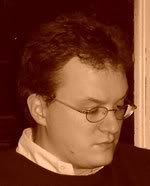
 James Hannam

 This is a review of my book, by James Hannam, Ph.D. in history form Cambridge, he's author of Gensis of Science, a ground breaking book that argues that religion never persecuted science in a systematic or sustained way. I think Hannam is on his way up to being a major academic force and I'm honored that he would review my book, much less favorably.

Sunday, June 22, 2014

(from his blog  Quodlibeta


The Trace of God by Joe Hinman

by James Hannam 

“Are mystical experiences real?” asks Joe Hinman in his new book, The Trace of God: A Rational Warrant for Belief. It should not be too much of a spoiler to reveal that he concludes that they are. Joe has distilled the research on mysticism since William James to determine the commonalities of these experiences and to ask how much they can tell us about aspects of reality not readily accessible to everyday experience.

There are plenty of problems with studying mystical or “peak” experiences. For a start, they are highly subjective and extremely difficult to describe. Francis Spufford gives it a go in his excellent book Unapologetic, but reading about someone else’s experience is always second best. I am a decidedly non-mystical person and so I find the subject alien, if quite fascinating. Joe introduces us to Ralph Hood Jr’s “M scale” which attempts to provide a measure of mystical experience so that they can be compared and validated. In fact, it turns out that there has been a great deal more work in this area than your might imagine. This has revealed uniformities that mean we can certainly group these experiences into a single category.

But are they real? The standard rationalist response is to dismiss mysticism was something that goes on inside our heads, often aided by illicit chemicals. It has no external cause and so it is of interest to neurologists and hippies only. It certainly can’t tell us anything about God. As Joe explains, the problem with this dismissal is that all our experiences are ultimately subjective. We never enjoy unmediated access to reality, but only the most radical solipsist would claim this means that reality doesn’t exist. We know when we are awake and quite often know when we are dreaming. Mysticism isn’t like that – it feels more real than everyday life.

Still, the strength of science, says the rationalist, is that it overcomes subjectivism by insisting on repeatability. Joe marshals Thomas Kuhn and other sociologists of science to argue that scientists are just as prone to herd mentality as the rest of us. I’m not sure this goes far enough to mean a mystical experience can claim parity of subjectivity with a laboratory experiment. But Joe doesn’t want to take things that far. He just argues that the mere fact that mystical life is subjective does not rule it out of court as a valid experience from which we can extrapolate knowledge. His basic argument is that we are justified in accepting religious truths on the ground of our own experiences (what is called the “religious a priori”). Thus, mysticism can provide us for a rational warrant for religious belief.

The bulk of The Trace of God is taken up by detailed rebuttals of sceptical arguments against mysticism: that it is just emotions and feelings, caused by drugs or brain chemistry. Joe blunts these arguments, but he would be the first to admit that he has not proved that mystic experiences are not purely internal. However, by showing that rationalists cannot invalidate mysticism, he leaves the road open to his own argument: these experiences are evidence of God in the way that a footprint is evidence of a wild animal. Mysticism provides a trace that gives us a rational warrant to postulate the existence of the being that gave rise to the spoor. We’re not dealing in proof here. In that respect, Joe’s project is similar to Alvin Plantinga’s work on warrant. But whereas Plantinga floats his justifications on rarefied philosophical air, Joe builds on the solid ground of widely experienced phenomena. No one, as far as I am aware, believes in God because of philosophy. Plenty of people base their religious faith on mystical experience.

This leaves us with two difficult questions: is belief in God warranted by someone else’s mystical experience? And where does religious doctrine fit into experiences that can be wildly inconsistent? Joe doesn’t really deal with the first of these. He concludes that the evidence of mysticism provides him with warrant for knowledge about God that he has anyway. It doesn’t seem to provide much evidence for the non-believer unless that non-believer is willing to invest in a religious interpretation of these experiences. As far as apologetics goes, this is a “come on in, the water’s lovely” argument. 

And what about doctrine? Joe, like me, is an orthodox Christian of liberal persuasion. One senses that, for him, the universal aspects of mysticism are an advantage not a problem. A Christianity that damned the rest of humanity (or worse a Christian sect that damned most Christians into the bargain) is not one that Joe or I would be comfortable with. If mystical experiences provide warrant for believing in God, they also provide evidence of God’s interest in all of humanity. Joe distinguishes between knowing God “face to face” and the knowledge of doctrine. He finds evidence for the distinction in the writings of Paul: the man who had the most famous mystical experience in history. 

Overall, as a first book that breaks new ground in the philosophy of religion, this book represents a considerable achievement. Joe’s publishers, Grand Viaduct, also deserve credit for helping him overcome the disadvantage of dyslexia to communicate his ideas in a format such that they might achieve the recognition they deserve.


ORDER THE BOOK ON AMAZON!


http://www.amazon.com/The-Trace-God-Rational-Warrant/dp/0982408714

Monday, March 21, 2011

New Book Sets Record Straight on Religion's Role in Rise of Modern Science

PhotobucketPhotobucket
James Hannam is a Historian, Ph.D. from Cambridge. He
has also been "Bede" one of the major internet apologists
known for "Bede's library." He is a member of the CARE.


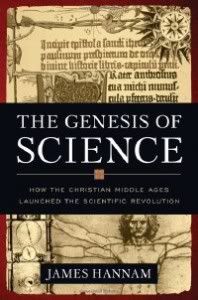
On March 21 a ground breaking work, The Genesis of Science: How The Christian Middle Ages Launched the Scientific Revolution, (Washington DC: Regnery Publishing Inc. 2011), by Cambridge-trained historian James Hannam, takes its place in the United States on the shelf alongside other historical classics. The book has already been released in the UK (as God’s Philosophers).

For the last several decades historians of science have known something that still eludes the general public. Thanks to great books such as Margaret Jacob’s The Newtonians[i] or Lindberg and Numbers’ God and Nature,.[ii] the whole field of history of science is routinely aware of the fact that Enlightenment-spawned notions of the church persecuting burgeoning science in the Middle Ages, are just so much propaganda. As Hannam’s book documents there was no rash of would-be Einsteins in the Middle Ages put down and held back persecution of scientific ideas. The reason this book may be destined for status as a classic is two fold: first because Hannam’s engaging and easy style makes the material accessible; secondly because it fills a void not previously filled by the body of work in history of science.

Most of the works in question, such as those mentioned above, either deal with a later period (that of Newton and the Seventeenth or Eighteenth centuries) or they deal with the general sweep of history, touching upon every period and focusing mainly on modern times (such as the Lindberg book does). Hannam actually uncovers the depth of scientific work in the Middle Ages, the extent to which discoveries set up the process of scientific learning, and how the church nurtured it rather than held it back. The scope and details he brings to coverage of the period fill a void in a way other historians have neglected.

The work disabuses the reader of three grand misconceptions that the general public has been fed by non-specialist historical pedagogy at all levels of education: Medieval people did not think the earth was flat and their scholars could prove it was not; the Inquisition never persecuted anyone for doing or thinking about science; and the scientific learning that went on in the Middle Ages, including what the church promoted and enabled, set up the scientific revolution. The Jacob book demonstrates that English church men of the Seventeenth century made Newtonian science possible and boosted it among the general public, thus essentially creating modern science along the way; in the same way and with no less erudition Hannam demonstrates how the developments of the Middle Ages set up those developments in the latter era.

Hannam begins by discussing the history of the idea of the “dark ages.” How did historians come to regard this period after the fall of Rome up to the Renaissance as “the dark ages?” There has been a trend in history as a whole for the last 40 years to de-periodize history. The Renaissance is no longer understood as a period of time but more as a movement that overlapped several periods. One such major source would be Peter Burke, The Renaissance.[iii] According to Hannam, historians originally spoke of the “dark ages” meaning the period had little surviving in the way of documents or texts that furnished a lot of information about the era. It was the Enlightenment philosophers who began using the term in an anti-clerical way, to specifically refer to the church’s attitude toward science and the suppression of learning. It was really in nineteenth century France, Hamman tells us, where the structures of history were periodized and given names that reflect this ideology coming out of the Enlightenment. This was the century when the social sciences were organized and when August Comte began structural functionalism. They were extending the philosopher’s predilections to a re-write of the world.

In fact the centuries immediately after the fall of Rome saw much progress in the way of discoveries. Hannam opens the first chapter with the discussion of these discoveries. The old philosopher-based anti-clerical view sees the period it calls “the dark ages” (from the fall of the Western Roman Empire, to after the Norman conquest of 1066) as one in which progress stopped. In reality that era saw much in the way of progress. Western Europe made progress in technological terms, although the beginning of it seems very simple, low tech, unscientific--but it was not the arresting of progress. One of the first aspects of progress with the improvement of the plough, that led to increased food production and population explosion that enabled economic growth and the development of cities eventually. The Normans invented the stirrup that was a military advance and important in their conquest of the Saxons. The importance of conquest was the consolidation of power. There as a power vacuum after the fall of Rome. By consolidating power, greater communication became possible, discoveries could be disseminated. Most the discoveries in that era were in the area of agriculture.

The Genesis of Science is an immense research project pulled off masterfully. Oxford and Cambridge did their jobs in teaching Hannam how to research. It’s a vast understanding and spans the gamut of the field: medieval theology, cosmology, astronomy, even astrology and alchemy, all forms of medieval learning, mathematics--the vast range of human knowledge for people of the Middle Ages are summarized, and all the relevant developments to the story of how modern science emerged from human learning are recounted, yet in an accessible and easy to read style most engaging to the reader. The author proves his thesis that Christianity did not persecute science but nurtured it and enabled it to develop. “Popular opinion, journalistic cliché, and misinformed historians notwithstanding, recent research has shown that the Middle Ages was a period of enormous advances in science, technology and culture. The compass, paper, printing, stirrups, gunpowder, all appeared in Western Europe between 500 and 1500.” [iv] The compass allowed better navigation and trade and eventually led to discovery of the New World. Twenty million books were produced in the first fifty years after printing press was invented, a veritable explosion of knowledge which contributed in obvious ways to the rise of modern science, down the road. Yet there is a lot more to the story of development than just particular inventions from business and agriculture.

One of the major arguments made by skeptics, especially the “new atheists”, is that philosophy was useless and just “making things up,” but empirical scientific knowledge is factual and true and gives us an accurate understanding of the world. Actual scientists know there is more to it than this, but one hears atheists argue this way. Hannam’s book demonstrates that without the role played by reason, philosophy, and the church modern science would not have developed.

Modern science is a very specific kind of knowledge that blends empirical experimentation with rational analysis. Today we take it for granted and trust it to provide us with accurate information about nature. It’s hard to believe that a few centuries ago this scientific way of thinking hardly existed. Before the edifice of modern science could be built, it required the strong foundations that were laid for it in the middle ages. The cornerstone was a widespread acceptance of reason as a valid tool for discovering truth about our world. Clearly this could not happen without the approval of the Church, which at the time was the guardian of almost all intellectual endeavors. This means that the development of reason and its relationship with faith are both important parts of our story. So prevalent did rational argument become among philosophers during the middle ages that the period deserves to be thought of as the beginning of the “Age of Reason.”[v]

The traditional Enlightenment-philosopher-influenced historian has habitually lauded great individuals, such as Di Vinci for example, as bucking the trends, standing alone against the time, one guy by himself who was brilliant enough o see through the status quo. Yet Hannam points out that when one examines the immediate milieu of such thinkers, it usually turns out that they were products of a going concern, or influenced by trends already in progress around them. However brilliant the innovators, they were nevertheless the outgrowth of a progress that never stopped. One such example is that of St. Anselm of Canterbury, the author of the famous “ontological argument.” Fleeing his father in their native Aosta in the Italian Mont Blanc, across the Alps and into the Rhone valley, the young boy who would become St. Anselm settled for a time in northern France. He found the most dynamic region in Europe at that time. The ferment was around the Cathedrals because they served as focal points of human energy, effort, belief, concern and the use of technology of the day. The cathedral cities of Paris, Chartres, Rheims, and Orleans, provided a magnet that formed a hub of activity, not the least of which was a vital scene for scholarship and philosophy. It was out of this center that Anselm moved forth and helped to produce a theological and philosophical ferment. Skeptics look at medieval philosophy (or don’t look at it closely) and find silly unscientific concepts, but the truth is that these disputes, arguments and ponderings got science going.

Hannam deals with Copernicus and the fact that his system was never the least bit threatened by the church because it was proposed hypothetically and was not a challenge to authority. Hannam demonstrates a rich background that Copernicus drew upon, consisting of many ancient world and "dark age" thinkers known in the middle ages who believed in geocentrically solar system. The final chapter is a tour de force on Galileo demonstrating that his problems were politically driven not based upon any hatred of science by the church.

Overall Hannam has produced a wonderful book, and I think all who care about Christian apologetics, or even just the status of religion in the modern world, need to read it.


[i] Jacob, Margaret C. The Newtonians and the English Revolution: 1689-1720. Ithica New York: Cornell University Press, 1976.

[ii] David C. Lindberg and Ronald l. Numbers, ed, God and Nature: Historical Essays on the Encoutner Between Christianity and Science. .University of California Press, 1986.

[iii] Peter Burke, The Renaissance, New York: Macmillian, 1997.

[iv] Hannam, Genesis of Science, xvii

[v] ibid, xix