Sunday, May 27, 2018

Schleiermacher revisited: Freedom from The Need to Prove

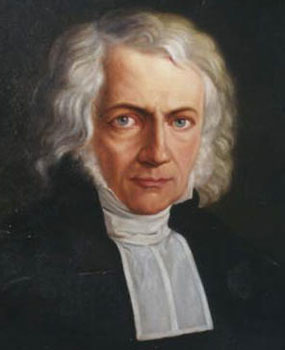
Image result for Schleiermacher


In my recent discussion of Schleiermacher's  feeling of utter dependence[1] I refereed to the concept as a "decision making paradigm."  I feel, however,  that I wasn't the least bit open about what that means. That discussion feel flat because I wasn't forth coming. I didn't have the energy to go o the trouble. I will take another crack at it now,.

What is commonly translated "feeling"is not an emotional sense but a sensation or an intuitive sense. It is common to find even theologians defining it as an emotional or sentimental experience but this is something William S. Babcock warned us about at Perkins when I was in seminary. I think the phrase might be more explanatory, maybe more accurate, if we called it "radical sense of contingency," it is a sense of unity in the life world and the dependence of the life world upon the source of the unity. Robert Williams in his book Schleiermacher the Theologian, agrees that the feeling is not sentiment or emotion. [2]

"Life world," or Labeinswelt is a term used in German philosophy. It implies the world of one's culturally constructed life, the "world" we 'live in.' Life as we expeirence it on a daily basis. The unity one senses in the life world is intuitive and unites the experiences and aspirations of the individual in a sense of integration and belonging in in the world. As Heidegger says "a being in the world." Schleiermacher is saying that there is a special intuative sense that everyone can grasp of this whole, this unity, being bound up with a higher reality, being dependent upon a higher unity. In other words, the "feeling" can be understood as an intuitive sense of "radical contingency" (int he sense of the above ontological arguments).

The decision making paradigm is a model of conditions that if met might reasonably indicate a senses of God correlate, or a set of conditions that might reasonably be taken as indicative of God's presence.How does the feeling function as a decision making paradigm? How do we know what those condition would be? First because the radical sense of contingency hinges upon the basis for which there is religion in  the first place. The unity in the life world is  related to the sense of undifferentiated unity found in mystical experience. Even though the Feeling is distinct from mystical experience it is related to it. 

This is not  an argument for the existence of God. "Decision Making" is just what it says, deciding what to believe. But it's is not proof it is not meant to be proof. The feeling warrants belief it frees us from the need to prove, It's a a phenomenological apprehension.
Williams himself was captured by this reading of Schleiermacher [criticisms of Hegel and Barth] until he encountered the work of Edmund Husserl. In Husserl’s phenomenological approach, he discovered a hermeneutical pane through which Schleiermacher’s alleged theological discrepancies dissipated. Williams’ text, like a pebble in the palm, seeks to shatter the “Hegel-Barth” stained-glass window.[3]
This is not a reasoned argument but a gateway experience it's the pragmatic result of the way it affects us and  that is reason to believe.

In the Platonic assumption of Schleiermacher we are in touch with God, God is speaking to us all, it's just a matter of listening, Religious doctrines are verbalization of the feeling. The experience works upon the individual as to produce in us the kind of result we should expect God to produce in  us the claims made and the previous experiences reported, in that sense it works, sense it works that in itself  is reason to believe it's true,


In the comment section that previous  piece Eric Sotnak, professor of Philosophy  asked me,"There seems to be an implied inference from 'there is a sense of unity' to 'there is unity'.Why think the sense is a reliable indicator of what is?"

I said:

The only real standard we have for truth is tightness of correlation. Science friends tell me correlation and mechanism. but then when I ask how do you know you have the right mechanism it's from the tight coloration. Why do science at all if you don't trust correlation based upon perception. The basis of correlation is perception.
The fundamental nature of the unity of the life world the tightness of correlation as measured in research such as the M scale research gives us a basis in trust.
To that I should add the conditions that make for the assumptions of God imply that God is the correlate or co-determinate, of the feeling as the fact of a foot is the correlate to a foot print in the snow. Again this is the Trace of God, as is the rationle forthe itle ofmy book.[4]

As Robert R. Williams puts it:

There is a "co-determinate to the Feeling of Utter dependence.

"It is the original pre-theoretical consciousness...Schleiermacher believes that theoretical cognition is founded upon pre-theoretical inter subjective cognition and its life world. The latter cannot be dismissed as non-cognative for if the life world praxis is non-cognitive and invalid so is theoretical cognition..S...contends that belief in God is pre-theoretical, it is not the result of proofs and demonstration, but is conditioned solely by the modification of feeling of utter dependence. Belief in God is not acquired through intellectual acts of which the traditional proofs are examples, but rather from the thing itself, the object of religious experience..If as S...says God is given to feeling in an original way this means that the feeling of utter dependence is in some sense an apparition of divine being and reality. This is not meant as an appeal to revelation but rather as a naturalistic eidetic"] or a priori. The feeling of utter dependence is structured by a correlation with its whence."[4]

These observations sum p the paradigm:

(1) There is a pervading sense of unity in the life world

(2) The over all sense of unity produces a sense of the dependence of the whole upon a higher ontological level.

(3) The content of the experience is expressly sublime and evokes the sense of the numinous.

(4)The sense of the numinous is expressly religious and constitutes the co-determinate of the divine.

The sense of the numinous is linked to Schleiermacher's feeling by Rudolph Otto the thinker most associated with the sense of the numinous[5] This Should not be surprising since the sense of the numinous part of mystical experience, and the feeling with mysticism proper the basis in unity; mysticism proper is undifferentiated unity of all things  and the feeling evokes a sense of the unity in life world. Both senses of unity transition the exeriencer into an awareness of higher reality.

The point is since the feeling evokes a fit object of religious devotion we are surely warranted to make leap of faith in deciding to believe in God.


Sources

[1] J.L. Hinman, "Schleiermacher's "feeling" as descion making paradigm" Metacrcok's blog (MAY 20, 2018)
http://metacrock.blogspot.com/2018/05/co-determinate-co-determinate-is-like.html
(accessed 5/26/18)

[2] Brice Tennant, "Review: chleiermacher the Theologian: The Construction of the Doctrine of God. By Robert R. Williams."Wesley Wildman Home page. The information on this page is copyright ©1994 onwards, Wesley Wildman (basic information here), unless otherwise note (2009).
http://people.bu.edu/wwildman/schl/reviews/review_williams_schleiermacherthetheologian_tennant.htm
(accessed 5/26/18)


[3]Ibid

[4] Robert Williams, Schleiermacher The theologian:The Constriction of the Doctrine of God. Philadelphia: Fortress Press; First Edition edition (1978) 4.

[5]Jacqueline Marina, "Frederick Schleiermacher and Rudalf Otto"pdf
https://philarchive.org/archive/MARTAP-12v1
(accessed 5/26/18)


Friday, May 25, 2018

The Emperor has no Clothes, but he has a new Conspiracy Theory

Image result for political cartoon: Trump as Emperor without Clothes
 on May 18, 2016 in 
2016 Elections2016 Presidential 
ElectionCartoonsPolitics |the 
moderateVoice


The intelligence community believes that Russia did seek to destabilize our democracy by assisting Trump in winning the election. A Republican controlled senate committee agrees with this finding.[1]Trump  shows signs of cracking under pressure. Now he has gone off the deep end and invented another conspiracy theory which is designed to divert attention from his own wrong doing. That's the same tactic he used to justify losing the popular vote.  He just asserted tat   he didn't lose it. Instead, those extra votes for Hillary came from illegal aliens who voted superstitiously to throw the election. Of course it was pointed out by election officials all over the country that there was no evidence of  any kind to back this assertion.[2]  So again the perpetrator accuses the system of doing the cheating to detract from his own guilt.

Asked by reporters what proof he had that his campaign was spied on, the president replied: "All you have to do is look at the basics and you'll see it. Looks like a very serious event, but we'll find out."Trump referenced classified documents the Justice Department is scheduled to show two GOP congressmen Thursday after Trump issued a "demand" Sunday that DOJ investigate what he then called possible efforts by the FBI to "surveil" and "infiltrate" his 2016 campaign.[3]
Anderson Cooper tells us that there is no evidence for a spy from FBI or any agency in the Trump campaign. But Trump's army of talking head propagandists have been at work lying speaking about this alleged "spy" as though a proven fact, when in fact they offer not evidence at all. When asked outright Trump just dances around the question.[4]In fact the old adage "if you repeat a lie often enough people believe it" is proven here. Even I had begun assuming there was an informant and that the allegation was proven.

The only documents referenced are not really know, but but it is theorized that Trump's tweet might
"reference New York Times and Washington Post reports that the FBI used an informant to make contact with members of his campaign, only after the agency obtained information that members of the Trump team had suspicious contacts with Russians during the 2016 election." [5] The impression of proof has been created y the massive repetition so many levels by Trump propagandists.


In recent days the president, in tandem with his allies in conservative media, has launched a full frontal attack on special counsel Robert Mueller's probe into Russian election meddling and possible collusion with the Trump campaign. Earlier this week, he called for an investigation of Mueller's investigation and alleged the FBI spied on his campaign, a story he described as “bigger than Watergate.” But the president has provided no evidence to support his allegations.[6]
This is a testimony to the power of lies and the power of propaganda. If there was an informant or a spy that attention from intelligence networks was no doubt   initiated by so many contacts between the Trump campaign and the Russians. This is only goes to prove there was something that needed investigating,something Trump or his people were up to. 
As Comey said:
"it's a dangerous time when our country is led by those who will lie about anything, backed by those who will believe anything, based on information from media sources that will say anything. Americans must break out of that bubble and seek truth.”[7]


[1]Alex Ward "Republican Run Committee says Russian Tried to Help Trump Win." Vox (May 16, 2018)
https://www.vox.com/policy-and-politics/2018/5/16/17361650/russia-election-trump-putin-intelligence-committee


(access 5/25/2018)
[2] Robert Farley, "Trump's Bogus Voter Fraud Claims Revisited," Fact Check.Org (Jan. 25.2017)
https://www.factcheck.org/2017/01/trumps-bogus-voter-fraud-claims-revisited/
(access 5/25/2018)
"In fact, voting experts we talked to pointed to numerous studies that have found such in-person voter fraud — the type of fraud Trump is alleging — is virtually nonexistent."


[3] Justin Fishel, Kendall Karson, aria Khan "Trump Claims 'You'll see it'..."  abc news (May 23,2018)


(access 5/25/2018)

[4] Anderson Cooper, ans Trump, "Sayimnmg SPy Doesn;tmakie it so video, from CNN on MSNBC News, (May 24, 2018) see the video:
https://www.msn.com/en-ie/news/video/cooper-saying-spy-doesnt-make-it-so/vp-AAxI6fA
(access 5/25/2018)

[5] Fisher, Karson, Kahn, ABC  News Op Cit

[6] Ibid.

[7]Clare Floran,"James Comey Pushes Back on Trump's Spying Cliams," CNN,(May 23,2018)
https://www.cnn.com/2018/05/23/politics/james-comey-donald-trump-informant-spy-claims/index.html
(access 5/25/2018)


Wednesday, May 23, 2018

In Memory of Philip Roth, dies at 85

Image result for philip Roth
Philip Roth


His work agaisnt Nixon (Our Gang)* was brilliant  All of his writing was Brilliant,
This guy was my favorite novelist for a time.


from the Guaridan:
He won intense respect from the moment in the 1960s when he joined Saul Bellow and Bernard Malamudin a Jewish troika at the centre of American literature. But there remained doubts, demands for clarification, as though he had not been writing literature after all, but committing a long, strained, perhaps not wholly candid act of self-revelation which merited the critics’ distrust.
Roth’s first book, Goodbye, Columbus (1959), sold a more than respectable 12,000 copies in hardback and received the National Book award. The big one – the Nobel prize in literature – eluded him, but there can be few American literary careers so richly laurelled, early and late. He was a bestselling writer only once in his career, when Portnoy’s Complaint (1969) sold 420,000 copies in the first 10 weeks after publication.


From his earliest work, Roth’s Jewish readers were uneasy with his ironic view of Jewish life. Roth delighted in every nuance and absurdity of Jewish life in America, but his defiantly secular sensibility was without piety or reverence. When asked about his religious beliefs in 2006, Roth told the radio interviewer Terry Gross that he had “no taste for delusion” nor any need for spiritual consolation. The Jewish community saw Roth as a wisenheimer – a sharp-tongued young man who had turned his back upon the religion of his fathers.
Heavyweight critics agreed. Robert Alter saw an element of “uncontrolled rage” against women and Jewish parents in Roth’s early books. Irving Howeargued that Roth lacked Tolstoyan amplitude because his books come out of a “thin personal culture”. Alfred Kazin wrote that Roth seemingly had escaped from his Jewishness altogether.

https://www.theguardian.com/books/2018/may/23/philip-roth-obituary

* Our Gang '''


Our Gang (1971) is Philip Roth's fifth novel. A marked departure from his previous book, the popular Portnoy's ComplaintOur Gangis a political satire written in the form of a closet drama. Centered on the character of "Trick E. Dixon", a caricature of then-President Richard Nixon, the book takes its cue from an actual quote from Nixon:

https://en.wikipedia.org/wiki/Our_Gang_(novel)


The President's First Duty

Image result for Washington Crossing The Delaware


this is by a friendofmine who teaches philosophy at a University, This was from his blog Dagerous Idea,

 by 

The President's FIRST duty is to uphold the rule of law and the Constitution of the United States. That comes before nominating pro-life justices, or cutting taxes, or supporting Israel, etc. Unless you have been looking at him through Fox-colored glasses, I think the answer concerning Trump is overwhelmingly NO. It was bad enough that many Christian leaders supported him at election time, but I think I can understand it up to a point. At that time there was the contrast with Hillary. With respect to his extramarital relationships, I think we have the right to ask him to just come clean, and either tell the country that he doesn't think he has a duty to be a faithful husband because he has considers that requirement to be an outdated religiously-based prudish moral rule, or to say that he is deeply repentant for the disrespect for marriage, in word and deed, that he has shown in the past and that he has amended his behavior in the meantime. This is especially true for Christians who look to a Republican President to support traditional marriage and who find same-sex marriage to be a treat to that institution. Don't such Christians have a right to know if the President they are supporting respects the institution of marriage as they understand it? And shouldn't such Christians demand such answers from the President they support? 

Someone willing to make a payment of amount a few times my annual salary to keep someone silent is someone who is liable to be blackmailed by a foreign government to keep other improprieties quiet. His ability to put the American people first and uphold the Constitution has to therefore be questioned. 

Evangelical leaders are getting up on TV and giving Trump a whole bunch of breaks that they wouldn't give Clinton or any other previous President. Worse yet they focus on the actual affair, when the attempt, in violation of campaign finance laws, to keep someone from talking about the affair is far more serious. And if he has people out making threats of physical violence, this is worse. 

I am tired of hearing that the public policy bottom line is all that matters. A President who can't uphold the rule of law, who is so compromised that we can expect nothing but scandal after scandal, is someone who the American people will sooner or later turn against. I liked a lot of John Edwards' public policy proposals. But his character was so compromised that I would be far more comfortable with Mitt Romney in the White House than him. I think those who voted for Trump should have seen the handwriting on the wall when they voted for him back in 2016, but this constant talk of "mulligans" and "we believe in forgiveness" is nauseating and with a lot of people yes, it damages the credibility of Christianity. The Franklin Grahams and Tony Perkinses, not to mention Paula White, who says its a sin to oppose our President since God raises up kings, (How come we didn't hear that when Obama was in office), yes, they do give opponents of Christianity ammunition. 


Originally on dangerous idea blog

http://dangerousidea.blogspot.com/2018/03/the-presidents-first-duty.html


Sunday, May 20, 2018

Schleiermacher's "feeling" as descion making paradigm

Image result for Friedrich Schleiermacher

Frederich Schleiermacher, (1768-1834) 


Co-determinate: The co-determinate is like the Derridian trace, or like a fingerprint. It's the accompanying sign that is always found with the thing itself. In other words, like trailing the invisible man in the snow. You can't see the invisable man, but you can see his footprints, and wherever he is in the snow his prints will always follow.

We cannot produce direct observation of God, but we can find the "trace" or the co-determinate, the effects of God in the wrold.

The only question at that point is "How do we know this is the effect, or the accompanying sign of the divine? But that should be answered in the argument below. Here let us set out some general parameters. These observations mark the paradigm.

(1) The trace produced content with specifically religious affects

(2)The affects led one to a renewed sense of divine reality, are transformative of life goals and self actualization

(3) Cannot be accounted for by alternate causality or other means


Frederich Schleiermacher, (1768-1834) in On Religion: Speeches to it's Cultured Dispisers, and The Christian Faith .sets forth the view that religion is not reduceable to knowledge or ethical systems. It is primarily a phenomenological apprehension of God consciousness through means of religious affections. Affections is a term not used much anymore, and it is easily confused with mere emotion. Sometimes Schleiermacher is understood as saying that "I become emotional when I pay and thus there must be an object of my emotional feelings." Though he does venture close to this position in one form of the arugment, this is not exactly what he's saying.

In the earlier form of his argument he was saying that affections were indicative of a sense of God, but in the Christian Faith he argues that there is a greater sense of unity in the life world and a snese of the dependence of all things in the life world upon something higher.

What is this feeling of utter dependence? It is the sense of the unity in the life world and it's greater reliance upon a higher reality. It is not to be confused with the stray sky at night in the desert feeling, but is akin to it. I like to think about the feeling of being in my backyard late on a summer night, listening to the sounds of the freeway dying out and realizing a certain harmony in the life world and the sense that all of this exists because it stems form a higher thing. There is more to it than that but I don't have time to go into it. That's just a short hand for those of us to whom this is a new concept to get some sort of handle on it. Nor does "feeling" here mean "emotion" but it is connected to the religious affections. In the early version S. thought it was a correlate between the religious affections and God; God must be there because I can feel love for him when I pray to him. But that's not what it's saying in the better version.


The basic assumptions Schleiermacher is making are Platonic. He believes that the feeling of utter dependence is the backdrop, the pre-given, pre-cognitive notion behind the ontological argument. IN other words, what Anselm tried to capture in his logical argument is felt by everyone, if they were honest, in a pre-cognitive way. In other words, before one thinks about it, it is this "feeling" of utter dependence. After one thinks it out and makes it into a logical argument it is the ontological argument.


"Life world," or Labeinswelt is a term used in German philosophy. It implies the world of one's culturally constructed life, the "world" we 'live in.' Life as we expeirence it on a daily basis. The unity one senses in the life world is intuitive and unites the experiences and aspirations of the individual in a sense of integration and belonging in in the world. As Heidegger says "a being in the world." Schleiermacher is saying that there is a special intuative sense that everyone can grasp of this whole, this unity, being bound up with a higher reality, being dependent upon a higher unity. In other words, the "feeling" can be understood as an intuitive sense of "radical contingency" (int he sense of the above ontological arguments).

He goes on to say that the feeling is based upon the ontological principle as its theoretical background, but doesnt' depend on the argument because it proceeds the argument as the pre-given pre-theoretical pre-cognitive realization of what Anselm sat down and thought about and turned into a rational argument: why has the fools said in his heart 'there is no God?' Why a fool? Because in the heart we know God. To deny this is to deny the most basic realization about reality.

Now don't' think by any stretch of the imagination that I think this proves the existence of God! No, no way. It is not "proof," it is freedom from the need to prove! 

As Robert R. Williams puts it:

There is a "co-determinate to the Feeling of Utter dependence.

"It is the original pre-theoretical consciousness...Schleiermacher believes that theoretical cognition is founded upon pre-theoretical inter subjective cognition and its life world. The latter cannot be dismissed as non-cognative for if the life world praxis is non-cognitive and invalid so is theoretical cognition..S...contends that belief in God is pre-theoretical, it is not the result of proofs and demonstration, but is conditioned solely by the modification of feeling of utter dependence. Belief in God is not acquired through intellectual acts of which the traditional proofs are examples, but rather from the thing itself, the object of religious experience..If as S...says God is given to feeling in an original way this means that the feeling of utter dependence is in some sense an apparition of divine being and reality. This is not meant as an appeal to revelation but rather as a naturalistic eidetic"] or a priori. The feeling of utter dependence is structured by a correlation with its whence." , Schleiermacher the Theologian, p 4.
These observations sum p the paradigm:

(1) There is a pervading sense of unity in the life world

(2) The over all sense of unity produces a sense of the dependence of the whole upon a higher ontological level.

(3) The content of the experince is expressly sublime and evokes the sense of the numinous.

(4)The sense of the numinous is expressly religious and constitutes the co-determinate of the divine.

Wednesday, May 16, 2018

Christianity: Religion and Relationship


Over at the secular outpost Blog Bradly Bowen has announced a 10 year plan to investigate the truth of Christianity. Why do I feel that this is more like a 10 year siege? In any case he had already done one piece on "what is Christianity?" I will answer that on the CADRE blog, but this part 2 I think will be of interest to readers of this Blog.[1] Bowen argues that those who say "Christianity is not a religion but is a relationship with Jesus," are "stupid," (he uses the word. Why does he want Christianity to be a "religion" instead of a relationship? You can't disprove a relationship. He does a bait and switch  replacing religion with system, reading system as philosophical system, then it's disprovable.

I do not think there is a conflict between religion and relationship. Before I get into that let's briefly examine Bowen's case. His argument works in three basic steps: (1) He quotes Paul, "..."the mystery of our religion is great..." .(1 Timothy 3:15-16) [2] The Greek word rendered here as "religion" is εύσεβείας which the Oxford commentary renders "system:" "...the system of belief that inspires piety. [3] So now he can claim Christianity is a religion and religion means system. Then he starts using various dictionaries to define Christianity as religion

"At Cambridge Dictionaries Online, you get a single definition of 'Christianity':
--the ​Christian ​faith, a ​religion ​based on the ​belief in one ​God and on the ​teachings of ​Jesus ​Christ, as set ​forth in the ​Bible."
[4] If we turn to the online Merriam-Webster Dictionary, we get a simple definition of 'Christianity', which is similar to the above definition: the religion that is based on the teachings of Jesus Christ. Bowen says: "What sort of a thing is 'Christianity' according to the Merriam-Webster Dictionary?  It is a 'religion', not a “relationship”. He actually wrote that the dictionary says it's not a relationship but it does not say that, it only says it's a religion but it does not add "and not a relationship." That's his assumption that it can't be both. "No matter what definition of “Christianity” we look at, all definitions in respected dictionaries point to the view that “Christianity is a RELIGION, and not a relationship." He says it a third time too (see fn4).

The assumptions he's working under are used to construct a very complex and learned straw man. He wants Christianity to be a system so he can find the one key point and destroy the system and take out all forms of belief. His reasoning is fallacious.Yes of course it's a religion. Those who say it's not are speaking of "religion" in a different sense than is Bowen or the passage he quotes from Paul. They use the term to mean empty set of rituals legalistic and lifeless, as opposed to an actual transformative phenomenological apprehension of the reality behind the system. 


He quotes a dictionary that says this Greek term implies a system and makes Christianity a system. He needs to line up that use of the term(religion) with the English dictionaries he uses. That wont work because the Oxford definition is contextual to that passage in Paul and Websters et al were not thinking about that passage. That does not make Christianity a system in the sense of Hegelian thought or process thought. (Process theology is a theology not a the basic religion "synonymous with Christian belief").

In modern theological terms religion is a social and spiritual tradition in which one is guided by thought and the experiences of others down certain paths in a way if life. All religions do three things: (1) define the human problematic. (2) provide an ultimate transformational experience that resolves the problematic; (3) mediate between the two through ritual and/or practice, through, prayer, meditation....most liberal theologians suck at step no 2. Intellectual content will very as to the specific analysis and definitions but not the general sense of three, In that view all versions of Christianity are the same: (1) problematic = estrangement from God via sin (2) a personal relationship with Christ although content will very enormously. (3) mediation generally the same although content will very.

Bowen uses Pastoral epistles! think about it. Not by Paul, from a time when the church became more organized and ritualistic (probably early second century). So the use of this term  may purposely not reflect the spontaneous miracle working faith of  the early days. Paul was a theologian, I think that's why God drafted him. He was made to do theology. There is a basis for his argument in understanding Christianity as a system. Of course theology is a major part of the Christian tradition. But it's both, or all three, religion, system and relationship.. But I doubt that Paul would think of systems in our modern sense. Paul was using metaphors about running races and fighting, it was not just an intellectual exercise for him. He also quoted hymns a lot so that might indicate a more experiential or emotionally accessible understanding of faith.

Not that I don't think Christianity is a system but I don't think systems are just intellectual only. Hussel had such a system where it was grounded in philosophical analysis but one was supposed to actually experience it.In the ancient world one's theology as not just a philosophical system but it included the actual lived experiences that went with it. Like Stoicism. Stoics were really, well, you know...stoic.

His dictionary Gambit is pointless because he is not using theological dictionary; except the Oxford and it's used specifically in relation to the context  of  isεύσεβείας (religion) in that one passage. It's not speaking of the soteriological nature of Christianity as a whole. Christianity is a religion and religion in the more positive sense employs a system and fosters a relationship with God. It's not merely words on paper or disembodied ideas, it's a way of life, its a realy one lives and experiences.

The last chapter of my book the Trace of God by Joseph Hinman is about Christianity as an experienced reality and relationship with God. The whole book is about it in the last chapter I deal with lexical help also. The term used for "knowing" in NT, as in  1 John "he who loves knows God.," that word is epigenosko meaning personal experience, know it face to face.[5] that indicates relationship. Of course they don't have aterm for "relationship."

    see additional material in comments
please join me in the comments, do you  think Christianity is a religion, relationship, both? 


Sources

[1] Bradley Bowen What is Christianity part 1, Secular outpost, Blog URL
http://www.patheos.com/blogs/secularoutpost/2016/01/15/what-is-christianity-part-2/

[2] New Revised Standard Version).

[3]  Oxford Bible Commentary, p.1225, (emphasis added--by Bowen)

[4] Definition of Christianity from the Cambridge Academic Content Dictionary © Cambridge University Press)
http://dictionary.cambridge.org/us/dictionary/english
- See more at: http://www.patheos.com/blogs/secularoutpost/2016/01/15/what-is-christianity-part-2/#sthash.KFegtuYw.dpuf

[These are all his words form further definitions]

The online Merriam-Webster Dictionary also provides An even fuller set of definitions of “Christianity” can be found at Dictionary.com:1. the Christian religion, including the Catholic, Protestant, and Eastern Orthodox churches.
2. Christian beliefs or practices; Christian quality or character:
Christianity mixed with pagan elements; the Christianity of Augustine’s thought.
3. a particular Christian religious system:
She followed fundamentalist Christianity.
4. the state of being a Christian.
5. Christendom.
6. conformity to the Christian religion or to its beliefs or practices.
http://dictionary.reference.com/browse/christianity?s=t\
[5] Strong's Exhaustive Concordance to the Bible, "Ginosko," Peabody Mass: Hendrickson Publishers, 2009, word 1097.


see additional material in commemnts
He adds:

Definitions (1), (2), and (3) support the view that Christianity is a religion and not a relationship. Definition (5) is consistent with Christianity being a religion, and does not fit well with the idea of Christianity being a relationship.


Definition (6) is similar to previous definitions we looked at from the Merriam-Webster Dictionary, and it is logically tied to the concept of “the Christian religion”.
Definition (4) is the ONLY definition here that could possibly be connected to the idea of having a relationship with Jesus Christ.  Many Protestants have the view that conversion to Christianity puts one into a “state” in which one has a permanently good relationship with God and Jesus Christ.  From a Catholic point of view, conversion to Christianity puts one  temporarily into a “state” in which one has a good relationship with God and Jesus Christ, but that positive “state” can be damaged or destroyed by sin, especially by serious (i.e. mortal) sins.  From a Catholic point of view, one must be in a good “state” or good relationship with God when one dies in order to obtain eternal life in heaven. - See more at: http://www.patheos.com/blogs/secularoutpost/2016/01/15/what-is-christianity-part-2/#sthash.KFegtuYw.dpuf
- See more at: http://www.patheos.com/blogs/secularoutpost/2016/01/15/what-is-christianity-part-2/#sthash.KFegtuYw.dpuf


However, from a Protestant point of view, one state is the result of the other state.  Accepting Christianity is both a necessary and a sufficient condition for being in a good relationship with God and Jesus Christ.  Thus because there is a relation of dependency between the “state of being a Christian” (or of accepting Christianity) and the state of being in a good relationship with God and Jesus Christ, these must be considered to be two different and distinguishable states.  Therefore, although “Christianity” in sense (4) has a causal or logical connection with having a good relationship with God and Jesus Christ, “Christianity” in sense (4) is something that is different and distinguishable from the state of having a good relationship with God and Jesus Christ.
Thus, from a Catholic point of view as well as from a common Protestant point of view “Christianity” in the sense of “the state of being a Christian” is NOT equivalent to the idea of “the state of being in a good relationship with God and Jesus Christ”.  Furthermore, for both Protestants and Catholics, their views about the connection between “the state of being a Christian” and “the state of being in a good relationship with God and Jesus Christ” is spelled out in central Christian doctrine, is spelled out in their understanding of the Christian faith or “Christianity”.  The religion or theological doctrines that they accept provide them with a point of view about the relationship between these two states.  Catholics and Protestants, obviously, have differing views about the relationship between these two states.  Therefore, from a Catholic as well as from a common Protestant point of view, “Christianity” even in sense (4) is directly connected to a religion, and only indirectly connected to a relationship.
No matter what definition of “Christianity
- See more at: http://www.patheos.com/blogs/secularoutpost/2016/01/15/what-is-christianity-part-2/#sthash.KFegtuYw.dpuf