Monday, August 28, 2023

Tillich, part 2: What does it mean to say "God is Being Itself?"


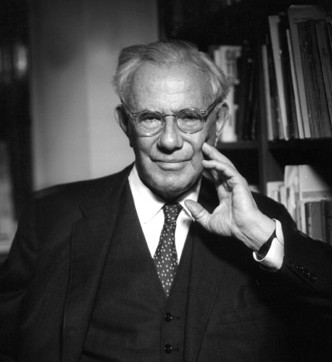
Paul Tillich 1886-1965

In this essay, which is a chapter from the new book I'm now working on, I'm moving toward defining what I think Tillich means exactly by being itself. It's a long journey but an important one.What does Tillich actually mean by “being itself?” Does he mean the same things as other theologians who use the phrase? It’s a mysterious sounding phrase and Tillich never actually comes out and says what he means by it. As I will show there is a reason for this, and I will show what I think that reason in is. In the mean time the task of this chapter is to deduce exactly what Tillich actually means by this phrase. There are three basic possibilities:

Three alternatives as to meaning

(1) The basic fact that things exist is all that the concept of “God” amounts to.

(2) There is a special quality to being, an impersonal aspect” ground of being” or “being itself” and that quality constitutes ‘the divine.’ This possibility excludes God as “king of the universe.”

(3) God is beyond our understanding, we can’t explain God but God is on a higher metaphysical level, and is not a thing to be classed with other things in creation; God is foundational to creation and to all things; God is “on the order of being itself; this might include but is not limited to a consciousness, or something like a Platonic form.

The first alternative can be ruled out immediately. If this were the case it would make Tillich an out and out atheist, with no belief in “God” to any real extent, and a very cynical atheist (more so than most) because he would be an atheist who can’t openly own up to his atheism. This is not really realistic possibility and this becomes clear as one reads Tillich. He’s clearly talking about something that is real and that is distinguished form just the mere fact that things exist. In fact he ruled this out himself in speaking of being “having depth” and excluding the possibility of atheism on the grounds that “being has depth” and that if one is aware of this one cannot be an atheist.

The name of infinite and inexhaustible depth and ground of our being is God. That depth is what the word God means. And if that word has not much meaning for you, translate it, and speak of the depths of your life, of the source of your being, of your ultimate concern, of what you take seriously without any reservation. Perhaps, in order to do so, you must forget everything traditional that you have learned about God, perhaps even that word itself. For if you know that God means depth, you know much about Him. You cannot then call yourself an atheist or unbeliever. For you cannot think or say: Life has no depth! Life itself is shallow. Being itself is surface only. If you could say this in complete seriousness, you would be an atheist; but otherwise you are not.[1]


This one quote is very important because it gives us several clues as to the meaning of the phrase as well as how to understand the reality of God as the Ground of Being. We will come back to this phrase. For the moment the important point to realize is that since he distinguishes between being as having depth, and “surface level of things” presumably the mere fact of existence, it seems clear he’s saying God is more than just the fact that things exist. This still doesn’t let him off the hook, however, in the eyes of some theological groups because it does not allay the Evangelical fears that what he really means is still un impersonal source of life rather than a God with a will and plan for your life. I will argue eventually that he does mean a God with will and a plan for your life, although the “plan” may not be as overt as we would like, the will may be harder to discern than we would like.

The second alternative, a special aspect of being, is no doubt part of what he means. I set up the second alternative to raise the issue raised by one of my former professors from Perkins school of Theology (SMU) that Tillich is merely reducing God below the level of the cognitive will to avoid coping with the moral aspects of God’s commands. [2] The issue of consciousness and personhood of God will be discussed in a subsequent chapter, and must be bracketed for the moment. On the other hand, to the extent that third alternative implies a stronger connection to the personal or the conscious than does the first I must tip my hand already and say that I will argue for the third alternative. Tillich does say that God is not “a person” (because he’s not a thing among other things in creation—not a contingency) but is “the personal itself.” This implies that God does contain an aspect of the conscious in some sense, specifically the structure that gives rise to consciousness as a whole. He speaks of being’s self affirmation.[3] This might lead us to think that he really did hold out of a “personal God,” and yet what is the “personal itself?” We are back at square one wondering what this “itself” thing is about. If the third alternative is not what Tillich had in mind, which I argue it is, it is what I have in mind anyway. Nevertheless, one clue we have is the distinction between possibility 2 and possibility 3, and what Tillich is doing with the concept of God in speaking this way. There is a more important distinction between option 2 and 3 than just the personal dimension; that of the distinction between God as just an aspect of being alongside other aspects, vs God as the basis of all reality, which the term “ground of being” might imply. The issue here is independent of the personal dimension, but no less important. The major point that Tillich is trying to make in speaking of God as “being itself” rather than “as aspect of being” is that God is not just another part of being; God is the basis of all being. The way of approaching the topic and the way speaking about God is Tillich’s attempt to guard the mystery of God without trying to explain things that are beyond our understanding, while communicating enough to tease one into seeking deeper realization.

We can see this method at work in the way Tillich writes about other great Christian theologians. One such example is his take on Luther. Luther was one of his heroes, he was Lutheran, so it’s only natural that he would seek to spot one of his pet issues in Luther’s work. I am sure that he’s reading it in, or rather, I am prepared to find that he’s reading it in. If one were to argue “he’s only reading his own hobby horse into Luther,” I would be content to go along with that take. On the other hand, there must be element of this view in Luther that allow him to read it in (if that’s what he’s doing) and more importantly, it does show us what Tillich believed, whether or not it shows us what Luther thought. Tillich believed that Luther had one of the most profound conceptions of God in human history. [4] Tillich quotes Luther:

Luther Denies everything which could make God finite, or a being beside others. ‘Nothing is so small, God is even smaller. Nothing is so Large God is even larger.’ ‘He is an unspeakable being, above and outside everything we can name and think. Who knows what this is, which is called-- God?’ ‘It is beyond body, beyond spirit, beyond everything we can see, hear and think.’ He makes the great statement that God is nearer to all creatures then they are to themselves. Tillich quotes Luther:
‘God has found a way that his own divine essence can be completely in all creatures, and in everyone especially, deeper, more internally, more present than the creature is to itself an at the same time and at the same time no where and can’t be comprehended by anyone so that he embraces all things and is within them. God is at the same time in every piece of sand totally, and nevertheless in all above all and out of all creatures.’
Tillich continues:

In these formulae the only conflict between theistic and pantheistic tendencies is solved; they show the greatness of God, the inescapability of his presence, and at the same time his absolute transcendence. I would say very dogmatically that any doctrine of God that leaves out one of these elements does not really speak of God but of something less than God.[5] (emphasis mine).

This is a very important concept and the key to the whole issue of understanding the notion of God as being itself; that is this idea that God is not a being alongside other beings in the universe, or in creation. God is the basis of all being. In fact Tillich does not speak of God as “a being” he leaves out the “a” but simply says that God is “being itself” not “a being itself.”

Leaving out the “a” is essential to understanding the concept. This is essential because the whole concept turns upon the idea that God is above the level things, above contingency, in a category by itself. True to the mystical concept Tillich understands that God is beyond our comprehension. God blows away all of our easy preconceived categories that we have taken for granted since we first learned to talk. Yet though God is beyond everything we name, think, or understand, he is beyond these things in a metaphysical sense; yet “God does not sit beside the world looking at it from outside but he is acting in everything in every moment.”[6] Tillich understands omnipotence not as talk about what God can and cannot do but as “creative power.” It’s this sense of God as a dynamic reality working actively in concert with the natural world that endears him to the process theologians. [7]

Of course none of this will satisfy the “new atheist” fundamentalists. The atheist fundies want only hard facts. This is all a phantasmagoria of made up crap. But, to get to the point where we can talk about the “facts” we have to be certain of what we are talking about. It’s very important to understand the concepts clearly. Some of the atheists with whom I have tried to discuss these things for years, still do not get the “not a being” aspect of it. Because they don’t understand this their arguments never apply. They are constantly arguing “there can be no such thing as a necessary being.” But their argument applies to a big man in the sky, a localized individual being who is like others, one of many, and who functions in a very similar way to biological humanity. They can’t for the life of them seem to understand the concept that eternal necessary being doesn’t mean “an eternal necessary being” but “being itself” the thing that being is, the begin ness of being so to speak, rather an individual being. Dawkins argument that God is improbable (The God Delusion) is based upon these same assumptions. Thus the argument he makes would not apply to any Christians view because it assumes God is a big biological organism, but it applies even less to Tillich’s view because it assumed on top of that that God is an individual manifestation of being and thus subject to being. Anything using the indefinite article assumes one of many. A penny assumes there is more than one penny, and this particular penny is an example of the many pennies that there are. A being is one of many, it is an example of one of the many beings that there are. But God is not a single individual being. That doesn’t mean there’s more than one God, it means that God transcends the easily understood category that we take for granted. In New Testament God is “The God” (‘0 Theos). This is a way of speaking of the quality of divinity itself. Literally John 1: 1 says “The God.” “The word was with the God.” One could translate the word was with deity, or as “the word was divine.”

This is the sort of reason for which Tillich loses the “a” in “being.” God is not one of many but is on a higher level and belongs to a higher class. God is not a product of being. God is not subject to being, conversely God cannot cease being. This is part of what Tillich means by “depth.” If we know being has depth we can’t be atheists. Why would that be? Because the situation in regard to being is not what it seems on the surface? The easily taken for granted situation that appears on the surface is not what is, and what is, is not what seems to be. We look at the surface we assume things exist, all that exists must be tangible and must be one of the many things in the world, the huge list of ships and strings and sealing wax, cabbages and kings; yet God does not belong on the list. God is not one of these things but is the basis of these things.

God is the foundation of their existence, the basis upon which they are allowed to cohere; the ground of their being. Thus God is above the list. The divine cannot be represented with the indefinite article because there can only be one ground of being. There can’t be a pantheon, they would all cancel each other out; which one is the ground of the other’s being? If there is one being in all of existence, then that one being is the ground of all being. If there is not one they all cancel each other out because they are all the ground of being then there is no ground of being. One could argue “its existence by a committee” but what’s the ground of the committee? If each member of the committee is “a being” then how can the committee itself be “the ground of being?”

Atheists pondering that will probably think in terms of a committee of very powerful beings could so make all the objects in the universe and thus be the creators of the universe. Sure they could but that’s not really the point. That would just be moving problem back one stage because you have to ask “what is the ground of being for this committee. It’s an eternal committee of individual’s beings that are not the ground of being but as a committee they are the ground of being? The problematic nature here is obvious. It’s much more elegant to propose a single ground of all being that is eternal, necessary, self sustaining and that transcends any particular list of articles in the universe by virtue of the fact that it is the maker of list. This is an example of what Tillich means by this enigmatic phrase “if you know being has depth you can’t be an atheist.” But of course to move to the point where it’s more than just a concept we need to say more. What does Tillich really mean by the phrase “ground of being,” what does that tell us about the nature of God? Tillich is fond of saying that God is the power of being.

God – power of being

Tillich speaks of God as the “Power of being,” and in his Systematic Theology (vol. II) He groups this phrase with ground of being and being itself as epithets of the divine. In volume II he explains what he means by the power of being and he does so in the context of answering an argument leveled at this concept by the nominalists. This is an example of what has been said above about Tillich’s concern for the philosophical controversies of the middle ages; the period was still living in Tillich’s mind. Yet this is not merely an example of a musty out of date thinker raking up ideas form the past no one understands or holds to, or reliving battles of the past long forgotten. When we read the term “nominalistis” in his writings we should read “modern scientific reductionists” as well as from Tillich’s time “postivisits.” The analogy is perfect and it was very real for Tillich. The same criticism made by the nominalists is made by modern reductionsits and scientism buffs. This very argument that Tillich answers in his Systematic Theology volume II has been made against my discussion of God as being itself by modern reductionistic atheists on the internet. This is a very long passage but it is well worth reading because it speaks volumes. Note in this passage the link between ground of being and power of being:

When a doctrine of God is initiated by defining God as being itself, the philosophical concept of being is introduced into systematic theology. This was so in the earliest period of Christian theology and has been so in the whole history of Christian thought. It appears in the present system [meaning in his systematic theology] in three places, in the doctrine of God where God is called being as being or the ground and the power of being; in the doctrine of man…and in the doctrine of Christ where he is called manifestation of New Being…In spite of the fact that classical theology has always used the concept of “being” the term has been criticized from the standpoint of nominalistic philosophy and that of personalistic theology. Considering the prominent role which the concept plays in the system it is necessary to reply to the criticisms and at the same time to clarify the way in which the term is used in its different applications.

The criticism of the nominalists and their positivistic decedents to the present day is based upon the assumption that the concept of being represents the highest possible abstraction. It is understood as the gneus to which all other genera are subordinated with respect to universality and with respect to the degree of abstraction. If this were the way in which the concept of being is reached, nominalism could interpret it as it interprets all universals, namely, as communicative notions which point to particulars but have no reality of their own. Only the completely particular, the thing here and now, has reality. Universals are means of communication without any power of being. Being, as such, therefore, does not designate anything real. God, if he exists, exists as a particular and could be called the most individual of all beings.

The answer to this argument is that the concept of being does not have the character that nominalism attributed to it. It is not the highest abstraction, although it demands the ability of radical abstraction. It is the expression of the experience of being over against non-being. Therefore, it can be described as the power of being which resists non being. For this reason the medieval philosophers called being the basic transcendetntale, beyond the universal and the particular. In this sense was understood alike by such people as Parmenides in Greece and Shankara in India. In this sense its significance has been rediscovered by contemporary existentialists such as Heidegger and Marcle. The idea of being lies beyond the conflict of nominalism and realism. The same word, the emptiest of all concepts when taken as an abstraction, becomes the most meaningful of all concepts when it is understood as the power of being in everything that has being.[8]

Tillich tells us that the notion of God as being itself is old; it can be taken back to the pre-Socratics. It has been used throughout the history of the church. The two major criticisms are the idea that it is nothing but an empty abstraction and that is means an impersonal view of God. As will be seen both criticisms are false. The criticism that it is an empty abstraction is basically a reductionist criticism, going all the way back to the nominalists. In its modern incarnation it is a reductionist criticism. In refuting this argument Tillich implicitly denies that his concept of God is anything like an atheistic concept. He denies that his view is that the fact of existing things is God, or God is nothing more than the sheer fact of existence. The alternative to mere abstraction that Tillich offers is the “power of being.” By that he means being as an active force that resist nothingness. He almost makes it sound like nothingness is an active force, or like gravity, pulls us to the center of mass, or like water draining out of a sink. We are being sucked down the drain to the sewer of nothingness except the drain stopper of being prevents this. The transcendental transcends both universal and particular according to Tillich. In Platonic analogy that would give being itself the role of “the one” as the form of the forms. That’s probably somehow analogous to the role the idea played in Tillich’s understanding. What he says about the same word can be either the emptiest or the most meaningful of terms depending upon one’s assumptions, is actually a good fleshing out of what he means by being having depth. Not only is he saying that things are not as they seem on the surface, but one way in which they are not the same is that there’s a power to being that resists nothingness. Being is “on,” by that I mean it’s a positive force; it is the most basic thing aside from nothingness.

The quotation given above continues:

No philosophy can suppress the notion of being in this latter sense. It be hidden under presuppositions and reductive formulas, but it nevertheless underlies the basic concepts of philosophizing. For “being” remains the content, the mystery and the eternal aporia of thinking. No theology can suppress the notion of being as the power of being. One cannot separate them. In the moment in which one says that God is or that he has being, the question arises as to how his relation to being is understood. The only possible answer seems to be that God is being itself, the sense of the power of being, or of the power to conquer non being.[9]

At this point the terminology gets sloppy and hazy. Is God the power of being? Is being itself the power of being? Is being the power of being? If being is the “power of being.” This is a redundant phrase. What does “being is the power of being” tell us about what being is? Of course we can always sort it out in our own way and hope we are on the same page with Tillich. God is the power of being, but that would mean that God is also something other than being which furnishes being its power. Unless we want to say that Being is power. What is being? Power. What is power, being? What in the heck are we saying? The answer is that Tillich says himself this phase “God is being itself” is a metaphorical way of speaking. It’s a symbol, it’s not meant to be a literal and precise formation tracing the essence of the divine. We might also note that John MacQuarrie makes a distinction between Being and “the beings.” Contingent beings are “the beings” and they cohere in reality because they participate in Being as creatures of the Being itself.[10] Being is the power to resist nothingness, the power to be. Thus we can say God is the basis upon which all that is coheres and has its being. God is the basis upon which “the beings” (all existing things) have their being. The power of being is its nature to generate becoming. Just as existentialism presupposes an essential to play off of, so becoming presupposes state of Being to develop from. Yet, these statements must be taken as metaphors, as Tillich himself says. We cannot understand these terms as scientific style terms which accurately tell us the physical make up and dimensions of a given object. These are not ways to promote a scientific understanding of God, or could hey be nor should they be.


sources

[1] Paul Tillich, The Shaking of the Foundations. New York, Charles Scribner’s Sons, 1948.

[2] This was raised in a private discussion when one of my former professors was told I was working on this project.

[3] Paul Tillich, The Courage to Be. London and Glasgow: Collins, the Fontana Library, 1952-74.175

[4] Tillich, History, 247

[5] Ibid. [6] Ibid

[7] That is according to my friend Scott Gross who studied process theology at Claremont with Hartshorne, D.Z. Phillips.

[8] Paul Tillich, Systematic Theology volume II, Chicago: University of Chicago Press, 1957, 10-11.

[9] Ibid

[10] John MacQuarrie, Principles of Christian Theology, op cit (find where he says being and the beings)

feb 2010


Sunday, August 27, 2023

Sunday, August 20, 2023

Can Science really Prove The Basis of Modern Physics?

I've demonstrated in other posts, that transcendent realms were not the original concept of supernatural. That is, however, the modern Western concept. Thus, we might as well ask, are there realms beyond our knowing, is this possible? If so, is there any possibility of our investigating them? Scientists have usually tended to assume that metaphysical assumptions about realms beyond are just out of the domain of science and can’t be investigated so they don’t bother to comment. Victor Stenger, however, wants to be able to assert that he’s disproved them so he argues that the magisteria do overlap. “There exists a widespread notion, promulgated at the higher levels of the scientific community itself, that science has nothing to say about God or the supernatural…”[1] He sights the national academy of sciences and their position that these are non overlapping magisteria, “science is a way of knowing about the natural world. It is limited to explaining the natural world. Science can say nothing about the supernatural. Weather God exists or not is a question about which science is neutral.”[2] Stenger disagrees. He argues that they can study the effects of prayer so that means they can eliminate the supernatural.

Two things are wrong with Stenger’s approach. First, he doesn’t use Lourdes or any other empirical record of miracles. He’s going entirely by double blind studies which can’t control for prayer from outside the control group; that makes such studies virtually worthless. So in effect Stenger is taking the work of people who try to empirically measure what is beyond the empirical, then when it doesn’t work he says “see, there’s nothing beyond the empirical.” That proves nothing more than the fact that we can’t measure that which is beyond measuring. Secondly, he doesn’t deal with the real religious experience studies or the M scale. That means he’s not really dealing with the empirical effects of supernature. I’ve just demonstrated good reason to think that supernature Is working in nature. It’s not an alien realm outside the natural, it’s not a miracle it’s not something that sets its self apart form the daily regular workings of the world. Supernature is of God but nature is of God. God made nature and he works in nature. We can tell the two apart by the results. Now I am going to deal with the other two issues, are there realms beyond the natural? Are there evidences of a form of supernatural in the world that stand apart from the natural such that we can call them “miracles?”

Are there realms beyond the natural? Of course there can be no direct evidence, even a direct look at them would stand apart from our received version of reality and thus be suspect. The plaintive cry of the materialists that “there is no evidence for the supernatural” is fallacious to the core. How can there be evidence when any evidence that might be would automatically be suspect? Moreover, science itself gives us reason to think there might be. Quantum physics is about unseen realms, but they are the world of the extremely tiny. This is the fundamental basis of reality, what’s beneath or behind everything. They talk about “particles” but in reality they are not particles. They are not bits of stuff. They are not solid matter.[3] Treating particles as points is also problematic. This is where string theory comes in.

This is where string theory comes in. In string theory fundamental particles aren't treated as zero-dimensional points. Instead they are one-dimensional vibrating strings or loops. The maths is hair-raising, and the direct evidence non-existent, but it does provide a way out of the current theoretical cul-de-sac. It even provides a route to unifying gravity with the other three fundamental forces - a problem which has baffled the best brains for decades. The problem is, you need to invoke extra dimensions to make the equations work in string-theory and its variants: 10 spacetime dimensions to be precise. Or 11 (M-theory). Or maybe 26. In any case, loads more dimensions than 4.

So where are they then? One idea is that they are right under our noses, but compacted to the quantum scale so that they are imperceptible. "Hang on a minute", you might think,"How can you ever prove the existence of something that, by definition, is impossible to perceive?" It's a fair point, and there are scientists who criticize string theory for its weak predictive power and testability. Leaving that to one side, how can you conceptualize extra dimensions?[4]

There is no direct evidence of these unseen realms and they may be unprovable. Why are they assumed with such confidence and yet reductionsts make the opposite assumption about spiritual realms? It’s not because the quantum universe realms are tangible or solid or material they are not. Scientists can’t really describe what they are, except that they are mathematical. In fact why can’t they be the same realms?

Then there’s the concept of the multiverse. This is not subatomic in size but beyond our space/time continuum. These would be other universes perhaps like our own, certainly the size of our own, but beyond our realm of space/time. Some scientists accept the idea that the same rules would apply in all of these universes, but some don’t.

Beyond it [our cosmic visual horizon—42 billion light years] could be many—even infinitely many—domains much like the one we see. Each has a different initial distribution of matter, but the same laws of physics operate in all. Nearly all cosmologists today (including me) accept this type of multiverse, which Max Tegmark calls “level 1.” Yet some go further. They suggest completely different kinds of universes, with different physics, different histories, maybe different numbers of spatial dimensions. Most will be sterile, although some will be teeming with life. A chief proponent of this “level 2” multiverse is Alexander Vilenkin, who paints a dramatic picture of an infinite set of universes with an infinite number of galaxies, an infinite number of planets and an infinite number of people with your name who are reading this article.[5]

Well there are two important things to note here. First, that neither string theory nor multiverse may ever be proved empirically. There’s a professor at Columbia named Peter Woit who writes the blog “Not Even Wrong” dedicated to showing that string theory can’t be proved.[6] There is no proof for it or against it. It can’t be disproved so it can’t be proved either.[7] That means the idea will be around for a long time because without disproving it they can’t get rid of it. Yet without any means of disproving it, it can’t be deemed a scientific fact. Remember it’s not about proving things it’s about disproving them. Yet science is willing to consider their possibility and takes them quite seriously. There is no empirical evidence of these things. They posit the dimensions purely as a mathematical solution so the equations work not because they have any real evidence.[8]

We could make the argument that we have several possibilities for other worlds and those possibilities suggest more: we have the idea of being “outside time.” There’s no proof that this is place one can actually go to, but the idea of it suggests the possibility, there’s the world of anti-matter, there are worlds in string membranes, and there are other dimensions tucked away and folded into our own. In terms of the multiverse scientists might argue that they conceive of these as “naturalistic.” They would be like our world with physical laws and hard material substances and physical things. As we have seen there are those who go further and postulate the “rules change” idea. We probably should assume the rules work the same way because its all we know. We do assume this in making God arguments such as the cosmological argument. Yet the possibility exists that there could be other realms that are not physical and not “natural” as we know that concept. The probability of that increases when we realize that these realms are beyond our space/time thus they are beyond the domain of our cause and effect, and we know as “natural.” It really all goes back to the philosophical and ideological assumption about rules. There is no way to prove it either way. Ruling out the possibility of a spiritual realm based upon the fact that we don’t live in it would be stupid. The idea that “we never see any proof of it” is basically the same thing as saying “we don’t live it so it must not exist.” Of course this field is going to be suspect, and who can blame the critics? Anyone with a penchant for the unknown can set up shop and speculate about what might be “out there.” Yet science itself offers the possibility in the form of modern physics, the only rationale for closing that off is the distaste for religion.[9]

All that is solid melts into air

This line by Marx deals with society, social and political institutions, but in thinking about the topic of SN it suggests a very different issue. The reductionst/materialists and phsyicalists assume and often argue that there is no proof of anything not material and not ‘physical” (energy is a form of matter). The hard tangible nature of the physical is taken as the standard for reality while the notion of something beyond our ability to dietetic is seen in a skeptical way, even though the major developments in physics are based upon it. Is the physical world as tangible and solid as we think? Science talks about “particles” and constructs models of atoms made of wooden tubes and little balls this gives us the psychological impression that the world of the very tiny is based upon little solid balls. In reality subatomic particles are not made out of little balls, nor are these ‘particles” tangible or solid. In fact we could make a strong argument that no one even knows what they are made of.

We keep talking about "particles", but this word doesn't adequately sum up the type of matter that particle physicists deal with. In physics, particles aren't usually tiny bits of stuff. When you start talking about fundamental particles like quarks that have a volume of zero, or virtual particles that have no volume and pop in and out of existence just like that, it is stretching the everyday meaning of the word "particle" a bit far. Thinking about particles as points sooner or later leads the equations up a blind alley. Understanding what is happening at the smallest scale of matter needs a new vocabulary, new maths, and very possibly new dimensions. This is where string theory comes in. In string theory fundamental particles aren't treated as zero-dimensional points. Instead they are one-dimensional vibrating strings or loops. The maths is hair-raising, and the direct evidence non-existent, but it does provide a way out of the current theoretical cul-de-sac. It even provides a route to unifying gravity with the other three fundamental forces - a problem which has baffled the best brains for decades. The problem is, you need to invoke extra dimensions to make the equations work in string-theory and its variants: [10] spacetime dimensions to be precise. Or 11 (M-theory). Or maybe 26. In any case, loads more dimensions than 4.9 Particles are not solid; they are not very tiny chunks of solid stuff. They have no volume nor do they have the kind of stable existence we do. They “pop” in and out of existence! This is not proof for the supernatural. It might imply that the seeming solidity of “reality” is illusory. There are two kinds of subatomic particles, elementary and composite. Composite are made are made out of smaller particles. Now we hear it said that elementary particles are not made out of other particles. It’s substructure is unknown. They may or may not be made of smaller particles. That means we really don’t know what subatomic particles are made of. That means scientists are willing to believe in things they don’t understand.10 While it is not definite enough to prove anything except that we don’t know the basis of reality, it does prove that and also the possibilities for the ultimate truth of this are still wide open. To rule out “the supernatural” (by the wrong concept) on the assumption that we have no scientific proof of it is utterly arrogance and bombast. For all we know what we take to be solid unshakable reality might be nothing more than God’s day dream. Granted, there is end to the spinning of moon beams and we can talk all day about what ‘might be,’ so we need evidence and arguments to warrant the placing of confidence in propositions. We have confidence placing evidence; it doesn’t have to be scientific although some of it is. That will come in the next chapter. The point here is that there is no basis for the snide dismissal of concepts such as supernatural and supernature.

NOTES

1 Victor Stenger, God and The Folly of Faith: The Incompatibility of Science and Religion. Amherst: New York: Prometheus Books, 2012. 225.

2 Stenger, ibid, quoting National Academy of Sciences, Teaching about Evolution and the Nature of Science. Washington DC: National Academies Press, 1998, 58.

3 STFC “are there other dimensions,” Large Hadron Collider. Website. Science and Facilities Council, 2012 URL: http://www.lhc.ac.uk/The%20Particle%20Detectives/Take%205/13686.aspx

4 ibid

5 George F.R. Ellis. “Does the Miltiverse Really Exist [preview]” Scientific American (July 19, 2011) On line version URL: http://www.scientificamerican.com/article.cfm?id=does-the-multiverse-really-exist George F.R. Ellis is Professor Emeritus in Mathematics at University of Cape Town. He’s been professor of Cosmic Physics at SISSA (Trieste)

6 Peter Woit, Not Even Wrong, Posted on September 18, 2012 by woi blog, URL: http://www.math.columbia.edu/~woit/wordpress/

7 ibid, “Welcome to the Multiverse,” Posted on May 21, 2012 by woit URL: http://www.math.columbia.edu/~woit/wordpress/?p=4715

8 Mohsen Kermanshahi. Universal Theory. “String Theory.” Website URL:http://www.universaltheory.org/html/others/stringtheory5.htm

9 STFC ibid, op cit.

10 Giorgio Giacomelli; Maurizio Spurio Particles and Fundamental Interactions: An Introduction to Particle Physics (2nd ed.). Italy: Springer-Verlag, science and Business media, 2009, pp. 1–3.


Saturday, August 12, 2023

Genesis and Mythology

The most radical view for some will be that of mythology in the Bible. This is a difficult concept for most Christians to grasp, because most of us are taught that "myth" means a lie, that it's a dirty word, an insult, and that it is really debunking the Bible or rejecting it as God's word. The problem is in our understanding of myth. "Myth" does not mean lie; it does not mean something that is necessarily untrue. It is a literary genre—a way of telling a story. In Genesis, for example, the creation story and the story of the Garden are mythological. They are based on Babylonian and Sumerian myths that contain the same elements and follow the same outlines. But three things must be noted:

1) Myth is not a dirty word, not a lie. Myth is a very healthy thing. 2) The point of the myth is the point the story is making--not the literal historical events of the story. So the point of mythologizing creation is not to transmit historical events but to make a point. We will look more closely at these two points. 3) I don't assume mythology in the Bible out of any tendency to doubt miracles or the supernatural, I believe in them. I base this purely on the way the text is written.

The purpose of myth is often assumed to be the attempt of unscientific or superstitious people to explain scientific facts of nature in an unscientific way. That is not the purpose of myth. A whole new discipline has developed over the past 60 years called "history of religions." Its two major figures are C.G. Jung[1] and Marcea Eliade.[2] In addition to these two, another great scholarly figure arises in Carl Kerenyi.[3] In addition to these three, the scholarly popularizer Joseph Champbell[4] is important. Champell is best known for his work The Hero with A Thousand Faces. This is a great book and I urge everyone to read it. Champbell, and Elliade both disliked Christianity intensely, but their views can be pressed into service for an understanding of the nature of myth. Myth is, according to Champbell a cultural transmission of symbols for the purpose of providing the members of the tribe with a sense of guidance through life. They are psychological, not explanatory of the physical world. This is easily seen in their elaborate natures. Why develop a whole story with so many elements when it will suffice as an explanation to say "we have fire because Prometheus stole it form the gods?" For example, Champell demonstrates in The Hero that heroic myths chart the journey of the individual through life. They are not explanatory, but clinical and healing. They prepare the individual for the journey of life; that's why in so many cultures we meet the same hero over and over again; because people have much the same experiences as they journey though life, gaining adulthood, talking their place in the group, marriage, children, old age and death. The hero goes out, he experiences adventures, he proves himself, he returns, and he prepares the next hero for his journey. We meet this over and over in mythology.

In Kerenyi's essays on a Science of Mythology we find the two figures of the maiden and the Krone. These are standard figures repeated throughout myths of every culture. They serve different functions, but are symbolic of the same woman at different times in her life. The Krone is the enlightener, the guide, the old wise woman who guides the younger into maidenhood. In Genesis we find something different. Here the Pagan myths follow the same outline and contain many of the same characters (Adam and Adapa—see, Cornfeld Archaeology of the Bible 1976). But in Genesis we find something different. The chaotic creation story of Babylon is ordered and the source of creation is different. Rather than being emerging out of Tiamot (chaos) we find "in the beginning God created the heavens and the earth." Order is imposed. We have a logical and orderly progression (as opposed to the Pagan primordial chaos). The seven days of creation represent perfection and it is another aspect of order, seven periods, the seventh being rest. Moreover, the point of the story changes. In the Babylonian myth the primordial chaos is the ages of creation, and there is no moral overtone, the story revolves around other things. This is a common element in mythology, a world in which the myths happen, mythological time and place. All of these elements taken together are called Myths, and every mythos has a cosmogony, an explanation of creation and being (I didn't say there were no explanations in myth.). We find these elements in the Genesis story, Cosmogony included. But, the point of the story becomes moral: it becomes a story about man rebelling against God, the entrance of sin into the world. So the Genesis account is a literary rendering of pagan myth, but it stands that myth on its head. It is saying God is the true source of creation and the true point is that life is about knowing God.

The mythological elements are more common in the early books of the Bible. The material becomes more historical as we go along. How do we know? Because the mythical elements of the first account immediately drop away. Elements such as the talking serpent, the timeless time ("in the beginning"), the firmament and other aspects of the myth all drop away. The firmament was the ancient world's notion of the world itself. It was a flat earth set upon angular pillars, with a dome over it. On the inside of the dome stars were stuck on, and it contained doors in the dome through which snow and rain could be forced through by the gods (that's why Genesis says "he divided the waters above the firmament from the waters below”). We are clearly in a mythological world in Genesis. The Great flood is mythology as well, as all nations have their flood myths. But as we move through the Bible things become more historical.

The NT is not mythological at all. The Resurrection of Christ is an historical event and can be argued as such (see Resurrection page). Christ is a flesh and blood historical person who can be validated as having existed. The resurrection is set in an historical setting, names, dates, places are all historically verifiable and many have been validated. So the major point I'm making is that God uses myth to communicate to humanity. The mythical elements create the sort of psychological healing and force of literary strength and guidance that any mythos conjures up. God is novelist, he inspires myth. That is to say, the inner experience model led the redactors to remake ancient myth with a divine message. But the Bible is not all mythology; in fact most of it is an historical record and has been largely validated as such.

The upshot of all of this is that there is no need to argue evolution or the great flood. Evolution is just a scientific understanding of the development of life. It doesn't contradict the true account because we don't have a "true" scientific account. In Genesis, God was not trying to write a science text book. We are not told how life developed after creation. That is a point of concern for science not theology.

How do we know the Bible is the Word of God? Not because it contains big amazing miracle prophecy fulfillments, not because it reveals scientific information which no one could know at the time of writing, but for the simplest of reasons. Because it does what religious literature should do, it transfors people's lives.

NOTES

[1] Carl Jung, Britaica,2023,https://www.britannica.com/biography/Carl-Jung

[2] Mircea Elide, Ibid. https://www.britannica.com/biography/Mircea-Eliade

[3] Karoky Kerenyi, Wikipedia, https://en.wikipedia.org/wiki/K%C3%A1roly_Ker%C3%A9nyi

[4] Joseph Campbell, Wikipedia, https://en.wikipedia.org/wiki/Joseph_Campbell

Sunday, August 06, 2023

The Scientific Nature of Physicalism:Turtles All the Way Down


I first heard the anecdote about turtles when it starred Wittgenstein. In some class he taught, supposedly, they were referring to the Indian cosmogany in which the earth sits on the back of an elephant and the elephant is on the back of a great turtle. A student asked "what does the turtle sit on?" Supposedly Wittgenstein said "from there on it's turtles all the way down." There is no real proof that Wittgenstein ever said that. Googling the phrase, it is associated with him without proving who said it. Moreover, no one knows what it means. I've seen about six interpretations. It's always associated with the sort of flippant remark a skeptic might make about religious answers. Here I use it as a metaphor for the arrogance of scientism to think that scientific exactitude and certainty rules out the possibility of other realms and forms of truth that science can't seek.

One of the most solid things in modern science is the Greek concept of the atom, and Greek atomism stands as atheistic symbol and as the basis of scientific thought. The reason atheists use an atomic symbol for their own is becuase they harken back to Greek atomistic view as a replacement for belief in deity. Science shows us all, we know the basic building blocks of reality, sub atomic particles, and thus we know there's no need for a God, yada yada yada. When we examine those bulwarks of modern thought we see that they are shaky and as uncertain as the one about the turtles. This is especially apt for sub atomic particles; science has never found a basic particle, it seems there is always a smaller one, it's particles all the way down.

The Issue of Transcendence

Are there realms beyond our knowing, is this possible? If so, is there any possibility of our investigating them? Scientists have usually tended to assume that metaphysical assumptions about realms beyond are just out of the domain of science and can’t be investigated so they don’t bother to comment. Victor Stenger, however, wants to be able to assert that he’s disproved them so he argues that the magisteria do overlap. “There exists a widespread notion, promulgated at the higher levels of the scientific community itself, that science has nothing to say about God or the supernatural…”[1] He sights the national academy of sciences and their position that these are non overlapping magisteria, “science is a way of knowing about the natural world. It is limited to explaining the natural world. Science can say nothing about the supernatural. Weather God exists or not is a question about which science is neutral.”[2] Stenger disagrees. He argues that they can study the effects of prayer so that means they can eliminate the supernatural.

Two things are wrong with Stenger’s approach. First, he doesn’t use Lourdes or any other empirical record of miracles. He’s going entirely by double blind studies which can’t control for prayer from outside the control group; that makes such studies virtually worthless. So in effect Stenger is taking the work of people who try to empirically measure what is beyond the empirical, then when it doesn’t work he says “see, there’s nothing beyond the empirical.” That proves nothing more than the fact that we can’t measure that which is beyond measuring. Secondly, he doesn’t deal with the real religious experience studies or the M scale. That means he’s not really dealing with the empirical effects of supernature. I deal with the M scale at length in my book The Trace of God. I’ve just demonstrated good reason to think that supernature Is working in nature. It’s not an alien realm outside the natural, it’s not a miracle it’s not something that sets its self apart form the daily regular workings of the world. Supernature is of God but nature is of God. God made nature and he works in nature. We can tell the two apart by the results. Now I am going to deal with the other two issues, are there realms beyond the natural? Are there evidences of a form of supernatural in the world that stand apart from the natural such that we can call them “miracles?” Are there realms beyond the natural? Of course there can be no direct evidence, even a direct look at them would stand apart from our received version of reality and thus be suspect. The plaintive cry of the materialists that “there is no evidence for the supernatural” is fallacious to the core. How can there be evidence when any evidence that might be would automatically be suspect? Moreover, science itself gives us reason to think there might be. Quantum physics is about unseen realms, but they are the world of the extremely tiny. This is the fundamental basis of reality, what’s beneath or behind everything. They talk about “particles” but in reality they are not particles. They are not bits of stuff. They are not solid matter.[3] Treating particles as points is also problematic. This is where string theory comes in.

This is where string theory comes in. In string theory fundamental particles aren't treated as zero-dimensional points. Instead they are one-dimensional vibrating strings or loops. The maths is hair-raising, and the direct evidence non-existent, but it does provide a way out of the current theoretical cul-de-sac. It even provides a route to unifying gravity with the other three fundamental forces - a problem which has baffled the best brains for decades. The problem is, you need to invoke extra dimensions to make the equations work in string-theory and its variants: 10 spacetime dimensions to be precise. Or 11 (M-theory). Or maybe 26. In any case, loads more dimensions than 4. So where are they then? One idea is that they are right under our noses, but compacted to the quantum scale so that they are imperceptible. "Hang on a minute", you might think,"How can you ever prove the existence of something that, by definition, is impossible to perceive?" It's a fair point, and there are scientists who criticize string theory for its weak predictive power and testability. Leaving that to one side, how can you conceptualize extra dimensions?[4] There is no direct evidence of these unseen realms and they may be unprovable. Why are they assumed with such confidence and yet reductionists make the opposite assumption about spiritual realms? It’s not because the quantum universe realms are tangle or solid or material they are not. Scientists can’t really describe what they are, except that they are mathematical. In fact why can’t they be the same realms? Then there’s the concept of the multiverse. This is not subatomic in size but beyond our space/time continuum. These would be other universes perhaps like our own, certainly the size of our own, but beyond our realm of space/time. Some scientists accept the idea that the same rules would apply in all of these universes, but some don’t.

Beyond it [our cosmic visual horizon—42 billion light years] could be many—even infinitely many—domains much like the one we see. Each has a different initial distribution of matter, but the same laws of physics operate in all. Nearly all cosmologists today (including me) accept this type of multiverse, which Max Tegmark calls “level 1.” Yet some go further. They suggest completely different kinds of universes, with different physics, different histories, maybe different numbers of spatial dimensions. Most will be sterile, although some will be teeming with life. A chief proponent of this “level 2” multiverse is Alexander Vilenkin, who paints a dramatic picture of an infinite set of universes with an infinite number of galaxies, an infinite number of planets and an infinite number of people with your name who are reading this article.[5]

Well there are two important things to note here. First, that neither string theory nor multiverse may ever be proved empirically. There’s a professor at Columbia named Peter Woit who writes the blog “Not Even Wrong” dedicated to showing that string theory can’t be proved.[6] There is no proof for it or against it. It can’t be disproved so it can’t be proved either.[7] That means the idea will be around for a long time because without disproving it they can’t get rid of it. Yet without any means of disproving it, it can’t be deemed a scientific fact. Remember it’s not about proving things it’s about disproving them. Yet science is willing to consider their possibility and takes them quite seriously. There is no empirical evidence of these things. They posit the dimensions purely as a mathematical solution so the equations work not because they have any real evidence.[8]

We could make the argument that we have several possibilities for other worlds and those possibilities suggest more: we have the idea of being “outside time.” There’s no proof that this is place one can actually go to, but the idea of suggests the possibility, there’s the world of anti-matter, there are worlds in string membranes, and there are other dimensions tucked away and folded into our own. In terms of the multiverse scientists might argue that they conceive of these as “naturalistic.” They would be like our world with physical laws and hard material substances and physical things. As we have seen there are those who go further and postulate the “rules change” idea. We probably should assume the rules work the same way because its all we know. We do assume this in making God arguments such as the cosmological argument. Yet the possibility exists that there could be other realms that are not physical and not “natural” as we know that concept. The probability of that increases when we realize that these realms are beyond our space/time thus they are beyond the domain of our cause and effect, and we know as “natural.” It really all goes back to the philosophical and ideological assumption about rules. There is no way to prove it either way. Ruling out the possibility of a spiritual realm based upon the fact that we don’t live in it would be stupid. The idea that “we never see any proof of it” is basically the same thing as saying “we don’t live it so it must not exist.” Of course this field is going to be suspect, and who can blame the critics? Anyone with a penchant for the unknown can set up shop and speculate about what might be “out there.” Yet science itself offers the possibility in the form of modern physics, the only rationale for closing that off is the distaste for religion.

All that is solid melts into air

This line by Marx deals with society, social and political institutions, but in thinking about the topic of SN it suggests a very different issue. The reductionst/materialists and phsyicalists assume and often argue that there is no proof of anything not material and not ‘physical” (energy is a form of matter). We see this in the quotes at the beginning of the chapter. The hard tangible nature of the physical is taken as the standard for reality while the notion of something beyond our ability to dietetic is seen in a skeptical way, even though the major developments in physics are based upon it. Is the physical world as tangible and solid as we think? Science talks about “particles” and constructs models of atoms made of wooden tubes and little balls this gives us the psychological impression that the world of the very tiny is based upon little solid balls. In reality subatomic particles are not made out of little balls, nor are these ‘particles” tangible or solid. In fact we could make a strong argument that no one even knows what they are made of.

We keep talking about "particles", but this word doesn't adequately sum up the type of matter that particle physicists deal with. In physics, particles aren't usually tiny bits of stuff. When you start talking about fundamental particles like quarks that have a volume of zero, or virtual particles that have no volume and pop in and out of existence just like that, it is stretching the everyday meaning of the word "particle" a bit far. Thinking about particles as points sooner or later leads the equations up a blind alley. Understanding what is happening at the smallest scale of matter needs a new vocabulary, new maths, and very possibly new dimensions. This is where string theory comes in. In string theory fundamental particles aren't treated as zero-dimensional points. Instead they are one-dimensional vibrating strings or loops. The maths is hair-raising, and the direct evidence non-existent, but it does provide a way out of the current theoretical cul-de-sac. It even provides a route to unifying gravity with the other three fundamental forces - a problem which has baffled the best brains for decades. The problem is, you need to invoke extra dimensions to make the equations work in string-theory and its variants: 10 spacetime dimensions to be precise. Or 11 (M-theory). Or maybe 26. In any case, loads more dimensions than 4.[9]

Particles are not solid; they are not very tiny chunks of solid stuff. They have no volume nor do they have the kind of stable existence we do. They “pop” in and out of existence! This is not proof for the supernatural. It might imply that the seeming solidity of “reality” is illusory. There are two kinds of subatomic particles, elementary and composite. Composite are made out of smaller particles. Now we hear it said that elementary particles are not made out of other particles. It’s substructure is unknown. They may or may not be made of smaller particles. That means we really don’t know what subatomic particles are made of. That means scientists are willing to believe in things they don’t understand.[10] While it is not definite enough to prove anything except that we don’t know the basis of reality, it does prove that and also the possibilities for the ultimate truth of this are still wide open. To rule out “the supernatural” (by the wrong concept) on the assumption that we have no scientific proof of it is utterly arrogance and bombast. For all we know what we take to be solid unshakable reality might be nothing more than God’s day dream. Granted, there is end to the spinning of moon beams and we can talk all day about what ‘might be,’ so we need evidence and arguments to warrant the placing of confidence in propositions. We have confidence placing evidence; it doesn’t have to be scientific although some of it is. That will come in the next chapter. The point here is that there is no basis for the snide dismissal of concepts such as supernatural and supernature.

Notes

[1] Victor Stenger, God and The Folly of Faith: The Incompatibility of Science and Religion. Amherst: New York: Prometheus Books, 2012. 225.

[2] Stenger, ibid, quoting National Academy of Sciences, Teaching about Evolution and the Nature of Science. Washington DC: National Academies Press, 1998, 58.

[3] STFC “are there other dimensions,” Large Hadron Collider. Website. Scinece and Facilities Council, 2012 URL: http://www.lhc.ac.uk/The%20Particle%20Detectives/Take%205/13686.aspx

[4] ibid

[5] George F.R. Ellis. “Does the Miltiverse Reallly Exist [preview]” Scientific American (July 19, 2011) On line versoin URL: http://www.scientificamerican.com/article.cfm?id=does-the-multiverse-really-exist, George F.R. Ellis is Proffessor Emeritus in Mathematics at University of Cape Town. He’s been proessor of Cosmic Physics at SISSA (Trieste)

[6] Peter Woit, Not Even Wrong, Posted on September 18, 2012 by woi blog, URL: http://www.math.columbia.edu/~woit/wordpress/

[7] ibid, “Welcome to the Multiverse,” Posted on May 21, 2012 by woit URL: http://www.math.columbia.edu/~woit/wordpress/?p=4715

[8] Mohsen Kermanshahi. Universal Theory. “Sring Theory.” Website URL: http://www.universaltheory.org/html/others/stringtheory5.htm

[9] STFC ibid, op cit.

[10] Sylvie Braibant; Giorgio Giacomelli; Maurizio Spurio Particles and Fundamental Interactions: An Introduction to Particle Physics (2nd ed.). Italy: Springer-Verlag, science and Business media, 2009, pp. 1–3.

Friday, July 28, 2023

Argument for Biblical Veracity

The truth content of the Bible has come to be thought of as a scientific or historical question. Did God part the red sea? Did God flood the earth and save one family on a boat with all the animals. At that point the real validity of it get's lost in ideology. The validity of the Bible as a transmitter of God's word is not seen in big miracles but small ones.

What I mean is that through reading the Bible our lives are transformed on a personal level through God's grace and the lessons imparted in the text. I had a great theologian as a prof at Perkins,the late William "Billy" Abraham. He used to say we know the Bible is the word of God because it bestorus grace upon the reader. HU? I think what he meant was we are in touch with the power of God through the text when we read it in faith, Not because we believe the big miracles but because we take into our hearts what it teaches about a relationship with God.

Here are three examples of truths we can learn from the Bible that will change our lives.

*Christ gives us peace that pases all understandng "the peace of God, which surpasses all understanding, will guard your hearts and your minds in Christ Jesus." Philipians 4:7

*feeling of God's presence in a palpable way:

"Where can I go from your Spirit? Where can I flee from your presence? If I go up to the heavens, you are there; if I make my bed in the depths, you are there. If I rise on the wings of the dawn, if I settle on the far side of the sea, even there your hand will guide me, your right hand will hold me fast. If I say, “Surely the darkness will hide me and the light become night around me,” even the darkness will not be dark to you; the night will shine like the day, for darkness is as light to you." Psalm 139.
Sensing the presence of God in a real way is about the most precious experience we can have. It makes life worth living. It changes your life for the better.

*God is with us always even unto the end of the age Matthew 28:20

*He gives us power over spiritual forces: "behold I give you power even over all the power of the enemy." Luke 10:19

There is no geological evidence of Noah's flood. The logistics of the ark demonstrate the clearly mythical nature of the story. The facts of the fossil record demonstrate the absurdity of litteral imterproiation of Gensis. But the truth of God is demonstrated these small ways which are universal to religion.The Bible is an excellent guide to such a spiritual way of life.

Sunday, July 23, 2023

The M Scale and Universal Nature of Mystical Experience (1)


Ralph Hood Jr. The University of Tennessee at Chattanooga,

Dr, James Tour an Israeli scietists speaks about his born again experiece and how he felt the presence of God as palapable and present right in fromt of him. The things he says about that are exactly what I experienced when I speak about the presemnce of God. For Tour's commemts see the link:

https://www.youtube.com/watch?v=qeuW2UPa1Lw

This expeerience and the scientific evidence is what my first book was about.(The Trace of God) Such experieinces are common yet in general people fear them because we fear feelings. If one read the scientific work I don't see how one could keep form belivimg.

Why should we assume that such experiences are experiences of the divine? The first reason is because the content of the experience is largely that of the divine. Even when the experience is interpreted by the receiver not be about God the receiver has been known to act in way consistently with belief in God, and the experience described is the same experience as those described by those who say ‘this was God.’ Ergo it’s just a matter of interpretation. The vast majority of those who have these experiences do believe they are about God.[1] Secondly, there is a voluminous and ancient tradition of writing about experiences by people from all over the world, and the brunt of this tradition is that it’s an experience of the divine. Literary and philosophical works such as Mysticism by Evelyn Underhill,[2] The works of W.T. Stace[3] and many other such writings which catalogue the writings of these experiences, and many more works of the experiences of individual mystics by the mystics themselves. Thirdly, grounded in empirical evidence, the universal nature of such experiences implies the experience of a source external to the human mind encountered by all who have such experiences. When I say “external” I mean it originates externally but is experienced internally. This includes human brain structure and brain chemistry as a conduit not that it circumvents natural processes. The works of W.T. Stace are very influential. He shows that, as Ralph Hood Jr. put it, “within and eventually outside of the great faith traditions mysticism has flourished.”[4] Stace offers five characteristics that demonstrate the commonalities to mystical experience; these are characteristics that are found universally in all cultures and in all forms of mystical experience:
The contemporary interest in the empirical research of mysticism can be traced to Stace’s (Stace, 1960) demarcation of the phenomenological characteristics of mystical experiences (Hood, 1975). In Stace’s conceptualization, mystical experiences had five characteristics (Hood, 1985, p.176):

1. The mystical experience is noetic. The person having the experience perceives it as a valid source of knowledge and not just a subjective experience.
2. The mystical experience is ineffable, it cannot simply be described in words.
3. The mystical experience is holy. While this is the religious aspect of the experience it is not necessarily expressed in any particular theological terms. 4. The mystical experience is profound yet enjoyable and characterized by positive affect.
5. The mystical experience is paradoxical. It defies logic. Further analysis of reported mystical experiences suggests that the one essential feature of mysticism is an experience of unity (Hood, 1985). The experience of unity involves a process of ego loss and is generally expressed in one of three ways (Hood, 1 976a). The ego is absorbed into that which transcends it, or an inward process by which the ego gains pure awareness of self, or a combination of the two.[5]


In speaking of “mystical experience” we are not talking about visions or voices. We are not talking about miracles or God speaking to people. We are talking about “the sense of the numinous,” a sense of presence, a sense of undifferentiated unity of all things. The claim is often made that this is an unmediated experience of reality. The veil is taken back on the thing behind the façade and reality is experienced directly. The notion of an unmediated experience is debatable and not essential to an understanding of the experience. A couple of examples might be helpful. It’s helpful to understand that mystical experiences come in two forms, introvertive and extrovertive. Intorovertive experiences are without time and space; they are not keyed to any external landmark or visual que. They seem to be beyond word, thought, or image. Extrovertive experiences are often keyed to a land mark and seem like projecting a sense onto the image of nature. For example the sense that God is pervading the physical space in nature around which one views a scene in nature. Or a sense that all the natural landscape around forms some sort of whole that’s meaningful and indicative as an understanding of all reality.

Common Core Vs. Perennial Philosophy

Hood takes these kinds of statements as phenomenological and descriptive of a personal experience. The true nature of that experience as unmediated is not important. The issue is that its universality, since it should be culturally constructed is indicative of more than just a trick of brain chemistry or cultural constructs. Ralph Hood Jr. argues for what is called “the common core hypothesis.” This is not a perennial philosophy one often finds discussed as part of mystical experience. The distinction is hat perennial almost construct a separate religion out of mystical experience and puts it over against faith traditions. The common core hypothesis merely recognizes that there is a common core experience that is universal to mystical experience, and thus it can be argued that it’s an experience of some reality external to just human brain structure. Yet it doesn’t try to collapse faith traditions into a particular theological formulation. Moreover, the common core hypothesis just takes the common core as a phenomenological reality not a theological or ontological demand about reality. Yet mystical experience “promotes a special type of human experience that is at once unitive and nondiscursive, at once self fulfilling and self-effacing.”[6] Introvertive mystical has been identified as “pure consciousness.” This kind of experience lacks content and can’t be tied to a cultural construct or personal influence.[7] While it is the case that these kinds of experiences are interpreted in various ways, and it is the case that various theological explanations tailored to a given tradition are advanced for these, as many as there are mystics to have the, the real diversity comes not from the experience but from the explanations attached to the experiences.[8] Much of the discussion about common core is tied to the texts of a given literature. There various bodies of mystical literature, the important once for our purposes is the empirical. This is a measurement based empirical scientific literature such as the work of Hood.[9]

Many names loom large in that body of literature; Greeley, Maslow, Wuthnow, Nobel, Lukoff and Lu, none more prolific or significant than Hood.Ralph Hood entered the field in the early 70s when he was a young man. Since that time he has done a huge a mount of research and is best known for developing what is called ‘the Mysticism scale,” or “M scale.” This is a 32 item questionnaire that is scored in a particular way and is calculated to test the veracity of Stace’s theories. In other words, if actual modern mystics around the world experience the things Stace thought they do, in the way Stace thought they experienced them (see the five point list above) they would answer certain questions in a certain way.[10] Hood’s work in the M scale is becoming the standard operating procedure for study of mystical and religious experiences. It hasn’t yet been understood by everyone so we find that people evoking religious experience by manipulating stimulation of the brain don’t use the M scale for research and thus can’t prove they are evoking real mystical experiences.[11] Dale Caird said that “research into mystical experience has been greatly facilitated”[12] by Hood’s M scale. Caird did one of the studies that validated the M scale. Burris (1999) has shown that the M scale is the most commonly used measurement for the study of mysticism.[13]

The M scale enables us to determine the validity of a mystical experience among contemporary people. In other words, did someone have a “real mystical experience” or are they just carried by the idea of having one?[14] There are two major versions of the M scale, what is called “two factor” solution and a three factor solution. The two factors are items assessing an experience of unity (questions such as “have you had an experience of unity?”) and items refereeing to religious and knowledge claims. In other words questions such as “did you experience God’s presence?” Or did you experience God’s love?” In each section there are two positively worded and two negatively worded items.[15] The problem with the two factor analysis is that it tried to be neutral with Langue, according to Hood himself. It spoke of “experience of ultimate reality” but with no indication that ultimate reality means reality of God. As Hood puts it, “no langue is neutral.”[16] One group might want ultimate reality defined as “Christ” while others who are not in a Christian tradition might eschew such a move. In response to this problem Hood and Williamson, around 2000, developed what they termed “the three factor solution.” They made two additional versions of the scale one made reference where appropriate to “God” or “Christ.” They had a “God” version and a “Chrsit” version and both were given to Christian relevant samples. The scales were “factor analyzed” that just means they weighed each difference as a factor such as it’s mention of God or mention of Christ. In this factor analysis, where the scale referred to “God,” “Christ” or simply “reality” the “factor structures were identical.” This means the respondents saw “God,” “Christ” and “ultimate reality” as coterminous, or as the same things. That means Christians who have mystical experience understand God, Christ, and Reality as reffering to the same things.[17] For all three versions matched Stace’s phenomenologically derived theory. “For all three intervertive, extrovertive and interpirative factors emerged.”[18] That means respondents were answering in ways indicative of having both types of mystical experience and deriving interpretive experiences from it, they understood their experiences in light of theological understanding. The only exception was that the introvertive factors contained the emergence of ineffability because there was no content to analyze. Of course where the scale has been validated the same technique was used and tailored to the tradition of the respondent. Buddhists got a version appreciate to Buddhists and Muslims got one appropriate to Islam, and so on. The same kinds of factors emerged. This demonstrates that mystical experiences are the same minus the details of the tradition, such as specific references to names. In other words Buddhists recognize Buddha mind as ultimate reality, while Vedantists recognize Brahmin as ultimate reality, Christian recognize Jesus as Ultimate reality, Muslims recognize Allah as ultimate reality, but all say they experience ultimate reality. This is a good indication that the same basic reality stands behind this experience, or to say it another way they are all experiences of the same reality.

Hood wrote a Text book with Bernard Spilka[19]Hood and Spilka point three major assumptions of the common core theory that flow out of Stace’s work: (1) Mystical experience is universal and identical in phenomenological terms. (2) Core Categories are not always essential in every experince, there are borderline cases. (3) Interovertive and extrovertive are distinct forms, the former is an experience of unity devoid of content, the latter is unity in diversity with content. The M scale reflects these observations and in so doing validate Stace’s findings. Hood and Spilka (et al) then go on to argue that empirical research supports a common core/perinnialist conceptualization of mysticism and it’s interpretation.

The three factor solution, stated above, allows a greater range of interpretation of experience, either religious or not religious. This greater range supports Stace’s finding that a single experience may be interpreted in different ways.[20] The three factor solution thus fit Stace’s common core theory. One of the persistent problems of the M scale is the neutrality of language, especially with respect to religious language. For example the scale asks about union with “ultimate reality” not “union with God.” Thus there’s a problem in understanding that ultimate reality really means God, or unify two different descriptions one about God and one about reality.[21] There is really no such thing as “neutral” language. In the attempt to be neutral non neutral people will be offended. On the one had the common core idea will be seen as “new age” on the other identification with a particular tradition will be off putting for secularists and people of other traditions. Measurement scales must sort out the distinctions. Individuals demand interpretation of experiences, so the issue will be forced despite the best attempts to avoid it. In dealing with William James and his interpreters it seems clear that some form of transformation will be reflected in the discussion of experiences. In other words the experiences have to be filtered through cultural constructs and human assumptions of religious and other kinds of thought traditions in order to communicate them to people. Nevertheless experiences may share the same functionality in description. Christians may want the experiences they have that would otherwise be term “ultimate reality” to be identified with Christ, while Muslims identify with Allah and atheist with “void.” The expressed is important as the “social construction of experience” but differently expressed experiences can have similar structures. Hood and Williamson designed the three factor analysis to avoid these problems of language.[22] This is a passage from my own work, The Trace of God[23]:

In a series of empirical measurement based studies employing the Mysticism scale introvertive mysticism emerges both as a distinct factor in exploratory analytic studies[24] and also as a confirming factor analysis in cultures as diverse as the United States and Iran; not only in exploratory factor analytic studies (Hood & Williamson, 2000) but also in confirmatory factor analyses in such diverse cultures as the United States and Iran (Hood, Ghornbani, Watson, Ghramaleki, Bing, Davison, Morris, & Williamson. (2001).[25] In other words, the form of mysticism that is usually said to be beyond description and beyond images, as opposed to that found in connection with images of the natural world, is seen through reflection of data derived form the M scale and as supporting factors in other relations. Scholars supporting the unity thesis (the mystical sense of undifferentiated unity—everything is “one”) have conducted interviews with mystics in other traditions about the nature of their introvertive mystical experiences. These discussions reveal that differences in expression that might be taken as linguistics culturally constructed are essentially indicative of the same experiences. The mystics recognize their experiences even in the expression of other traditions and other cultures. These parishioners represent different forms of Zen and Yoga.[26] Scholars conducting literature searches independently of other studies, who sought common experience between different traditions, have found commonalities. Brainaid, found commonality between cultures as diverse as Advanita-Vendanta Hinduism, and Madhmika Buddhism, and Nicene Christianity; Brainaid’s work supports conclusions by Loy with respect to the types of Hinduism and Buddhism.[27]
The upshot of this work by Hood is two fold: on the one had it means there is a pragmatic way to control for the understanding of what is a mystical experience and what is not. Using Stace as a guide we find that modern experiences around the world are having Stace-like experiences. Thus Stace’s view makes a good indication of what is and what is not a mystical experience. That means we can study the effects of having it. Now other scales have been attempted and none of them had the kind of verification that the M scale does, but taken together the whole body of work for the last fifty years or so (since Abraham Maslow) shows that religious experience of the “mystical” sort is very good for us. People who have such experiences tend to find positive, dramatic, transformation in terms of outlook, mental health and even physical health.

Over the years numerous claims have been made about the nature of spiritual/mystical and Maslow's “peak experiences”, and about their consequences. Wuthnow (1978) set out to explore findings regarding peak experiences from a systematic random sample of 1000 persons and found that peak experiences are common to a wide cross-section of people, and that one in two has experienced contact with the holy or sacred, more than eight in ten have been moved deeply by the beauty of nature and four in ten have experienced being in harmony with the universe. Of these, more than half in each have had peak experiences which have had deep and lasting effects on their lives. Peakers are more likely also, to say they value working for social change, helping to solve social problems, and helping people in need. Wuthnow stressed the therapeutic value of these experiences and also the need to study the social significance of these experiences in bringing about a world in which problems such as social disintegration, prejudice and poverty can be eradicated. Savage et al., (1995) provided clinical evidence to suggest that peakers produce greater feelings of self-confidence and a deeper sense of meaning and purpose. Mogar's (1965) research also tended to confirm these findings.[28]
There is much more to this essay, for the rest click on link: http://religiousapriori.blogspot.com/2012/10/the-m-sacle-and-universal-nature-of.html


Notes

[1] Joseph Hinman, Trace of God:Rational warrant for Belief. Colorado Springsmm,2014.
[2] Evelyn Underhill, Mysticism: A study on the Nature and Development of Man’s Spiritual consciousness. New York: Dutton, 1911.
[3] W.T. Stace, Teachings of the Mystics: Selections from the Greatest Mystics and Mystical Writers of the World. New American Library 1960. A good General overview of Stace’s understanding of mysticism is Mystical Experience Registry: Mysticism Defined by W.T. Stace. found onine at URL: http://www.bodysoulandspirit.net/mystical_experiences/learn/experts_define/stace.shtml
[4] Ralph Hood Jr. “The Common Core Thesis in the Study of Mysticism.” In Where God and Science Meet: How Brain and Evolutionary Studies Alter Our Understanding of Religion. Patrick Mcnamara ed. West Port CT: Prager Publications, 2006, 119-235. Google books on line version: URL http://books.google.com.cu/books?id=0bzj3RtT3zIC&printsec=frontcover&source=gbs_ge_summary_r&cad=0#v=onepage&q&f=true visited 8/20/2012
[5] Robert J. Voyle, “The Impact of Mystical Experiences Upon Christian Maturity.” originally published in pdf format: http://www.voyle.com/impact.pdf. google html version here: http://64.233.161.104/search?q=cache:avred7zleAEJ Voyle is quoting Hood in 1985, Hood in return is speaking Stace. :www.voyle.com/impact.pdf+Hood+scale+and+religious+experience&hl=en&gl =us&ct=clnk&cd=2&ie=UTF-8
[6] Matilal (1992) in Hood, ibid, 127.
[7] Hood, ibid.
[8] ibid.
[9] ibid.
[10] JL Hinman, the Trace of God, Studies chapter, also Hood ibid, 128.
[11] Find, John Hick
[12] Dale Caird, “The structure of Hood's Mysticism Scale: A factor analytic study.”journal for the Scientific study of religion 1988, 27 (1) 122-126
[13] Burris (1999) quoted in Hood, ibid, 128
[14] Hood, ibid, 128
[15] ibid.
[16] ibid, 129
[17] ibid
[18] ibid
[19] Bernard Spilka, Ralph Hood Jr., Bruce Hunsberger, Richard Gorwuch. The Psychology of Religion: An Empirical Approach. New York, London: the Guildford Press, 2003.
[20] Ibid, 323
[21] ibid
[22] ibid, Hood in McNamara.
[23] Find trace of God J.L. Hinman, fn 47-50 are original fn in that source
, [24] Ralph Hood Jr., W.P. Williamson. “An empirical test of the unity thesis: The structure of mystical descriptors in various faith samples.” Journal of Christianity and Psychology, 19, (2000) 222-244.
[25] R.W. Hood, Jr., N.Ghorbani, P.J. Waston, et al “Dimensions of the Mysticism Scale: Confirming the Three Factor Structure in the United States and Iran.” Journal for the Scientific Study of Religion, 40 (2001) 691-705.
[26] R.K.C. Forman, Mysticism, Mind, Consciousness. Albany: State University of New York Press, (1999) 20-30.
[27] F.S. Brainard, Reality and Mystical Experience, Unvisited Park: Pennsylvania State University Press. (2000). See also D.Loy, Nonduality: A Study in Comparative Philosophy. Amherst, New York: Humanities Press.
[28] Krishna K. Mohan, “Spirituality and Wellbeing: an Overview.” An Article based upon a Presentation made during the Second International Conference on Integral Psychology, held at Pondicherry India 4-7 January 2001, published in hard copy, Cornelissen, Matthijs (Ed.) (2001) Consciousness and Its Transformation. Pondicherry: SAICE.On line copy URL: http://www.ipi.org.in/texts/ip2/ip2-4.5-.php website of the India Psychology Institute. Site visited 9/3/12.

Monday, July 17, 2023

Reduction of Knowledge to Science

The Scientistic movement cuts across many boundaries. It includes, but is not limited to, atheism. One major facet of its ideology which has been especially important to atheism is the transformation of knowledge to technique. I refer to Barrett’s concept of the illusion of technique, of which I spoke in chapter one. The first move is a reduction of knowledge from a multiplicity of forms to one thing only, scientific knowledge. Then scientific knowledge lends itself to the working of technique in shaping our understanding by manipulating reality and thus truth. This reduction of knowledge to scientific data, is reflected on the popular internet site answers.com. One such question asked: “is science the supreme form of knowledge?” The answer it gives us is, “Science is the only form of knowledge. There is no way to know something without it being scientific in some way.”[1] It goes to ask “what is science knowledge the answer is “science knowledge is the understanding of everything around us how they process or work. To have Science knowledge it will allow you to have good explanations of many things…”[2] It reads like it’s written by a third grader. Science knowledge is everything, nothing escapes it, and it gives good explanations of many things, not all things? It gives a little testimonial just incase the definition doesn’t sound quite right. That its good for explaining things.

In popular terms, the site “debate.org” has a debate on the question “is science the only source of true knowledge.” That should at least reflect the fact that people are asking the question. Their straw poll, which is of course not scientific and not representative, shows 44% of people who visited the sight, says yes science is the only form of true knowledge.” 56% say “no.” It’s true that even with a specialized computer going audience the ‘no’s’ have it, yet 44% is a large percentage.[3] They quote Hume:

“If we take in our hand any volume; of divinity or school metaphysics, for instance; let us ask, Does it contain any abstract reasoning concerning quantity or number? No. Does it contain any experimental reasoning concerning matter of fact and existence? No. Commit it then to the flames: for it can contain nothing but sophistry and illusion.”[4] English Commedian Ricky Gervias is featured in a piece for Wall Street Journal, “why I am an Atheist.” He says:

People who believe in God don’t need proof of his existence, and they certainly don’t want evidence to the contrary. They are happy with their belief. They even say things like “it’s true to me” and “it’s faith.” I still give my logical answer because I feel that not being honest would be patronizing and impolite. It is ironic therefore that “I don’t believe in God because there is absolutely no scientific evidence for his existence and from what I’ve heard the very definition is a logical impossibility in this known universe,” comes across as both patronizing and impolite.[5] That’s an example of how deeply this kind of thinking as been absorbed by the popular level.

Austin Cline is a blogger and an expositor of atheist opinion. He writes about the nature of scientific knowledge defending the statement “God does not exist,” as a scientific statement. If we examine his view it turns out that the reason he says it is because he’s reduced the nature of knowledge to his understanding of science. He says that objecting to the statement on the grounds that God is beyond scientific proof is a misunderstanding of what the statement means. The statement, “God does not exist” (as a scientific statement) means that it can’t be proved by scientific means. If it can’t be proved then it doesn’t exist. That’s the same as saying “my view is all there is.”

When a scientist says "God does not exist," they mean something similar to when they say "aether does not exist," "psychic powers do not exist," or "life does not exist on the moon." All such statements are casual short-hand for a more elaborate and technical statement: "this alleged entity has no place in any scientific equations, plays no role in any scientific explanations, cannot be used to predict any events, does not describe any thing or force that has yet been detected, and there are no models of the universe in which its presence is either required, productive, or useful." [6]

I’ve never actually seen a scientist who says that, except for the professional atheists such as Dawkins. Even Dawkins doesn’t actually say that he’s making a scientific statement. One might think that the comparison to aether is not valid, seeing the Michaelson/Moraelly experiments as disproof of the possibility of aehter. Technically all they really did was fail to find any evidence in favor of aether and the modern scientific understanding of the universe failed to produce a place for it.[7] That’s really the point Cline makes, science doesn’t have to disprove God, just not finding a place for God means God doesn’t exist (for scientism) because scientism only accepts that for which science makes a place. In other words, by this method, knowledge is reduced all other forms to science alone, or least to their reading of science alone. Cline himself rejects an absolutist position (of disproof) on the part of science. “What should be most obvious about the technically accurate statement is that it is not absolute. It does not deny for all time any possible existence of the entity or force in question.”[8] Of course it doesn’t have to. Since it has mandated a methodology that excludes God sense it only allows that which is found in sense data, then God will never meet the requirement unless he wants to submit to scientific scrutiny. God seems to have his own ideas about being in charge, so this is not likely. The effect is only things that compare to scientific methods can be considered knowledge. That is only a good argument if one only accepts religious belief as a scientific hypothesis. The assumption is clearly that science is the only from of knowledge and if it’s not scientific then it’s not worthy to be known. The point is that for scientism (and New atheism) science is the only valid form of knolwedge.

Jerry A. Coyne argues that science is the only valid form of knowledge and he doesn’t mind castigating the arts in doing it. On his blog[9] he takes to task Patrick MacNamara, the professor in Neurology at Boston University who edits the series of books on Where God and Science Meet.[10] In the course the discussion Coyne begins to argue that science is the only from of knowledge, only scientific knowledge can be validated. He says:

First, music, literature and poetry don’t produce any truths about the universe that don’t require independent verification by empirical and rational investigation: that is, through science (broadly interpreted). These fine arts don’t convey to us anything factual about the world unless those facts can be replicated by reason, observation or experiment. All of the other “truths” from the arts fall into the class of “emotional realizations.” I may, for example, feel a oneness with humanity from reading Tolstoy, or a feeling that I need to “seize the day” from watching Never Let Me Go. While one might consider these things worthwhile knowledge, with “knowledge” defined broadly, they are not what we atheists—and many of the faithful—mean by “truths.”[11]

His reasoning is pretty convoluted. Literature and poetry don’t produce truths because they don’t require independent verification. That’s a statement not in evidence. Just because they don’t require his kind of verification doesn’t mean they don’t require any. That may be what personal experience is for. Or that may be what other literature is for. Moreover, who says that knowledge has to be verified to be knowledge? That’s only the case if you already accept up front that scientific knowledge is the only kind. I think that writers like Coyne are merely demonstrating the failure of our educational system to instill within the students in its charge a love of learning or a sense of the humanities. At the very least his position is begging the question. He doesn’t understand the nature of literature or what it does for you, and he takes it very literally and tries to approach it like science. We can see this in his statement:

when you read a novel like Anna Karenina, you know it’s fiction: if from the endeavor you realize things about yourself, or about human emotions, you are not required to sign onto the genuine physical existence of Count Vronsky or Karenin. In contrast, emotional realizations that derive from faith require absolute belief in a number of ridiculous, incorrect, or unverifiable propositions.[12]

. He does understand that fiction is fiction but then why can’t he extrapolate from that to the nature of religion? He thinks religious belief has to be literal. It can’t refer to emotions or internal states. That feeling stuff is not truth that’s just stories. He issues his own challenge to believers: “tell me exactly what ‘knowledge’ religion has provided that is not derivable from secular reason. Like Hitchens, I still have not received an answer.” [13]He sure will. I’ll send him a copy of this book. Why would anyone think that reality one discovers in God is not knowledge or that it’s not “real?” Why shouldn’t it be verifiable? But why must it be verifiable in scientific terms? Spiritual knowledge is real; Knowledge of God is real knowledge. Noetic knowledge from mystical experience is real. Historical knowledge is real knowledge that can pertain to religious teaching. It’s absurdly silly to say that science is the only true knowledge. I’ll go into greater elaboration on this in the chapter on supernatural. This will all be discussed in the chapters on supernatural (chapter nine) and perspective (chapter 10).

Peter Atkins writes, in “Science as Truth,” that “…there can be no denying that science is the best procedure yet discovered for exposing fundamental truths about the world…This claim of universe competence may seem arrogant, but it appears to be justified.”[14] He points to science’s experimentation guided by elaboration and improvement of theory as the basis of scientific acuity. He points to the function, the success, the “science works” aspect to demonstrate the truth of science. “No other mode of discovery has proved to be so effective or to contribute so much toward the achievement or aspirations of humanity.”[15] Like Atkins those who defend Scientism and who seek to reduce all human knowledge to one form of knowledge, scientific, usually claim to do so in the name of humanity. Yet in so doing they threaten to destroy not only some of the most cherished aspects of human knowledge but humanity itself. This is no ideal threat. There are four major harms impending as a result of this movement:

(1) Loss of the arts as a valid understanding of human being

(2) Loss of human freedom as a value in society,

(3) Loss of humanity itself in the face of technological augmentation

(4) Separation from God.

The process of reducing knowledge to just scientific knowledge alone was at work eroding the value of the arts through most of the twentieth century. George Richmond Walker wrote a fine article for the Bulletin of the Atomic Scientists, way back in 1964. In that article, “Art, Science, and Reality,” he demonstrated that civilization has always assumed that knowledge spread over a wide variety of subject matters and disciplines. Knowledge belongs to all the endeavors of humanity, they were all worthy of being called by that name, especially the arts. As sited in the first chapter, Dewy and the positivists were skeptical that the arts provide knowledge, yet, “in times past there have been many thinkers who asserted or assumed that art as well as science reveals something of the true nature of the actual world.”[16] He cites Plato and Aristotle who say that art is a form of knowledge. I would not expect Plato and Aristotle to cut much ice in this day and age. He adds, “religion was understood and is still generally believed to be concerned with reality of some kind.”[17] He quotes the philosopher Bosanquet “the spirit of art is faith in ‘life and divinity with which the external world is inspired so that the idealizations that are characteristic of art are not so much imaginations that depart from reality as they are revelations of the life and divinity that is alone ultimate reality.’”[18] Richmond argues that modern science is giving us an exacting knowledge of the external world but through quantum theory we know that the essential substance of the world is mathematical not physical and external. Thus he grounds true knowledge in experience of the world, which is reflected through the arts as well as science. He sites Whitehead in saying that neither physical nature nor life can be understood without understanding the interconnections that can only be understood through experience. He bases this view in a monism that speaks of the interconnections of all things, thus to screen off just one aspect such as the objective quantifiable aspects that science provides and ignore the experiential that the artistic provides is merely to miss the whole. We are not missing just one aspect but the whole.[19] All knowledge is generated by experience and the only thing we know of that brings experience to the table is humanity. He makes the point that we don’t know what we are approaching as a species or what we are unleashing but we do know we can’t escape being human. We are finally confined to our humanity and art is our unique expression as humans that reflect our experience in ways that allows us to bridge the known.

Leon Wieseltier, literary editor of the New Republic, gave the commencement address at Brandeis University in 2013. Peter Lawler wrote an article for The Standard based upon that speech.[20] He pointed out the threat to the arts and thus to freedom from scientism and technologism. He points to Neuroscientists who seek to displace theology, philosophy, poetry. This is the idea that there is a ready genetic explanation for all we do and that understanding brain function is to understand all that there is to know. We can see that through Cyone’s literalistic approach to literature. The technologism of which he speaks is a good example of what I talk about in chapter one under the heading of “illusion of technique.” the idea that we can do anything, we can manipulate the world to match our desires, thus we control meaning and truth. Yet this only applies to one form of knowledge, science, and all other forms will all but wither away. This is because science feeds technology, the basis of manipulation and control.

Reduction of knowledge to science will only result in a loss of freedom; free speech, freedom of action, political freedom. Back in the 1970s B.F. Skinner achieved fame and notoriety with his work Beyond Freedom and Dignity[21], in which he argued that freedom and dignity were concepts holding us back from saving the planet. He pointed to pollution and world hunger and agued that we were not doing the things needed to be done because ideas of human freedom stood in the way. We are not willing make the impositions on the individual that need to be made to illicit the proper human behavior. He advocated using operant conditioning. Skinnerism found a wide audience for a time but then I think society began to take a real look at what he was talking about and decided human freedom and dignity were worth keeping. Skinner’s school of thought made an impact in clinical psychology, the giving tokens for rewards in exchange for behavior, this school was called “behaviorism.” We began to figure out that freedom and dignity are two of the things that make life worth living. Losing them is losing some of the thing for which we want the world made safe and preserved so that we might enjoy them. Saving the world at the expense of those is like destroying the village to save it. Wieseltier points to Marxism as an example of what the scientistic mentality does to freedom.[22]

Determinism is the outcome of scientism: because we know it all we can study and understand what causes everything, thus we have proved that there is No free will. Because there’s no free will there is no problem taking away political freedom. All we need to do is tell the sheep they won’t miss it because they only think they want it anyway. There is no greater threat to freedom then the philosophical twaddle that rationalizes it’s loss with a lot of nonsense about how veg the concept of freedom is. Daniel Dennett tries to answer by showing that he believes in freedom politically and lives free in a deterministic world because determinism cuts down on randomness. Randomness is what destroys freedom because you can’t predict the future in reliable way,[23] while determinism doesn’t mean inevitability.[24] To pull this off Dennett uses some slick tricks. To prove determinism is not inevitable but allows freedom he does two things; first, he uses the analogy of a bullet, its trajectory is inevitable if unblocked, but we have a bullet proof vest the striking is not inevitable. Of course the problem is that it assumes we can think freely to act. If our thoughts and desires are also controlled, then we can’t act freely to wear the vest. With Harris’s ideas of determinism, for example, all causes are the same as determinism and for him free will is just a illusion.[25] Thus we can’t think freely to wear the vest. The second thing Dennett does is to compare scientific determinism to belief in God. He refers to aspects of belief a lot. He refers to the Deus ex Machina[26] (don’t look now, not a Biblical concept). The reason is because he expects us to accept that by comparison scientific determinism is less inevitable and controlling than the concept of fate, which he links to God or the divine. A large portion of the book is aimed at disproving notions of free will, which means he’s just doing the reductionist trick (see chapter “reductionism,” chapter 5) reducing reality to the bit he can control then claims that’s all there is. Loss of free will isn’t a problem because free will is not very expansive anyway. Based upon this lackluster performance of its defense we can assume it is in grave danger. One can only imagine how this tactic would be applied by the real purveyors of power in a world ran by the dictates of scientism.


Sources


[1] Answers.com “Is Science the Supreme form of knowledge?” Internet resource: http://wiki.answers.com/Q/Is_science_the_supreme_form_of_knowledge (accessed 12/27/13). Answers.com is owned by the Answers corporation began in Israel. The name domain name was purchansed by Bill Gose and Hendrick Jones. The domain name sold to guru net based in Israel.
[2] Ibid, http://wiki.answers.com/Q/What_is_science_knowledge (accessed 12/27/13).
[3] Debate.Org, “Is Science the Only True Source of Knowledge?” owned by Juggle, LLC online resource: http://www.debate.org/opinions/is-science-the-only-source-of-true-knowledge accessed 12/31/13.
[4] Ibid.
[5] Ricky Gervais, “Ricky Gervais: Why I am An Atheist.” Wall Street Journal: Arts and Entertainment. (Dec. 19, 2010). Online copy: http://blogs.wsj.com/speakeasy/2010/12/19/a-holiday-message-from-ricky-gervais-why-im-an-atheist/ accessed 12/31/13.
[6] Austin Cline, “Scientifically God Does Not Exist: Science allows us to say God Does not Exist, there is role for God in science, no explanation that God can provide.” About.com, Agnosticism/Atehism. Online publication:

http://atheism.about.com/od/argumentsagainstgod/a/GodScience.htm accessed 12/27/13. [7] Richard Staley, (2009), "Albert Michelson, the Velocity of Light, and the Ether Drift", Einstein's generation. The origins of the relativity revolution, Chicago: University of Chicago Press, ISBN 0-226-77057-5
[8] Ibid.
[9] Jerry A. Coyne, “Once Again, Does Religion Produce Knowledge,” Why Evolution is True, blog, Mya 4, 20/11. URL: http://whyevolutionistrue.wordpress.com/2011/05/04/once-again-does-religion-produce-knowledge/ accessed 12/27/13. Coyne Ph.D. , is professor of Ecology and Evolution at University of Chicago. From his blog: “Coyne has written over 110 refereed scientific papers and 80 other articles, book reviews, and columns, as well as a scholarly book about his field (Speciation, co-authored with H. Allen Orr). He is a frequent contributor to The New Republic, The Times Literary Supplement, and other popular periodicals..”

[10] Patrick McNamara ed., Where God and Science Mee:How Brain and Evolutionary Experiences Alter Our Understanding of Religion, volumes I-III. Westport CT:Praeger Publishers, 2006. [11] Coyne, Op. Cit.
[12] Ibid.
[13] Ibid.
[14] Peter Atkins, “Science as Truth,” History of the Human Sciences, Volume 8, no 2 (1995) 97-102

Attkins is former professor of Chemistry at Oxford, author of many books, scholarly and popular. He’s well known as an atheist and speaks and writes on behalf of atheism. [15] Ibid.
[16] George Richmond Walker, Op. cit. 9.
[17] Ibid.
[18] Ibid.
[18] Ibid.
[20] Peter Augustine Lawler, “Defending the Humanities,” The Weekly Standard, Jun 17, 2013, Vol. 18, No. 38, 2013. from the Online copy Jan 1, 2014 http://www.weeklystandard.com/keyword/Scientism accessed 1/1/14.

[21] B.F. Skinner, Beyond Freedom and Dignity, New York: Alfred A. Knopf, 1971. 1.
[22] Quoted in Lawler, Op. Cit.
[23] Daniel C. Dennett, Freedom Evolves, New York: Penguin Books, 2004, 13, 309. [24] Ibid, 56.
[25] Sam Harris, Free Will, New York: Free Press, 2012.,10.
[26] Dennett, Freedom Evolves, Op cit. 47.
Posted by Joseph Hinman (Metacrock) at 3:29 AM 1 comment:
Labels: apologetics, atheist reduction of knowledge to science, Austin Cline, Jerry A. Coyne, Leon Wieseltier, loss of civilization, Peter Atkins, philosophy