Tuesday, January 15, 2019

My Dialogue with Jeff Lowder Concerning his Arguments for Nnaturalism

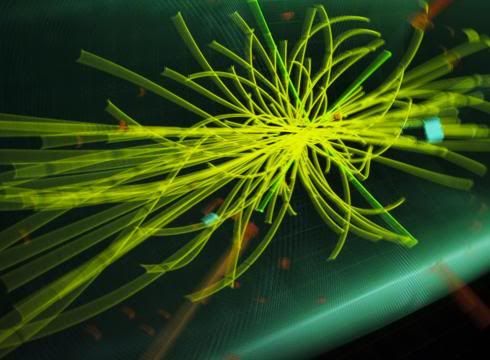
 photo European-lab-Close-to-finding-God-particle-NAN19NH-x-large.jpg


Lowder summarizes his debate with  Frank Turek [1] "what best explains reality: naturalism or theism?" He defines his terms: “naturalism” "the physical exists and, if the mental exists, the physical explains why the mental exists. If naturalism is true, then there are no purely mental beings which can exist apart from a physical body and so there is no God or any person or being much like God." He defines supernaturalism: "...the mental exists and, if the physical exists, the mental explains why anything physical exists. If supernaturalism is true, then there is no purely physical matter which can exist without some sort of ultimate mental creator."

He has three contentions but I will only deal today with matters pertaining to the definitions, I will deal with the contentions in days to come. Lowder defines Naturalism as "the view that the physical exists and, if the mental exists, the physical explains why the mental exists.[1] If naturalism is true, then there are no purely mental beings which can exist apart from a physical body and so there is no God or any person or being much like God." Then Supernaturalism is just the reverse, if it exists then mental explains physical.[2] 

This asserts that God is a being one among many, ("...no purely mental beings"). The theological trajectory developed by Tillich, John Macquarrie, (and others) voiced at Vatican II, indicates God is not a being but being itself. Moreover we have a problem in understanding what "mental" is when divorced from the physical process involving brain. I guess I don't mind your definition in principle but it is kind a metaphysical constrict to assert that we can see into the black box deeply enough to know that God's mental process well enough to critique it. I just assume that is part of what is meant by "God transcends our understanding."

If I were to say the physical is only a form of energy and matter is not the primary state or the primordial state of energy, you would probably say I am being too literal about the physical. It's not matter per se that makes something physical, such that energy is a from of the physical. I assume you might say something like that? I say we don't know all forms of energy. We don't know all that is involved in reality. Thus since the mental is a form of energy how do you know all physical doesn't reduce to the mental? Why make this sharp distinction between physical physical ?


  • Apart from the Being itself thing I wish you would address what I said about energy
    ie:
    We don't know all that is involved in reality. Thus since the mental is a form of energy how do you know all physical doesn't reduce to the mental? Why make this sharp distinction between physical physical and mental especially when dealing with the ultimate ends of existence?


    • Avatar


      Sorry, Joe. With all due respect, I have no idea what you are talking about.


    Don't worry about it man, No one else does why should you? Look you say SN = physical depends upon the mental. right? You say N = mental depends upon the physical. My question is assuming that I can assert rationally that mind is a form of energy (I can't think what else it would be), since we know that matter is just another form of energy how do we know that the N and SN don't meet at some point where they are both energy?


      • Avatar


        If mind is a form of energy, then "naturalism" as I have defined it, a/k/a "source physicalism," is true. In fact, in that case, I think eliminative materialism might even be true. Welcome back to atheism, Joe! 😂🤗


    I suppose you are assuming there's only one kind of energy and we know all about it? I don't think we actually know what energy is. For example what is it made of? Most scientists will say charges but charges are comes out to be more charges. If Mind is energy it could as easily be that your view reduces to a form of idealism.;-)


    The reductionst/materialists and phsyicalists assume and often argue that there is no proof of anything not material and not ‘physical” (energy is a form of matter).  The hard tangible nature of the physical is taken as the standard for reality while the notion of something beyond our ability to dietetic is seen in a skeptical way, even though the major developments in physics are based upon it. Is the physical world as tangible and solid as we think? Science talks about “particles” and constructs models of atoms made of wooden tubes and little balls this gives us the psychological impression that the world of the very tiny is based upon little solid balls. In reality subatomic particles are not made out of little balls, nor are these ‘particles” tangible or solid. In fact we could make a strong argument that no one even knows what they are made of. 
    We keep talking about "particles", but this word doesn't adequately sum up the type of matter that particle physicists deal with. In physics, particles aren't usually tiny bits of stuff. When you start talking about fundamental particles like quarks that have a volume of zero, or virtual particles that have no volume and pop in and out of existence just like that, it is stretching the everyday meaning of the word "particle" a bit far. Thinking about particles as points sooner or later leads the equations up a blind alley. Understanding what is happening at the smallest scale of matter needs a new vocabulary, new maths, and very possibly new dimensions.(quoting me from my article)
    This is where string theory comes in. In string theory fundamental particles aren't treated as zero-dimensional points. Instead they are one-dimensional vibrating strings or loops. The maths is hair-raising, and the direct evidence non-existent, but it does provide a way out of the current theoretical cul-de-sac. It even provides a route to unifying gravity with the other three fundamental forces - a problem which has baffled the best brains for decades. The problem is, you need to invoke extra dimensions to make the equations work in string-theory and its variants: 10 spacetime dimensions to be precise. Or 11 (M-theory). Or maybe 26. In any case, loads more dimensions than 4.9 (my article fn 9)


    Particles are not solid; they are not very tiny chunks of solid stuff. They have no volume nor do they have the kind of stable existence we do. They “pop” in and out of existence! This is not proof for the supernatural. It might imply that the seeming solidity of “reality” is illusory. There are two kinds of subatomic particles, elementary and composite. Composite are made are made out of smaller particles. Now we hear it said that elementary particles are not made out of other particles. It’s substructure is unknown. They may or may not be made of smaller particles. That means we really don’t know what subatomic particles are made of. That means scientists are willing to believe in things they don’t understand.10 While it is not definite enough to prove anything except that we don’t know the basis of reality, it does prove that and also the possibilities for the ultimate truth of this are still wide open. To rule out “the supernatural” (by the wrong concept) on the assumption that we have no scientific proof of it is utterly arrogance and bombast. For all we know what we take to be solid unshakable reality might be nothing more than God’s day dream. Granted, there is end to the spinning of moon beams and we can talk all day about what ‘might be,’ so we need evidence and arguments to warrant the placing of confidence in propositions. We have confidence placing evidence; it doesn’t have to be scientific although some of it is. That will come in the next chapter. The point here is that there is no basis for the snide dismissal of concepts such as supernatural and supernature.[3]


    • Avatar


      With the caveat that I'm not a physicist, I'm going to stipulate that anything "physical" has a spatial location. So, when you ask, "what if minds are a form of energy?", my reply is, "Do minds, on your view, have a spatial location?" If yes, then they're what I would call "physical." If no, then they're an example of what I would call something "mental" existing without something "physical" supporting or causing it.
    Joe Hinman 

    Good point but unfortunately it makes the same fallacy as the solidity argument. Look, take a solid object it seems clearly physical. At the subatomic level,however, its mostly nothing. Go down to the level of the particles that make up the object, they are not little balls. In order to explain what they are we have to enter into a recursion and pretend it's not not recursive. Solidity is an illusion.
    In the same way location is an illusion as well for the same reason, places are just points amid objects and space. Everything is mostly space and objectives are not really that solid,so places are not where they seem. Now the mental aspect of our lives is highly dependent upon physical apparatus. But since that is illusory it's more parsimonious to assume that the whole rests upon some basic formation that not dependent or illusory.
    • Just because life that emerges within the complicity of physical depends upon the illusion of solidity for the production of the mental doesn't mean that the ultimate foundation of reality would be as well, That would not be physical since that is illusory. Nor would it be dependent upon the physical, it would have to be some third thing we don't understand.
      As for cation if we assume,for the sake of argument,that a universal mind produced all of reality where would the mind be located? It would not be in it;s owns thoughts except as an object reason.


    [1] JEFFERY JAY LOWDER,  Opening Statement from My Debate with Frank Turek, Secular, Outpost Blog, (Dec,29, 2018)https://www.patheos.com/blogs/secularoutpost/2018/12/29/opening-statement-from-my-debate-with-frank-turek/

    the debate is also on You tube.


    [3] J.L. Hinman, "Can Sciece Really  Prove The Basis of Modern Physics,"   Metacrock's Blog (APR 30,2017)
    http://metacrock.blogspot.com/2017/04/can-science-really-prove-basis-of.html

    I am quoting my fn 4 and 9 in that article:

    STFC “are there other dimensions,” Large Hadron Collider. Website. Science and Facilities Council, 2012 URL: http://www.lhc.ac.uk/The%20Particle%20Detectives/Take%205/13686.aspx

    Monday, January 14, 2019

    Lowder's contentions: introduction

    Image result for stars in space

    Recently my friend, atheist apologist Jeff Lowder, posted on his blog an article summarizing his arguments in a debate he had with Evangelist Frank Turek. In this article I am going to critique his arguments. He offers three contentions:


    (1) The best explanation is the explanation with the overall greatest balance of intrinsic probability and accuracy;(2) Naturalism is an intrinsically more probable explanation than theism; and(3) Naturalism is a more accurate explanation than theism.
    He offers definitions:

    *“naturalism,”  the physical exists and, if the mental exists, the physical explains why the mental exists.[1] [1] If naturalism is true, then there are no purely mental beings which can exist apart from a physical body and so there is no God or any person or being much like God.*“supernaturalism,” that the mental exists and, if the physical exists, the mental explains why anything physical exists.[2] If supernaturalism is true, then there is no purely physical matter which can exist without some sort of ultimate mental creator.*personal supernaturalism” is a type of supernaturalism; it adds on the claims that one or more personal mental entities exist and, if a physical world exists, it or they produced the physical world for a purpose.[3]* “theism” is a type of personal supernaturalism; it adds onthe claim that there is just one mental entity, God, who is all-powerful, all-knowing, and morally perfect.[4] *“otherism” is a catch-all category. It says that both naturalism and supernaturalism are false.[5]the question before us in tonight’s debate is this. What best explains reality: theism or naturalism?
    Lowder offers three contentions:
    (1) The best explanation is the explanation with the overall greatest balance of intrinsic probability and accuracy;(2) Naturalism is an intrinsically more probable explanation than theism; and(3) Naturalism is a more accurate explanation than theism.

    Before turning to his contentions we need to think about what is being asked. An explanation of "reality." The problem is Lowder and all the philosophers of naturalism  will sicrcombscirbe reality to just the aspects of it that can be dealt with though their method. That is to say, to the physical aspects, That means they are not explaining reality at all. To draw analogy it's like saying I am going to explain pot roast.But I don't deal with where roast comes from, or what it tastes like or the texture it has in the mouth just the fact that it is and that it looks brownish, No smell. So have I explained roast? I've explained the fact that it exists and that it looks brown does that really cover it? 

    First Contention

    : the best explanation is the explanation with the overall greatest balance of intrinsic probability and accuracy.
    Lowder states"
    By “intrinsic probability” of a hypothesis, I mean the probability independent of the evidence we have for or against it. The intrinsic probability of a hypothesis is determined entirely by its modesty and coherence.[6]By “accuracy” of a hypothesis, I mean the degree to which a hypothesis’s predictions correspond to reality. We measure accuracy by looking at “evidence.”By “evidence” I mean something which makes something else more probable than it would have been otherwise. Let me give you an example.[7] Imagine you have two jars of red and blue jellybeans. In the first jar, 90% of the jellybeans are blue and the rest are red. In the second jar, 90% of the jellybeans are red and the rest are blue.[2]
    Is it really possible to deal with intrinsic probability and accuracy if we don't include all the variables? If most of the venerable are unknown or can't be studied.He limits reality to the mere concept of the physical aspect rather than including evidence for it. That in itself limits in seen aspects,In so doing he also limits and conceals competing explanations and aspects not given to sense data. He's giving a kind of explanation but in not dealing with moral philosophy to  name one thing, he's not really dealing with reality per se.

    In explaining his reasons he essentially bases his casein Bayes."Mathematicians have a formula called Bayes’ Theorem, which can be used to specify the relationship between intrinsic probability, accuracy, and the overall or final probability of a hypothesis. It follows from Bayes’ Theorem that a hypothesis is probably true, just in case it has a greater overall balance of intrinsic probability and explanatory power than do its alternatives collectively."[3]

    Second Contention

    second basic contention: naturalism is an intrinsically more probable explanation than theism.


    Analysis:
    Intrinsic probability is determined by modesty, coherence, and nothing else. By “modesty,” I mean a measure of how much the hypothesis asserts.[8] The more a hypothesis claims, the more ways there are for it to be false and so, before we start looking at evidence, the less likely it is to be true.By “coherence,” I mean a measure of how well the parts of a hypothesis fit together.[9] If the different parts count against each other, the hypothesis is less coherent and less likely to be true.Now consider naturalism and supernaturalism. They are symmetrical claims: naturalism claims that the physical explains the mental, while supernaturalism claims that the mental explains the physical. Both claims are equally modest and equally coherent. Before examining the evidence, both positions are equally likely to be true.[10]With these definitions in mind, then, I can now defend my second contention. Theism is a type of supernaturalism but could be false even if supernaturalism is true. Furthermore, theism is less modest than either supernaturalism or naturalism. Therefore, before we look at evidence, it is less likely to be true than supernaturalism or naturalism.[11] But that entails that naturalism is intrinsically more probable than theism.

    Naturalism is more accurate in terms of scientifically verifiable aspects of reality but that does not prove that there are no other aspects. It's a typically unfair argument. In fact Lower has merely reduced the question to science vs religion. But if we only use scientific thinking we can never understand anything but scientific thinking, Science cannot prove that only science is valid because it can;t evaluate other ideas,
    More on Wednesday
    Notes
    [1] I preset Lowder's actual notes in red bracketed numbers above and below after mine.


    Lowder's Notes[1] I owe this definition to Paul Draper.[2] I owe this definition to Paul Draper.[3] This definition is similar to, but not identical with, one offered by Paul Draper.[4] I owe this definition to Paul Draper.
    [5] I owe this definition to Paul Draper.[6] I owe this to Paul Draper.
    [7] I owe this jelly bean analogy to Paul Draper. Draper’s full analogy also includes an equal number of yellow jelly beans in both jars, where yellow signifies something that is equally likely to have come from either jar and hence is not evidence that it came from either jar. I have omitted the yellow jelly beans solely in the interest of time.[8] I owe this definition to Paul Draper.[9] I owe this definition to Paul Draper.[10] Paul Draper, “God and the Burden of Proof,” Secular Outpost (July 21, 2014), http://www.patheos.com/blogs/secularoutpost/2014/07/21/new-by-paul-draper-god-and-the-burden-of-proof/[11] Paul Draper, “More Pain and Pleasure: A Reply to Otte” in Christian Faith and the Problem of Evil (ed. Peter van Inwagen, Eerdmans, 2004), 41-54 at 49.[12] Let N stand for naturalism, T for theism, and F for any of these facts. Using the symbol “Pr(F | H)” to stand for the epistemic probability that F is true conditional upon H, then the claim that some fact is evidence favoring naturalism over theism should be understood as the claim that Pr(F | N) > Pr(F | T).[13] Jeffery Jay Lowder, “Potential Objections to Swinburne’s Cosmological Argument,” The Secular Outpost (March 17, 2014), http://www.patheos.com/blogs/secularoutpost/2014/03/17/potential-objections-to-swinburnes-cosmological-argument/. Note that here I am using the word “matter” as a way to provide a concrete example of something “physical.”[14] See Keith M. Parsons, Science, Confirmation, and the Theistic Hypothesis (Ph.D. Dissertation, Kingston, Ontario, Canada: Queen’s University, 1986), 46; Paul Draper, “Evolution and the Problem of Evil” in Philosophy of Religion: An Anthology (3rd ed., ed. Louis Pojman, Wadsworth, 1997), 223-24; and idem, “God, Science, and Naturalism” Oxford Handbook of Philosophy of Religion(ed. William Wainwright, Oxford: Oxford University Press, 2004), 272-303; and Barbara Forrest, “Methodological Naturalism and Philosophical Naturalism: Clarifying the Connection” Philo 3 (2000): 7-29.[15] Draper 2004.[16] See Paul Draper, “Evolution and the Problem of Evil” in Philosophy of Religion: An Anthology (3rd ed., ed. Louis Pojman, Wadsworth, 1997), 219-230; cf. Louis P. Pojman, Philosophy of Religion (Mayfield, 2001), chapter 6.


    https://www.patheos.com/blogs/secularoutpost/2018/12/29/opening-statement-from-my-debate-with-frank-turek/


    • [2] Ibid
    [3] Ibid

    Tuesday, January 08, 2019

    technical difficulties

    Having major  computer problems, may  be gone long time 

    Monday, January 07, 2019

    "God is Beyond our understanding" is beyond atheist's understanding

    Image result for stars in space


    I had an interesting discussion on the Secular Outpost Blog. The atheists were reacting to the concept  That , "God is beyond human comprehension". They argue that this means we can;t know anything about God  thus we can't  make a rational belief. This was part of a larger argument, Bradley Bowen; argument against Christian  apologist Kreft, part 87 or something. Poster Susan Humphreys in the comment section starts thinking down a tributary of that discussion


    I was watching the news one evening, only half listening and a Cardinal was being interviewed (possibly Dolan). The interviewer asked a question that I don't think the Cardinal wanted to answer because he said, in an attempt to stop the questions I think, "God is beyond human comprehension". This is taken from several places in the Bible. At the time I thought does the Cardinal realize what he just said? If God is beyond human comprehension than anything a person says about God--his characteristics, purposes, plans, what he can or can't do, what he wants us to do or not to do, even if he is a he and not a she or an it, or even if he/she/it exists--is nothing more than the figment of human imagination.[2]

    Metacrock: Of course that kind of statement comes with an implicit qualification which should be self evident, that while we can't ascertain God by our own intellectual powers, that does not preclude God's own willful revelation to us about himself.We cannot even know what good is in an ultimate sense even assuming a naturalistic world. I have never been able to get an atheist to give me a valid justification  form moral motions, but given my  own limited experience I can say I know what good is relative to my own   milieu. Thus while I cannot say my parents were the absolute good I can say they were good to me,

    Brad Bowen:
    "If some being is beyond human comprehension, then that being is beyond human evaluation and beyond human understanding. We cannot evaluate a being as "morally good" if that being is beyond our comprehension. We also cannot KNOW (or even make reasonable probability estimates about) what such a being will do or not do. "[3]
    Metacrock:I think that is a rather fallacious argument, of course God is beyond human evaluation in an ultimate sense, in order to understand God exhaustively  you would have   to create your own universe. That does not mean we can't understand aspects of God as they pertain to our own lives. 

    Analogy: I don't know very much about quantum gravity but I do know it requires highly specialized education to understand,Now If we take  statements literally like you want us to take statement about God I can't say that.  Perhaps Quantum gravity is stupid. perhaps it's a game for mentally challenged people. I can't say because It's beyond my understanding.


    There are natural qualification  to those concepts that should be understood I don't think it's fair for us to have to spell them out every time we talk about it.


    Brad:

    We cannot see God perform any actions, nor can we photograph or video God. We cannot hear God, smell God, touch God, or taste God. God leaves no physical evidence of his activity. The only hope we have of identifying God as the CAUSE of a particular event is to KNOW the PLANS or PURPOSES of God, and to determine that God, if God exists, would be likely to CHOOSE to cause that particular event.
    Metacrock:We don't have to understand the plans and purposes of God to know that God caused the universe, in fact that is irrelevant. We can understand God as cause through logic. We can understand it through self disclosure of God to us. But there is a problem with just understanding God as a cause,I write a essay  on this for my blog recently[4]


    We don't have to understand the plans and purposes of God to know that God caused the universe, in fact that is irrelevant.
    RESPONSE:

    Brad:
    I have argued for the opposite conclusion, and you have not shown there to be ANY PROBLEM with my argument.

     Metacrock:
    I disagree with your arguments Brad.

    Brad:


    QUESTION: Do you think that ANY of Swinburne's arguments for God or ANY of Kreeft's arguments for God can be successful WITHOUT making some assumptions about the PLANS or PURPOSES of God?
    Metacrock:
    I said we don't need to know that for certain arguments such as the CA or OA. But I think we can reasonably assert that God's plans and purposes are benevolent based upon what logical and and experiential evidence we do have, We don't need that much intellectual comprehension to understand love.
    Brad:
    If so, please point me to at least ONE such argument by Swinburne or Kreeft.
    Metacrock:
      I don't know their arguments well enough to defend, But I do know mine,would you like me to introduce you  to a couple? The God is being itself thing, I could tell you about that,, again.
      [end dialogue]

      The irony in that last comment is that I debated him on the existence of God he totally ignored my comments and acted shamefully.[5] He made no effort to understand  my countless explanations and in depth attempts to  clarify what everyone agrees was crystal clear he kept whining it was so unclear. Total debate version  of boxing strategy called "rope-a-dope."[6]

      The phrase "beyond our understanding" does not mean that we can't understand anything about God at all. We can understand somethings. But God is infinite we are finite so we cannot understand God as a whole. WE can understand the fact that God loves us,we not understand why but we can know it as a fact, We can experience God's love in our hearts, that is all we need to understand. The creator of the universe loves me what else do I need to know?

      We have a gap in knowledge where the mass of what we don't know about God resides,that gap is bridged by faith. This is where faith plays it's role. So of course this is bothersome to skeptics who have trouble with faith anyway.


      Notes

      [1] Bradley Bowen, "The Logic of Miracles – Part 4: Kreeft’s Last Ten Arguments" Secular Outpost Blog (Dec 20,2018), comment section.


      [2] Ibid, comments

      [3] Ibid

      [4] J.L. Hinman, "How Modern Thinking about God Went Wrong" Metacrock's Blog (WEDNESDAY, DECEMBER 19, 2018)

      [5] "Debate, Hinman s Bowen" Religious A Priori

      https://religiousapriori.blogspot.com/2018/12/debate-hinman-v-bowen-belief-rationally.html

      O think this is the whole debate it;s in several posts.

      Essentially I kicked his ass he pretended it was nothing.

      [6]https://www.google.com/search?source=hp&ei=SBcyXK3BIMXktQXwlbrgDQ&q=what+is+%22rope+a+dope%3F%22&btnK=Google+Search&oq=what+is+%22rope+a+dope%3F%22&gs_l=psy-ab.3..0j0i22i30l3j0i22i10i30j0i22i30l2.801752.808005..808817...1.0..0.267.2776.5j16j2......0....1..gws-wiz.....0..35i39j0i131.EdaxSuyc8-8
      a boxing tactic of pretending to be trapped against the ropes, goading an opponent to throw tiring ineffective punches.