Sunday, April 09, 2023

"Weak evidence" that warrants belief in Jesus' Resurrection


My friend and loyal atheist opponant "Pixie" states: "The empty tomb is not even considered a historical fact in mainstream history as the evidence is so weak. It all adds up to pretty flimsy evidence that cannot be verified."[https://metacrock.blogspot.com/2023/04/atheist-reduction-of-knolwedge-to.html]

I will post more "weak eveidece" on Wednesday.

The Gospel accounts of the resurrection were transmitted faithfully from the very beginning. How do we know this? The same way we know that any aspect of ancient world history is a probably true: the documents are trustworthy. Now skepitics are probably spitting milk out their noses reading this, but its true.There are three areas of reliability, and two major misconceptions that have to be avoided. Let me start with the misconceptions:

(1) The idea that "reliable" means "realisitic."

I'm sure many skeptics reading this are saying, How can they be reliable when they speak of miracles?. But reliable doesn't' necessarily mean "realistic." This doesn't mean they aren't hard to believe, or that they don't require an assumption about metaphysics; reliable doesn't' mean true. What it does mean I'll get to in a minute.

big misconception number two:

(2) Faithful transmission of history would have to mean that we can prove that eye witnesses wrote the documents. Or worse, that the name sakes wrote the documents (John wrote John, Matthew wrote Matthew). None of that has to be the case.

faithful transmission means the content has been passed down from source to antoher for generations without significant alteration. Trustworthy doesn't mean "we can prove its true," it means we can trust, within a reasonable estimation, that what we have recorded today is what we would find being transmitted in the earilest times. Here is how we know:

I. The evidence of the Manuscripts (Ms) and the stories themselves.

II. Early date of the Resurrection narrative.

III. Reliability of the Community.

I. The evidence of the Manuscripts (Ms) themselves.

I wont belabor the point about the documents, since that has been talked to death on message boards for years. See my pages on Bible: canonical Gospels for a lot of good info on this point. But, the often quoted statistic is that the NT MS are generally 98% reliable. What that means is, that to within 98% all the thousands of MS that we possess (24,000 of all types including fragments) say the same things. we don't find passages with wildly different events. There is no one secret passage somwhere that offers some totally different account of what happened. Such a Ms just doesnt' exist and there is no evidence that such a thing ever did exist. The closest we come to that is Secret Mark the fragment found by Martin Smith at Mar Saba; but even Secret Mark assumes the world of the Gospels, it assumes a particular event recorded in Mark, it doesn't' change the basic facts of the story at all.

Now skeptics have been known to argue, "but they are just copying the same story." That's the point! If those events didn't happen, or at least if they were not been taught from the beginning as "the truth," we should find other versions. NO program of eradication could take out all copies in the ancient world. Some fragment of a Gospel would have survived somewhere. If there was a version of the story in which Jesus didn't rise from the dead, or in which he rose on the 8th day, or whatever, we would have a copy of it. The fact that the manuscripts give a cooherent and unified testimony going all the way back as early as it can go (and not contradicted by 35 lost gospels we do possess) indicates that this is a good representation of what happened (see F.F. Bruce, The New Testament Documents,Are they Reliable?

Unified Narratival Framework

The Gospel of Luke is greatly substantiated by artifacts and history, what about the other Gospels, especially the first Gospel Mark? In the totality of the Synoptic tradition we have a unified framework which is kept intact. We do not see the growth and elabortaion of myth. As Stephen Neil points out, quoting Edwin Clement Hoskyns (1884-1937) in The Riddle of the New Testament (p.104) Neil begins by saying,

"We hold with some confidence that Mark is the earliest of the Gospels and that both Matthew and Luke use him in the Composition of their Gospels, if there is any tendency to heighten the drama...we shall certainly find it in those points at which Matthew and Luke differ from Mark. Do we in fact find that this is the process which has taken place? After a careful survey of the evidence Hoskyns answers in the negative. Matthew and Luke have far more material than Mark...but essentially the presentation of Jesus is the same, and if there is any tendency it is not toward heightening the majesty and mystery of Christ it is rather in the opposite direction--Jesus is a little tamed, a little softened and brought a little nearer to ordienary categories of human existence" (p. 216). He then quotes Hoskyns himself: "In this process of editing they nowhere heighten Marks tremendous picture of Jesus. No deifying of a prophet, or of a mere preacher of righteousness can be detected. They do not introduce Hellenistic superstition or submerge in the light of later Christian faith the lineaments of Mark's picture of Jesus.They attempt to simplify Mark, he is more difficult to understand than they are...."

Rather than seeing a myth spreading and growing and moving toward a deified Christ what we actually see is a stable framework of assumed and testified fact and a relatively stable explanation of what the facts mean. This is in sharp contrast to the skeptic's idea that the simple facts grew out of proportion with re-telling until they culminated in the fantastical notion that Jesus rose from the dead!

II. Early Date of Resurrection Narrative.

A.Myth Takes Centuries to Develop

The importance of early claims is this. Myth takes time to develop. Legends might spring up over night, but they take time to assume a consistent form. William Lane Craig quotes prof. Sherwin-White ("Contemporary Scholarship and the Historical Evidence for the Resurrection of Jesus Christ," Truth 1 (1985): 89-95)

"For in order for these stories to be in the main legendary, a very considerable length of time must be available for the evolution and development of the traditions until the historical elements have been supplanted by unhistorical. This factor is typically neglected in New Testament scholarship, as A. N. Sherwin-White points out in Roman Law and Roman Society tn the New Testament. Professor Sherwin-White is not a theologian; he is an eminent historian of Roman and Greek times, roughly contemporaneous with the NT. According to Professor Sherwin-White, the sources for Roman history are usually biased and removed at least one or two generations or even centuries from the events they record. Yet, he says, historians reconstruct with confidence what really happened. He chastises NT critics for not realizing what invaluable sources they have in the gospels. The writings of Herodotus furnish a test case for the rate of legendary accumulation, and the tests show that even two generations is too short a time span to allow legendary tendencies to wipe out the hard core of historical facts. When Professor Sherwin-White turns to the gospels, he states for these to be legends, the rate of legendary accumulation would have to be 'unbelievable'; more generations are needed. All NT scholars agree that the gospels were written down and circulated within the first generation, during the lifetime of the eyewitnesses."

B.Resurrection Claims Made Early

(1) Markon Account Very Early

The early date of the transmissions are borne out by the Texts themselves. They are clean and free of myth. The Markon version is especially pure. Consider the use of the phrase "on the third day" which we find in Paul's statement above about the 500 witnesses. Throughout the NT that phrase is used of the Resurrection. Even in Gospels latter than Mark's it is used. But not in Mark. In Mark we are receiving something from the purest strata of the early days. William Lane Craig, (The History of the empty Tomb of Jesus" New Testament Studies 21 (1985):39-67)

Gerd Theissen in The Gospels in Context, (pp. 166-167):

In my opinion, in Mark we can discern behind the text as we now have it a connected narrative that presupposes a certain chronology. According to Mark, Jesus died on the day of Passover, but the tradition supposes it was the preparation day before Passover: in 14:1-2 the Sanhedrin decided to kill Jesus before the feast in order to prevent unrest among the people on the day of the feast. This fits with the circumstance that in 15:21 Simon of Cyrene is coming in from the fields, which can be understood to mean he was coming from his work. It would be hard to imagine any author's using a formulation so subject to misunderstanding in an account that describes events on the day of Passover, since no work was done on that day. Moreover, in 15:42 Jesus' burial is said to be on the "preparation day," but a relative clause is added to make it the preparation day for the Sabbath. Originally, it was probably the preparation day for the Passover (cf. Jn 19:42). The motive for removing Jesus from the cross and burying him before sundown would probably have been to have this work done before the beginning of the feast day, which would not make sense if it were already the day of Passover. Finally, the "trial" before the Sanhedrin presupposes that this was not a feast day, since no judicial proceedings could be held on that day. It would have been a breach of the legal code that the narrator could scarcely have ignored, because the point of the narrative is to represent the proceeding against Jesus as an unfair trial with contradictory witnesses and a verdict decided in advance by the high priests.

(2)Gospel Phraseology implies early telling

"The use of 'the first day of the week' instead of 'on the third day' points to the primitiveness of the tradition. The tradition of the discovery of the empty tomb must be very old and very primitive because it lacks altogether the third day motif prominent in the kerygma, which is itself extremely old, as evident by its appearance in I Cor 15. 4. If the empty tomb narrative were a late and legendary account, then it could hardly have avoided being cast in the prominent, ancient, and accepted third day motif.{81} This can only mean that the empty tomb tradition ante-dates the third day motif itself. Again, the proximity of the tradition to the events themselves makes it idle to regard the empty tomb as a legend. It makes it highly probable that on the first day of the week the tomb was indeed found empty." (Caraig)

(3) Pauline Tesimony Earlier than written Gospels

Paul's statement about the 500 and the credal confession were written prior to any of the Gospels. This places the teaching about 20 years after the fact. That pushes the pre-Markon material in Mark back even further, to near the date of the events (because it took time to form into a credal statement).

"Undoubtedly the major impetus for the reassessment of the appearance tradition was the demonstration by Joachim Jeremias that in 1 Corinthians 15: 3-5 Paul is quoting an old Christian formula which he received and in turn passed on to his converts According to Galatians 1:18 Paul was in Jerusalem three years after his conversion on a fact-finding mission, during which he conferred with Peter and James over a two week period, and he probably received the formula at this time, if not before. Since Paul was converted in AD 33, this means that the list of witnesses goes back to within the first five years after Jesus' death. Thus, it is idle to dismiss these appearances as legendary. We can try to explain them away as hallucinations if we wish, but we cannot deny they occurred. Paul's information makes it certain that on separate occasions various individuals and groups saw Jesus alive from the dead. According to Norman Perrin, the late NT critic of the University of Chicago: "The more we study the tradition with regard to the appearances, the firmer the rock begins to appear upon which they are based." This conclusion is virtually indisputable."
[Craig] Leadership University (Webstie) original "Contemporary Scholarship and the Historical Evidence for the Resurrection of Jesus Christ," Truth 1 (1985): 89-95]

We can also include in along with this Pauline testimony Hebrews and 1 Peter. Accounts of points that correspond to Gospels circulating by AD 70 (see Luke Timothy Johnson quotation under point I).

C. Pre Markan Redaction Pushes Date of original Writting to mid Century>

However the material upon which the Gospels are based dates back to an earlier period, and in a form which is essentially the same as that which is found in the Synopitics. This actually pushes the date of the Gospel story, including the death, burial and resurrection (including the empty tomb) to A.D. 50.

"Studies of the passion narrative have shown that the Gospel accounts are dependent upon one and the same basic account of the suffering, crucifixion, death and burial of Jesus. But this accounted ended with the discovery of the empty tomb." Hemut Koster Ancient Christian Gospels p. 231

(1) Diatessaron

The Diatessaron ..of Titian is the oldest known attempted harmony of the Gospels. It probably dates to about 172 AD and contains almost the entire text of the four canonicals plus other material, probably from other Gospels and perhaps oral traditions. It is attested to in many works and is probably the first presentation of the Gospel in syriac.

In an article published in the Back of Helmut Koester's Ancient Christian Gospels, William L. Petersen states:

"Sometimes we stumble across readings which are arguably earlier than the present canonical text. One is Matthew 8:4 (and Parallels) where the canonical text runs "go show yourself to the priests and offer the gift which Moses commanded as a testimony to them" No fewer than 6 Diatessaronic witnesses...give the following (with minor variants) "Go show yourself to the priests and fulfill the law." With eastern and western support and no other known sources from which these Diatessaranic witnesses might have acquired the reading we must conclude that it is the reading of Tatian...The Diatessaronic reading is certainly more congielian to Judaic Christianity than than to the group which latter came to dominate the church and which edited its texts, Gentile Christians. We must hold open the possible the possibility that the present canonical reading might be a revision of an earlier, stricter , more explicit and more Judeo-Christian text, here preserved only in the Diatessaron. [From "Titian's Diatessaron" by William L. Petersen, in Helmut Koester, Ancient Christian Gospels: Their History and Development, Philadelphia: Trinity Press International, 1990, p. 424]

While textual critics find it more significant that the early implications are for Jewish Christianity, I find it significant that the pre-Markan material in the Diatesseran includes a miracle story. Those miracles just never really fall out of the story. They are in there from the beginning. But for our purposes the most important point to make is that here we have traces of pre-Markan material. That is, Mark as we know Mark was not the earliest Christian Gospel written, it is merely the earliest of which we have a full copy. The date assigned to the composition of Mark is not the date assigned to the sources used to redact that composition. This pushes the written record of the Jesus story before A.D. 60 and makes it at least contemporaneous with Paul's writings. In other words it is clear that written Gospels with Jesus in an historical setting, and with Mary and Joseph the Cross and the empty tomb existed and circulated before the version of Mark that we know, and at the same time or before Paul was writing his first epistle (150'sAD).

(2) Papyrus Egerton 2

The Unknown Gospel (Egerton 2) preserves a tradition of Jesus healing the leper in Mark 1:40-44. (Note: The independent tradition in the Diatessaran was also of the healing of the leper). There is also a version of the statement about rendering unto Caesar. Space does not permit a detailed examination of the passages to really prove Koster's point here. But just to get a taste of the differences we are talking about:

Koster says:

"There are two solutions that are equally improbable. It is unlikely that the pericope in Egerton 2 is an independent older tradition. It is equally hard to imagine that anyone would have deliberately composed this apophthegma by selecting sentences from three different Gospel writings. There are no analogies to this kind of Gospel composition because this pericope is neither a harmony of parallels from different Gospels, nor is it a florogelium. If one wants to uphold the hypothesis of dependence upon written Gospels one would have to assume that the pericope was written form memory....What is decisive is that there is nothing in the pericope that reveals redactional features of any of the Gospels that parallels appear. The author of Papyrus Egerton 2 uses independent building blocks of sayings for the composition of this dialogue none of the blocks have been formed by the literary activity of any previous Gospel writer. If Papyrus Egerton 2 is not dependent upon the Fourth Gospel it is an important witness to an earlier stage of development of the dialogues of the fourth Gospel....[Koester , 3.2 p.215]

Koseter shows that the Gospels are based upon pre-markan material which dates from A.D. 50 and ends witht he empty tomb, the resurrection appearnces of Jesus he believes were added from other sources. In this theory is partially in agreement with Crossen who also believes that the pre-Markan material can be traced to A.D. 50 and includes the empty tomb. Koester also uses the Gospel of Thomas and Gospel of Peter and several other works to demonstrate the same point.[please see Jesus Puzzell 2 for more on this point] This puts the actual writing of the Gospel tradition just 20 years after the original events. There still many eye-witnesses living, the communities which had witnessed the events of Jesus' ministry would have still basically been intact. The events would be somewhat fresh, and plenty of oportunity for witnesses to correct mistakes.

Thus the basic historical validity for the Gospels can be upheld, since they are based upon material which actually goes back to within a mere 20 years of the original events. This means that many of he eye witnesses would have been in the community and able to correct any mistakes or fabrications which were put into the text.

Almost all NT scholars put the writing of the Synoptic Gospels within the plausable life span of eye witnesses, Mark around 65, Matt. around 70 and Luke 80. In Ancient Christian Gospels, (1991) Helmutt Koster identifies a proto-Gospel which underlies the synoptic and John, and which has traces in the Gospel of Peter. (Koster is a major textual critic and is certainly placed in the Liberal camp).

(c) Peter not copy of Matt.

"The Gospel of Peter is dependent upon the traditions of interpriting old testament materials, for the description of Jesus' suffering and death; it shares such traditions wtih the canonical Gospels, but is not dependent upon the canonical writtings....[Dominic Crosson] argues that this activity [interpretation of scritpure as nuleous of passion narrative]...resulted in the composition of a litterary document at a very early date, i.e. in the middle of the first century." (Koster, 218).

"The Gospel of Peter as a whole is not dependent upon any of the canonical Gospels. It is a composition which is analogous to the Gospels of Mark and John. All three writtings, independently of each other use an older passion narrative which is based upon a exigetical tradition that was still alive when these Gospels were composed and to which the Gospel of Matthew also had access...However, framgements of the epiphany story of Jesus being raised from the Tomb, which the Gospel of Peter has preserved in its entirety, were employed in different literary contexts in the Gospels of Mark and Matthew." (Koster, 240).

(b) Passion account developed early

"The account of the passion of Jesus must have developed quite early becasue it is one and the same account used by Mark (and subsequently by Matthew and Luke) and John, and as will be argued below, by the Gospel of Peter. However, except for the story of the discovery of the empty tomb the different stories of the appearence of Jesus after his resurrection in the various gospels cannot derive from one single source....each of the authors of the extant Gospels and of their secondary endings drew these epiphany stories form their own particular tradition, not form a common source." (Ibid. 220).

(c) empty tomb part of original story

"Stories of the passion narrative were dependent upon one and the same basic account of the suffering Crucifixion, death and burial of Jesus. But this account ended with the discovery of the empty tomb....for the story of Jesus' burial and the discovery of the empty tomb the Gospel of Peter used the source that also that underlys Mark and John, which ended with the discovery of the empty tomb." (ibid.231).

William Laine Craig tells us:

" The presence of the empty tomb pericope in the pre-Markan passion story supports its historicity. The empty tomb story was part of, perhaps the close of, the pre-Markan passion story. According to Pesch,{79} geographical references, personal names, and the use of Galilee as a horizon all point to Jerusalem as the fount of the pre-Markan passion story. As to its age, Paul's Last Supper tradition (I Cor 11. 23-25) presupposes the pre-Markan passion account; therefore, the latter must have originated in the first years of existence of the Jerusalem Urgemeinde. Confirmation of this is found in the fact that the pre-Markan passion story speaks of the 'high priest' without using his name (14. 53, 54, 60, 61, 63). This implies (nearly necessitates, according to Pesch) that Caiaphas was still the high priest when the pre-Markan passion story was being told, since then there would be no need to mention his name. Since Caiaphas was high priest from A.D. 18-37, the terminus ante quem for the origin of the tradition is A.D. 37. Now if this is the case, then any attempt to construe the empty tomb account as an unhistorical legend is doomed to failure." (The History of the empty Tomb of Jesus" New Testament Studies 21 (1985):39-67)

"Like the burial story, the account of the discovery of the empty tomb is remarkably restrained. Bultmann states, '. . . Mark's presentation is extremely reserved, in so far as the resurrection and the appearance of the risen Lord are not recounted.' {55} Nauck observes that many theological motifs that might be expected are lacking in the story: (1) the proof from prophecy, (2) the in-breaking of the new eon, (3) the ascension of Jesus' Spirit or his descent into hell, (4) the nature of the risen body, and (5) the use of Christological titles.{56} Although kerygmatic speech appears in the mouth of the angel, the fact of the discovery of the empty tomb is not kerygmatically colored. All these factors point to a very old tradition concerning the discovery of the empty tomb."

III. Community as Author

We do not have to know the exact identity of the authors, because the original material comes from the community itself

A.Oral tradition was not uncontroled.

Oral tradition in first-century Judaism was not uncontrolled as was/is often assumed, based on comparisons with non-Jewish models. From pg. 53-55 in B.D. Chilton and C.A. Evans (eds.), "Authenticating the Activities of Jesus" (NTTS, 28.2; Leiden: E.J. Brill, 1998):

"...[T]he early form criticism tied the theory of oral transmission to the conjecture that Gospel traditions were mediated like folk traditions, being freely altered and even created ad hoc by various and sundry wandering charismatic jackleg preachers. This view, however, was rooted more in the eighteenth century romanticism of J. G. Herder than in an understanding of the handling of religious tradition in first-century Judaism. As O. Cullmann, B. Gerhardsson, H. Riesenfeld and R. Riesner have demonstrated, [22] the Judaism of the period treated such traditions very carefully, and the New Testament writers in numerous passages applied to apostolic traditions the same technical terminology found elsewhere in Judaism for 'delivering', 'receiving', 'learning', 'holding', 'keeping', and 'guarding', the traditioned 'teaching'. [23] In this way they both identified their traditions as 'holy word' and showed their concern for a careful and ordered transmission of it. The word and work of Jesus were an important albeit distinct part of these apostolic traditions.

"Luke used one of the same technical terms, speaking of eyewitnesses who 'delivered to us' the things contained in his Gospel and about which his patron Theophilus had been instructed. Similarly, the amanuenses or co-worker-secretaries who composed the Gospel of John speak of the Evangelist, the beloved disciple, 'who is witnessing concerning these things and who wrote these things', as an eyewitness and a member of the inner circle of Jesus' disciples.[24] In the same connection it is not insignificant that those to whom Jesus entrusted his teachings are not called 'preachers' but 'pupils' and 'apostles', semi-technical terms for those who represent and mediate the teachings and instructions of their mentor or principal.(25)

(22. O. Cullmann, "The Tradition," in Cullmann, The Early Church (London: SCM Press; Philadelphia: Westminster, 1956) 55-99; B. Gerhardsson The Origins of the Gospel Traditions (Philadelphia: Fortress, 1979); H. Riesenfeld The Gospel Tradition (Philadelphia: Fortress, 1970) 1-29; Riesner, Jesus als Lehrer.

23. Rom 6:17; 16:17; 1 Cor 11:2, 23; 15:3; Phil 4:9; Col 2:6-7; 2 Thess 2:15; 3:6; 2 Tim 3:14; Titus 1:9; 2 John 9-10; Jude 3: Rev 2:13, 24. Cf. Abot 1:1; Philo, The Worse Attacks the Better 65-68. 24. John 19:35; 21:24-25; cf. 13:23; 18:15-16; 19:26-27; 20:1-10; 21:7, 21-23. Cf. J. A. T. Robinson, Redating the New Testament (Philadelphia: Westminster, 1976) 298-311. 25. On parallels with other rabbis and their disciples and other Jewish usage cf. Mark 2:18 = Luke 5:33; K.H. Rengstorf TDNT 1 (1964) 412-43;.TDNT 4 (1967) 431-55.

Also, there wasn't an necessarily a long period of solely oral transmission as has been assumed:

"Under the influence of R. Bultmann and M. Dibelius the classical form criticism raised many doubts about the historicity of the Synoptic Gospels, but it was shaped by a number of literary and historical assumptions which themselves are increasingly seen to have a doubtful historical basis. It assumed, first of all, that the Gospel traditions were transmitted for decades exclusively in oral form and began to be fixed in writing only when the early Christian anticipation of a soon end of the world faded. This theory foundered with the discovery in 1947 of the library of the Qumran sect, a group contemporaneous with the ministry of Jesus and the early church which combined intense expectation of the End with prolific writing. Qumran shows that such expectations did not inhibit writing but actually were a spur to it. Also, the widespread literacy in first-century Palestinian Judaism [18], together with the different language backgrounds of Jesus' followers--some Greek, some Aramaic, some bilingual--would have facilitated the rapid written formulations and transmission of at least some of Jesus' teaching.[19]" (p. 53-54)

------------------ 18. Cf. Josephus, Against Apion 2.25 204: The Law "orders that (children) should be taught to read."; cf. idem, Ant. 12.4.9 209; Philo, Embassy to Gaius 115, 210, Further, see R. Riesner, Jesus als Lehrer (WUNT 2.7; Tubingen: Mohr [Siebeck], 1981; 4th ed., 1998) 112-15. 19. Jesus had hearers and doubtless some converts from Syria (Matt 4:25), the Decapolis (Matt 4:25; Mark 3:8; 5:20; 7:31), Tyre and Sidon (Mark 3:8; 7:24, 31; Matt 15:21).

N. T. Wright, critiquing the Jesus Seminar's view of oral tradition as uncontrolled and informal based on some irrelevant research done in modern Western non-oral societies writes:

"Against this whole line of thought we must set the serious study of genuinely oral traditions that has gone on in various quarters recently. [65] (p. 112-113)

--------------- 65. For example, see H. Wansbrough (ed.), Jesus and the Oral Gospel Tradition (JSNTSup 64; Sheffield: JSOT Press, 1991), referring to a large amount of earlier work; Bailey, "Informal Controlled Oral Tradition," 34-54. The following discussion depends on these and similar studies, and builds on Wright, The New Testament and the People of God, 418-43; and idem, Jesus and the Victory of God, 133-37.)

"Communities that live in an oral culture tend to be story-telling communities. They sit around in long evenings telling and listening to stories--the same stories, over and over again. Such stories, especially when they are involved with memorable happenings that have determined in some way the existence and life of the particular group in question, acquire a fairly fixed form, down to precise phraseology (in narrative as well as in recorded speech), extremely early in their life--often within a day or so of the original incident taking place. They retain that form, and phraseology, as long as they are told. Each village and community has its recognized storytellers, the accredited bearers of its traditions; but the whole community knows the stories by heart, and if the teller varies them even slightly they will let him know in no uncertain terms. This matters quite a lot in cultures where, to this day, the desire to avoid 'shame' is a powerful motivation. "Such cultures do also repeat, and hence transmit, proverbs, and pithy sayings. Indeed, they tend to know far more proverbs than the orally starved modern Western world. But the circulation of such individual sayings is only the tip of the iceberg; the rest is narrative, narrative with embedded dialogue, heard, repeated again and again within minutes, hours and days of the original incident, and fixed in memories the like of which few in the modern Western world can imagine. The storyteller in such a culture has no license to invent or adapt at will. The less important the story, the more the entire community, in a process that is informal but very effective, will keep a close watch on the precise form and wording with which the story is told. "And the stories about Jesus were nothing if not important. Even the Jesus Seminar admits that Jesus was an itinerant wonder-worker. Very well. Supposing a woman in a village is suddenly healed after a lengthy illness. Even today, even in a non-oral culture, the story of such an event would quickly spread among friends, neighbors and relatives, acquiring a fixed form within the first two or three retellings and retaining it, other things being equal, thereafter. In a culture where storytelling was and is an art-form, a memorable event such as this, especially if it were also seen as a sign that Israel's God was now at last at work to do what he had always promised, would be told at once in specific ways, told so as to be not just a celebration of a healing but also a celebration of the Kingdom of God. Events and stories of this order are community-forming, and the stories which form communities do not get freely or loosely adapted. One does not disturb the foundations of the house in which one is living."[B.D. Chilton and C.A. Evans (eds.), Authenticating the Activities of Jesus (NTTS, 28.2; Leiden: E.J. Brill, 1998) p. 113-115.]


Saturday, April 01, 2023

Atheist Reduction of Knolwedge to science

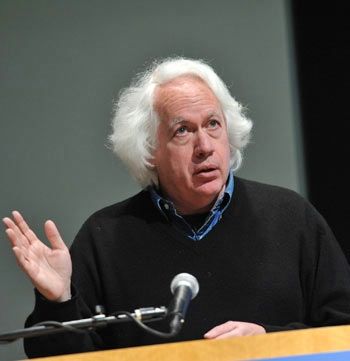
Leon Wieseltier

The Scientistic movement cuts across many boundaries. It includes, but is not limited to, atheism. One major facet of its ideology which has been especially important to atheism is the transformation of knowledge to technique. I refer to Barrett’s concept of the illusion of technique, of which I spoke in chapter one. The first move is a reduction of knowledge from a multiplicity of forms to one thing only, scientific knowledge. Then scientific knowledge lends itself to the working of technique in shaping our understanding by manipulating reality and thus truth. This reduction of knowledge to scientific data, is reflected on the popular internet site answers.com. One such question asked: “is science the supreme form of knowledge?” The answer it gives us is, “Science is the only form of knowledge. There is no way to know something without it being scientific in some way.”[1] It goes to ask “what is science knowledge the answer is “science knowledge is the understanding of everything around us how they process or work. To have Science knowledge it will allow you to have good explanations of many things…”[2] It reads like it’s written by a third grader. Science knowledge is everything, nothing escapes it, and it gives good explanations of many things, not all things? It gives a little testimonial just incase the definition doesn’t sound quite right. That its good for explaining things.

In popular terms, the site “debate.org” has a debate on the question “is science the only source of true knowledge.” That should at least reflect the fact that people are asking the question. Their straw poll, which is of course not scientific and not representative, shows 44% of people who visited the sight, says yes science is the only form of true knowledge.” 56% say “no.” It’s true that even with a specialized computer going audience the ‘no’s’ have it, yet 44% is a large percentage.[3] They quote Hume:

“If we take in our hand any volume; of divinity or school metaphysics, for instance; let us ask, Does it contain any abstract reasoning concerning quantity or number? No. Does it contain any experimental reasoning concerning matter of fact and existence? No. Commit it then to the flames: for it can contain nothing but sophistry and illusion.”[4] English Commedian Ricky Gervias is featured in a piece for Wall Street Journal, “why I am an Atheist.” He says:

People who believe in God don’t need proof of his existence, and they certainly don’t want evidence to the contrary. They are happy with their belief. They even say things like “it’s true to me” and “it’s faith.” I still give my logical answer because I feel that not being honest would be patronizing and impolite. It is ironic therefore that “I don’t believe in God because there is absolutely no scientific evidence for his existence and from what I’ve heard the very definition is a logical impossibility in this known universe,” comes across as both patronizing and impolite.[5]

That’s an example of how deeply this kind of thinking as been absorbed by the popular level.

Austin Cline is a blogger and an expositor of atheist opinion. He writes about the nature of scientific knowledge defending the statement “God does not exist,” as a scientific statement. If we examine his view it turns out that the reason he says it is because he’s reduced the nature of knowledge to his understanding of science. He says that objecting to the statement on the grounds that God is beyond scientific proof is a misunderstanding of what the statement means. The statement, “God does not exist” (as a scientific statement) means that it can’t be proved by scientific means. If it can’t be proved then it doesn’t exist. That’s the same as saying “my view is all there is.”

When a scientist says "God does not exist," they mean something similar to when they say "aether does not exist," "psychic powers do not exist," or "life does not exist on the moon."

All such statements are casual short-hand for a more elaborate and technical statement: "this alleged entity has no place in any scientific equations, plays no role in any scientific explanations, cannot be used to predict any events, does not describe any thing or force that has yet been detected, and there are no models of the universe in which its presence is either required, productive, or useful." [6] I’ve never actually seen a scientist who says that, except for the professional atheists such as Dawkins. Even Dawkins doesn’t actually say that he’s making a scientific statement. One might think that the comparison to aether is not valid, seeing the Michaelson/Moraelly experiments as disproof of the possibility of aehter. Technically all they really did was fail to find any evidence in favor of aether and the modern scientific understanding of the universe failed to produce a place for it.[7] That’s really the point Cline makes, science doesn’t have to disprove God, just not finding a place for God means God doesn’t exist (for scientism) because scientism only accepts that for which science makes a place. In other words, by this method, knowledge is reduced all other forms to science alone, or least to their reading of science alone. Cline himself rejects an absolutist position (of disproof) on the part of science. “What should be most obvious about the technically accurate statement is that it is not absolute. It does not deny for all time any possible existence of the entity or force in question.”[8] Of course it doesn’t have to. Since it has mandated a methodology that excludes God sense it only allows that which is found in sense data, then God will never meet the requirement unless he wants to submit to scientific scrutiny. God seems to have his own ideas about being in charge, so this is not likely. The effect is only things that compare to scientific methods can be considered knowledge. That is only a good argument if one only accepts religious belief as a scientific hypothesis. The assumption is clearly that science is the only from of knowledge and if it’s not scientific then it’s not worthy to be known. The point is that for scientism (and New atheism) science is the only valid form of knolwedge.

Jerry A. Coyne argues that science is the only valid form of knowledge and he doesn’t mind castigating the arts in doing it. On his blog[9] he takes to task Patrick MacNamara, the professor in Neurology at Boston University who edits the series of books on Where God and Science Meet.[10] In the course the discussion Coyne begins to argue that science is the only from of knowledge, only scientific knowledge can be validated. He says:

First, music, literature and poetry don’t produce any truths about the universe that don’t require independent verification by empirical and rational investigation: that is, through science (broadly interpreted). These fine arts don’t convey to us anything factual about the world unless those facts can be replicated by reason, observation or experiment. All of the other “truths” from the arts fall into the class of “emotional realizations.”

I may, for example, feel a oneness with humanity from reading Tolstoy, or a feeling that I need to “seize the day” from watching Never Let Me Go. While one might consider these things worthwhile knowledge, with “knowledge” defined broadly, they are not what we atheists—and many of the faithful—mean by “truths.”[11]

His reasoning is pretty convoluted. Literature and poetry don’t produce truths because they don’t require independent verification. That’s a statement not in evidence. Just because they don’t require his kind of verification doesn’t mean they don’t require any. That may be what personal experience is for. Or that may be what other literature is for. Moreover, who says that knowledge has to be verified to be knowledge? That’s only the case if you already accept up front that scientific knowledge is the only kind. I think that writers like Coyne are merely demonstrating the failure of our educational system to instill within the students in its charge a love of learning or a sense of the humanities. At the very least his position is begging the question. He doesn’t understand the nature of literature or what it does for you, and he takes it very literally and tries to approach it like science. We can see this in his statement:

when you read a novel like Anna Karenina, you know it’s fiction: if from the endeavor you realize things about yourself, or about human emotions, you are not required to sign onto the genuine physical existence of Count Vronsky or Karenin. In contrast, emotional realizations that derive from faith require absolute belief in a number of ridiculous, incorrect, or unverifiable propositions.[12]

. He does understand that fiction is fiction but then why can’t he extrapolate from that to the nature of religion? He thinks religious belief has to be literal. It can’t refer to emotions or internal states. That feeling stuff is not truth that’s just stories. He issues his own challenge to believers: “tell me exactly what ‘knowledge’ religion has provided that is not derivable from secular reason. Like Hitchens, I still have not received an answer.” [13]He sure will. I’ll send him a copy of this book. Why would anyone think that reality one discovers in God is not knowledge or that it’s not “real?” Why shouldn’t it be verifiable? But why must it be verifiable in scientific terms? Spiritual knowledge is real; Knowledge of God is real knowledge. Noetic knowledge from mystical experience is real. Historical knowledge is real knowledge that can pertain to religious teaching. It’s absurdly silly to say that science is the only true knowledge. I’ll go into greater elaboration on this in the chapter on supernatural. This will all be discussed in the chapters on supernatural (chapter nine) and perspective (chapter 10).

Peter Atkins writes, in “Science as Truth,” that “…there can be no denying that science is the best procedure yet discovered for exposing fundamental truths about the world…This claim of universe competence may seem arrogant, but it appears to be justified.”[14] He points to science’s experimentation guided by elaboration and improvement of theory as the basis of scientific acuity. He points to the function, the success, the “science works” aspect to demonstrate the truth of science. “No other mode of discovery has proved to be so effective or to contribute so much toward the achievement or aspirations of humanity.”[15] Like Atkins those who defend Scientism and who seek to reduce all human knowledge to one form of knowledge, scientific, usually claim to do so in the name of humanity. Yet in so doing they threaten to destroy not only some of the most cherished aspects of human knowledge but humanity itself. This is no ideal threat. There are four major harms impending as a result of this movement:

(1) Loss of the arts as a valid understanding of human being
(2) Loss of human freedom as a value in society,
(3) Loss of humanity itself in the face of technological augmentation
(4) Separation from God.

The process of reducing knowledge to just scientific knowledge alone was at work eroding the value of the arts through most of the twentieth century. George Richmond Walker wrote a fine article for the Bulletin of the Atomic Scientists, way back in 1964. In that article, “Art, Science, and Reality,” he demonstrated that civilization has always assumed that knowledge spread over a wide variety of subject matters and disciplines. Knowledge belongs to all the endeavors of humanity, they were all worthy of being called by that name, especially the arts. As sited in the first chapter, Dewy and the positivists were skeptical that the arts provide knowledge, yet, “in times past there have been many thinkers who asserted or assumed that art as well as science reveals something of the true nature of the actual world.”[16] He cites Plato and Aristotle who say that art is a form of knowledge. I would not expect Plato and Aristotle to cut much ice in this day and age. He adds, “religion was understood and is still generally believed to be concerned with reality of some kind.”[17] He quotes the philosopher Bosanquet “the spirit of art is faith in ‘life and divinity with which the external world is inspired so that the idealizations that are characteristic of art are not so much imaginations that depart from reality as they are revelations of the life and divinity that is alone ultimate reality.’”[18] Richmond argues that modern science is giving us an exacting knowledge of the external world but through quantum theory we know that the essential substance of the world is mathematical not physical and external. Thus he grounds true knowledge in experience of the world, which is reflected through the arts as well as science. He sites Whitehead in saying that neither physical nature nor life can be understood without understanding the interconnections that can only be understood through experience. He bases this view in a monism that speaks of the interconnections of all things, thus to screen off just one aspect such as the objective quantifiable aspects that science provides and ignore the experiential that the artistic provides is merely to miss the whole. We are not missing just one aspect but the whole.[19] All knowledge is generated by experience and the only thing we know of that brings experience to the table is humanity. He makes the point that we don’t know what we are approaching as a species or what we are unleashing but we do know we can’t escape being human. We are finally confined to our humanity and art is our unique expression as humans that reflect our experience in ways that allows us to bridge the known.

Leon Wieseltier, literary editor of the New Republic, gave the commencement address at Brandeis University in 2013. Peter Lawler wrote an article for The Standard based upon that speech.[20] He pointed out the threat to the arts and thus to freedom from scientism and technologism. He points to Neuroscientists who seek to displace theology, philosophy, poetry. This is the idea that there is a ready genetic explanation for all we do and that understanding brain function is to understand all that there is to know. We can see that through Cyone’s literalistic approach to literature. The technologism of which he speaks is a good example of what I talk about in chapter one under the heading of “illusion of technique.” the idea that we can do anything, we can manipulate the world to match our desires, thus we control meaning and truth. Yet this only applies to one form of knowledge, science, and all other forms will all but wither away. This is because science feeds technology, the basis of manipulation and control.

Reduction of knowledge to science will only result in a loss of freedom; free speech, freedom of action, political freedom. Back in the 1970s B.F. Skinner achieved fame and notoriety with his work Beyond Freedom and Dignity[21], in which he argued that freedom and dignity were concepts holding us back from saving the planet. He pointed to pollution and world hunger and agued that we were not doing the things needed to be done because ideas of human freedom stood in the way. We are not willing make the impositions on the individual that need to be made to illicit the proper human behavior. He advocated using operant conditioning. Skinnerism found a wide audience for a time but then I think society began to take a real look at what he was talking about and decided human freedom and dignity were worth keeping. Skinner’s school of thought made an impact in clinical psychology, the giving tokens for rewards in exchange for behavior, this school was called “behaviorism.” We began to figure out that freedom and dignity are two of the things that make life worth living. Losing them is losing some of the thing for which we want the world made safe and preserved so that we might enjoy them. Saving the world at the expense of those is like destroying the village to save it. Wieseltier points to Marxism as an example of what the scientistic mentality does to freedom.[22]

Determinism is the outcome of scientism: because we know it all we can study and understand what causes everything, thus we have proved that there is No free will. Because there’s no free will there is no problem taking away political freedom. All we need to do is tell the sheep they won’t miss it because they only think they want it anyway. There is no greater threat to freedom then the philosophical twaddle that rationalizes it’s loss with a lot of nonsense about how veg the concept of freedom is. Daniel Dennett tries to answer by showing that he believes in freedom politically and lives free in a deterministic world because determinism cuts down on randomness. Randomness is what destroys freedom because you can’t predict the future in reliable way,[23] while determinism doesn’t mean inevitability.[24] To pull this off Dennett uses some slick tricks. To prove determinism is not inevitable but allows freedom he does two things; first, he uses the analogy of a bullet, its trajectory is inevitable if unblocked, but we have a bullet proof vest the striking is not inevitable. Of course the problem is that it assumes we can think freely to act. If our thoughts and desires are also controlled, then we can’t act freely to wear the vest. With Harris’s ideas of determinism, for example, all causes are the same as determinism and for him free will is just a illusion.[25] Thus we can’t think freely to wear the vest. The second thing Dennett does is to compare scientific determinism to belief in God. He refers to aspects of belief a lot. He refers to the Deus ex Machina[26] (don’t look now, not a Biblical concept). The reason is because he expects us to accept that by comparison scientific determinism is less inevitable and controlling than the concept of fate, which he links to God or the divine. A large portion of the book is aimed at disproving notions of free will, which means he’s just doing the reductionist trick (see chapter “reductionism,” chapter 5) reducing reality to the bit he can control then claims that’s all there is. Loss of free will isn’t a problem because free will is not very expansive anyway. Based upon this lackluster performance of its defense we can assume it is in grave danger. One can only imagine how this tactic would be applied by the real purveyors of power in a world ran by the dictates of scientism.


Sources

[1] Answers.com “Is Science the Supreme form of knowledge?” Internet resource: http://wiki.answers.com/Q/Is_science_the_supreme_form_of_knowledge (accessed 12/27/13). Answers.com is owned by the Answers corporation began in Israel. The name domain name was purchansed by Bill Gose and Hendrick Jones. The domain name sold to guru net based in Israel.

[2] Ibid, http://wiki.answers.com/Q/What_is_science_knowledge (accessed 12/27/13).

[3] Debate.Org, “Is Science the Only True Source of Knowledge?” owned by Juggle, LLC online resource: http://www.debate.org/opinions/is-science-the-only-source-of-true-knowledge accessed 12/31/13.

[4] Ibid.

[5] Ricky Gervais, “Ricky Gervais: Why I am An Atheist.” Wall Street Journal: Arts and Entertainment. (Dec. 19, 2010). Online copy: http://blogs.wsj.com/speakeasy/2010/12/19/a-holiday-message-from-ricky-gervais-why-im-an-atheist/ accessed 12/31/13.

[6] Austin Cline, “Scientifically God Does Not Exist: Science allows us to say God Does not Exist, there is role for God in science, no explanation that God can provide.” About.com, Agnosticism/Atehism. Online publication:
http://atheism.about.com/od/argumentsagainstgod/a/GodScience.htm accessed 12/27/13. [7] Richard Staley, (2009), "Albert Michelson, the Velocity of Light, and the Ether Drift", Einstein's generation. The origins of the relativity revolution, Chicago: University of Chicago Press, ISBN 0-226-77057-5

[8] Ibid.

[9] Jerry A. Coyne, “Once Again, Does Religion Produce Knowledge,” Why Evolution is True, blog, Mya 4, 20/11. URL: http://whyevolutionistrue.wordpress.com/2011/05/04/once-again-does-religion-produce-knowledge/ accessed 12/27/13. Coyne Ph.D. , is professor of Ecology and Evolution at University of Chicago. From his blog: “Coyne has written over 110 refereed scientific papers and 80 other articles, book reviews, and columns, as well as a scholarly book about his field (Speciation, co-authored with H. Allen Orr). He is a frequent contributor to The New Republic, The Times Literary Supplement, and other popular periodicals..”

[10] Patrick McNamara ed., Where God and Science Mee:How Brain and Evolutionary Experiences Alter Our Understanding of Religion, volumes I-III. Westport CT:Praeger Publishers, 2006.

[11] Coyne, Op. Cit.

[12] Ibid.

[13] Ibid.

[14] Peter Atkins, “Science as Truth,” History of the Human Sciences, Volume 8, no 2 (1995) 97-102

Attkins is former professor of Chemistry at Oxford, author of many books, scholarly and popular. He’s well known as an atheist and speaks and writes on behalf of atheism. [15] Ibid.

[16] George Richmond Walker, Op. cit. 9.

[17] Ibid.

[18] Ibid.

[18] Ibid.

[20] Peter Augustine Lawler, “Defending the Humanities,” The Weekly Standard, Jun 17, 2013, Vol. 18, No. 38, 2013. from the Online copy Jan 1, 2014 http://www.weeklystandard.com/keyword/Scientism accessed 1/1/14.

[21] B.F. Skinner, Beyond Freedom and Dignity, New York: Alfred A. Knopf, 1971. 1.

[22] Quoted in Lawler, Op. Cit. [23] Daniel C. Dennett, Freedom Evolves, New York: Penguin Books, 2004, 13, 309.

[24] Ibid, 56.

[25] Sam Harris, Free Will, New York: Free Press, 2012.,10.

[26] Dennett, Freedom Evolves, Op cit. 47.

iriginally posted MONDAY, NOVEMBER 30, 2015

Wednesday, March 29, 2023

Themes of Civlization part 2: Freedom and Dignity

Back in the late early 70s, about 1970 when I was young, a major force in the world of thought was Skinarian psychology, led by B.F.Skinner best known for his book Beyond Freedom and Dignity. It is very strange that Skinner should have been popular with the young in that era, because looking back on it he was counter to every impulse of the youth movement. Skinner argued that freedom and dignity were outmoded concepts that stood in the way of ecological and social reform. Yet if there was anything that the youth movement was about it was freedom. If you have true freedom, dignity can't be far behind. Those concepts are bound up together. Digty follows freedom and requires it. Freedom without dignity is meaningless. Skinner argued that people need to be engineered to protect the environment, and we need to change behavior by treating people as rats in mazes and reinforcing their good behaviors and using negative reinforcement or opporant conditioning to rid society of their bad behaviors. As I understand it the difference in negative reinforcement and opporant conditioning is this. Negative reinforcement means you are reinforcing them to stop a behavior. So you are giving goodies they want but you are influencing them to stop something. With opporant one is using abrasive or uncomfortable reinforcement to detour behavior. Skinner wanted to start treating everyone like this in order to produce good social behavior. For a time this theory was on everyone's lips. The problem was Skinner assumed environment was the major factor in behavior. When the genetic side began leading the Skinner dropped from the horizon.

It is odd that this view had any currency at all in the 60's because it was anti-antithetical to the spirit of the age. The counter culture was about individual freedom. Skinner wanted to eliminate individual freedom and relegate it to the outmoded concept bin. Now the major explanations for behavior revolve around genetic determinism. Atheists go for this sort of explication, I think, because it allows them to feel guilt free when fears of Pascal's revenge loom forth. When the slight tinge that maybe there is a hell after all dawns its ugly head, the atheist likes to be able to say "O but I'm so totally blameless because everything I do is determined by genetics. All of life is just strict determinism." This is a forlorn hope because it plays right into the hands of the most fundamentalistic theists. Surely if we are predestined (ala Calvinistic predestination) then we should expect to find a genetic predisposition that would give away our ultimate destination. I find myself mystified by many of the choices of atheists in this generation. The desire to be reduced to the status of robots is no less puzzling. I can understand why they feel so much more comfortable with technology. That makes perfect sense. But I cannot understand why they are so comfortable with being reduced to the level of robots. It seems one major reason to rebel against God is to be free, but then they don't believe in freedom.

I'm sure some atheist believe in freedom, but I have argued with many of them, a huge number, who do not. They especially reject freedom in the form of free will. maybe some atheists think its' a matter of being free to follow their pre determined natures. I have seen atheists on message boards, more times than I can count, many many times argue that free will is nonsense because everything is determinism. It seems total absolute determinism is a huge assumption among this millennial generation. At least in message board debates the hedge against religious guilt does play into it. Most of those arguments usually revolve around the notion "God can't hold me responsible for sin because I'm predetermined to do what I do." One would think that if everything is so pre determined then religious people are religious because of chemicals in their heads, they have no other choice because there is no free will. That may make atheists feel better about the slight possibility of a God, but then it also should mean that their atheism is predetermined and that may be because they are predestined to burn. Even so and at any rate they should at least understand that if this is true than religious people are not religious because they ear stupid, but because they are predetermined by chemicals. Conversely atheists are not superior or smarter because they cant' help and did not choose their outlook.

I usually avoid arguments about free will because it is absolutely meaningless. There is no reason to assume that we could ever find the truth of it. If we are so totally determined, if the universe is so totally deterministic, then research and science are hopeless. Anything we "discover" will only be the biased result of the pre determined outlook. Science has to assume free will or it can't research or experiment. If conclusions are already pre determined there's no point is doing the research. But people who make these arguments are usually just confused about the nature of cause and effect. They are confusing causation with determinism. Cause and effect in and of itself is not deterministic per se. The nexus of material cause and effect allows for a greater verity of outcomes; there are uncertainty principles, and human reason means that we can choose from between alternatives. In any choice we make reason is the motive cause of the outcome that results from the choice having been made. Some think that free will suspension of cause and effect, but in free will reason itself becomes the cause, there is no one pre determined outcome. The analogy would be the human propensity for height. Humans fall within a range of four to seven feet, in general. There is no one over all universal height that so advantageous that it becomes the universal height, so a range is possible. So we have a genetic propensity for height, but we are not per determined to necessarily be any particular height, but we will usually fall pretty much in that range.

Science is potentially of the greatest forces for freedom, yet it is also one of the greatest dangers. We saw how a certain kind of scientific thinking, with B.F. Skinner, almost contributed to the sacking of freedom and dignity. The scientistic mentality always seeks to reduce freedom and to explain away dignity. Scientism is practically the worship of science. It seeks to reduce freedom to a level of control in the name of some misbegotten misconception about the what serves science. Scientistic types always want humanity to be the servants of science. They will defend that with some circular reasoning about serving the greater good of some abstract humanity for which concrete here and now people must suffer. The other day I came across a perfect example of the scientistic mentality, on Meta Filter.

book review:Daniel Dennett's Breaking the Spell: Religion as a Natural Phenomenon March 7, 2006 11:10 AM

March 7, 2006 11:10 AM RSS feed for this thread Subscribe Prof. Daniel Dennett's (New York University, Philosophy) new book Breaking the Spell appears to have frightened its NYT book reviewer, Leon Wieseltier (The New Republic, Literary Editor).

(the blogger here was wrong, Dennett is at Tufts not NYU)

Wieselter claims "The question of the place of science in human life is not a scientific question. It is a philosophical question", and promptly proceeds to demonstrate that he himself knows nothing about philosophy. Dennett responds. Prof. Brian Leiter (University of Texas, Philosophy) responds that "'The view that science can explain all human conditions and expressions, mental as well as physical' is not a 'superstition' but a reasonable methodological posture to adopt based on the actual evidence, that is, based on the actual expanding success of the sciences . . . during the last hundred years."

b l o g s s and serious reviews.

Science can explain all conditions and expressions mental as well as physical because its' had success in blowing tings up, polluting things, and discovering a few cures for a few diseases. This hardly constitutes knowing everything. People who really understand science don't make those kind of statements. People who think that way just turn their eyes to the floor when confronted with the huge list things science still doesn't know. Nothing like that matters, it's all about replacing God with the new god which they think they understand and control. We already have graphic evidence of how science is often used to exploit people and to reduce people to inhuman level. In the book What Difference Does a Revolution Makes Adrew Reding quotes Tomas Borgre, leader of the FSLN in Nicaragua (the Sandinistas) Jose Meguse Bonino (Latin American liberation Theologian) wrote about how science was being used to exploit the campesinos of Central America.The governments put statistics and technology to work dreaming up ways to control populations, modern economics made their way of life obsolete and reduced them to the level of wage slavery, and when they protested they were told "this is science, you are an ignorant peasant, you can't possibly understand but this is proven with modern efficiency). The mystique of science justifies everything. You are far too subjective, meaning ignorant and of no value, you can't possibly understand your own feelings. You need to science to tell you what to feel and if you can't stand that then science will give you pills so it wont hurt anymore.

But science is so successful, what does it matter what mere humans feel? Feelings are subjectively and subjectivity is not factual so science must erase subjectivity. Marcuse's one-dimensional man is more no tap now then it has ever been. What do you imagine the reduction of human consciousness to brain chemistry is really about? Remember the novel Brave New World? How did they keep the masses in line? By altering their brain chemistry with a drug called "soma." If we are nothing more than brain chemistry and if our choices are all illusory and bad and science can alter our brain chemistry so we make the choices some group of elites wants us to make, and they make us feel good about it, hey why not right? What is life anyway? It's not meaningful. It's really staggering how a society that is so keyed into "empowerment" and so afraid of "dissing" and so hyped on the concept of "respect" can so easily justify being controlled, manipulated and reduced to subhuman lack of dignity? So far the government doesn't have to spray soma in the air to control people; they just provide lots of nice shiny things to buy. But the ideologies of control are all over the net constantly telling us we are merely machines dignity doesn't matter, life is meaningless, just get into some localized bull shit you like and don't worry about truth or justice.

Dignity is bound up with freedom. One cannot have dignity without freedom. Dignity is the ability to feel good about who you are and to feel that you are worth something just because of who you are. Without freedom you are not able to be who you are. You are forced to make choices you do not wish to make, choices that don't suit who you are, and that's astounding that so many people are willing to be told that their choices are illusory and thus they are actually allowing the functionalists to tell them they do not merit dignity. Basic human dignity is the only thing we all owe each other a priori. Dignity is part of the concept of love in the Christian sense, agope, God's love. Agope is the willingness to bestow human dignity upon the other. I define love as "the will to the good of the other," and part of that definition of "the good" is the basic human dignity we all owe each other. Freedom and dignity are inherent in the concept of Christian love.

The relation of freedom and dignity to civilization is fundamental. Civilization, according to Schweitzer, is living conditions arranged to maximize human potential and the growth of the individual. The assumption that all humans have dignity and the freedom to grant that dignity and to see one's own sense of it is the basic goal and pursuit of civilization itself. The Skinnarians highbrow talk of outgrowing freedom and dignity was a recipee for destroying civilization. Posted by Joseph Hinman (Metacrock) at 7:45 AM MONDAY, MAY 31, 2010 Labels: apologetics, civlization, dignity, freedom, History of ideas, Skinner

Here us an interview with Christian list a philosopher at LSE who argues agaimst determinism: https://blogs.scientificamerican.com/cross-check/free-will-is-real/

Sunday, March 26, 2023

The Trump church makes war on progressive Christians,

There has come to be a movement among evangelicals, a counter to what they think is a movement, the progressive christians. The lynch pin is a book calld Another  Gospel? by Alisa Childers. [1] In this book, which is a runaway best seller, she asserts that all those who call themselves "progressive christians" constitute another faith, another Jesus; and are in fact open to the anathema of Galatians. She has asserted that known Christians such as Rachel Held Evans (a well known christian commentator) are going to hell. she expressed hope that Evens repented on her deathbed. [2] her book has been lauded by evangelical stalwarts such as Sean Mcdowell.[3]

There are progressive counters. Radall Rouser, professor from Canada who does Christian apologetics, has posted many things about this on Youtube.The reader is urged to watch this one.[4]Childers conflates theological explanation with doctrine. That means rather than say the atonement is a core doctrine of the faith and there are several views of how it works she says you have to have her version or you are a dreaded progressive and you are part of another faith, She says progressive christianity is not even christian it's another faith. So unless you buy her version of substitutionary atonement you are a fake Christian. That is merely black  mailing all Christians into asserting her specific line of theological explanation; That is the only one.

The time has come to take off the gloves. I wrote off the evangelicals with the last election. I don't call them "evangelicals" I call them "Trump church." Now I ask why are these Trump church guys so unwilling to accept that there could be anyone who is a real Christian and is progressive?

You can say it's far fetched but think about it. If there is a large group of Christians who criticize the Trump Church then they effectively undercut the possible political factor of the progressives. Even though politics has not surfaced as being part of the issue I bet that is lurching in the background and motivating the Trumpies.It would be easy to exchange theological professions for political progress.  They might start draining votes from republicans.

Suppose they leave them unchallenged? Progressive Christians could give people the idea that Christians don't have to be republican. It could take away votes. That's why they must rule out every progressive as not a Christian.

Notes

[1]Alisa Childers, Another Gospel? A Lifelong Christian Seeks Truth in Response to Progressive Christianity.Tyndale Elevate: Tyndale Elevate,October 6, 2020.

[2]Rndal Rouser, "How Alisa Childers Hopes Rachel Held Evans Got Saved Before She Died" Tentative Apologist bog, (February 20, 2023), https://randalrauser.com/2023/02/how-alisa-childers-hopes-rachel-held-evans-got-saved-before-she-died/

[3]Ibid

[4]Rouser, "Are Progressives Like Me Going to Hell? A Response to Sean McDowell and Tom Gilson" video on Yuo Tube,https://www.youtube.com/watch?v=Z5Hl7wYHlF0

Monday, March 20, 2023

Argument from Religious Experience (for existence of God)


Photobucket
Dr.Ralph Hood Jr.


Argument

(1)There are real affects from Mystical experince.

(2)These affects cannot be reduced to naturalistic cause and affect, bogus mental states or epiphenomena.

(3)Since the affects of Mystical consciousness are independent of other explaintions we should assume that they are genuine.

(4)We should assume that the object is real since the affects are real, or that the affects are the result of some higher reailty.

(5)The true measure of the reality of the co-dterminate is the transfomrative power of the affects (ie what it does in your life).

Why should we assume that such experiences are experiences of the divine? The first reason is because the content of the experience is largely that of the divine. Even when the experience is interpreted by the receiver not be about God the receiver has been known to act in way consistently with belief in God, and the experience described is the same experience as those described by those who say ‘this was God.’ Ergo it’s just a matter of interpretation. The vast majority of those who have these experiences do believe they are about God.[1] Secondly, there is a voluminous and ancient tradition of writing about experiences by people from all over the world, and the brunt of this tradition is that it’s an experience of the divine. Literary and philosophical works such as Mysticism by Evelyn Underhill,[2] The works of W.T. Stace[3] and many other such writings which catalogue the writings of these experiences, and many more works of the experiences of individual mystics by the mystics themselves. Thirdly, grounded in empirical evidence, the universal nature of such experiences implies the experience of a source external to the human mind encountered by all who have such experiences. When I say “external” I mean it originates externally but is experienced internally. This includes human brain structure and brain chemistry as a conduit not that it circumvents natural processes.

The works of W.T. Stace are very influential. He shows that, as Ralph Hood Jr. put it, “within and eventually outside of the great faith traditions mysticism has flourished.”[4] Stace offers five characteristics that demonstrate the commonalities to mystical experience; these are characteristics that are found universally in all cultures and in all forms of mystical experience:

The contemporary interest in the empirical research of mysticism can be traced to Stace’s (Stace, 1960) demarcation of the phenomenological characteristics of mystical experiences (Hood, 1975). In Stace’s conceptualization, mystical experiences had five characteristics (Hood, 1985, p.176):
1. The mystical experience is noetic. The person having the experience perceives it as a valid source of knowledge and not just a subjective experience. 2. The mystical experience is ineffable, it cannot simply be described in words. 3. The mystical experience is holy. While this is the religious aspect of the experience it is not necessarily expressed in any particular theological terms. 4. The mystical experience is profound yet enjoyable and characterized by positive affect. 5. The mystical experience is paradoxical. It defies logic. Further analysis of reported mystical experiences suggests that the one essential feature of mysticism is an experience of unity (Hood, 1985). The experience of unity involves a process of ego loss and is generally expressed in one of three ways (Hood, 1 976a). The ego is absorbed into that which transcends it, or an inward process by which the ego gains pure awareness of self, or a combination of the two.[5]
In speaking of “mystical experience” we are not talking about visions or voices. We are not talking about miracles or God speaking to people. We are talking about “the sense of the numinous,” a sense of presence, a sense of undifferentiated unity of all things. The claim is often made that this is an unmediated experience of reality. The veil is taken back on the thing behind the façade and reality is experienced directly. The notion of an unmediated experience is debatable and not essential to an understanding of the experience. A couple of examples might be helpful. It’s helpful to understand that mystical experiences come in two forms, introvertive and extrovertive. Intorovertive experiences are without time and space; they are not keyed to any external landmark or visual que. They seem to be beyond word, thought, or image. Extrovertive experiences are often keyed to a land mark and seem like projecting a sense onto the image of nature. For example the sense that God is pervading the physical space in nature around which one views a scene in nature. Or a sense that all the natural landscape around forms some sort of whole that’s meaningful and indicative as an understanding of all reality.

Common Core Vs. Perennial Philosophy

Hood takes these kinds of statements as phenomenological and descriptive of a personal experience. The true nature of that experience as unmediated is not important. The issue is that its universality, since it should be culturally constructed is indicative of more than just a trick of brain chemistry or cultural constructs. Ralph Hood Jr. argues for what is called “the common core hypothesis.” This is not a perennial philosophy one often finds discussed as part of mystical experience. The distinction is hat perennial almost construct a separate religion out of mystical experience and puts it over against faith traditions. The common core hypothesis merely recognizes that there is a common core experience that is universal to mystical experience, and thus it can be argued that it’s an experience of some reality external to just human brain structure. Yet it doesn’t try to collapse faith traditions into a particular theological formulation. Moreover, the common core hypothesis just takes the common core as a phenomenological reality not a theological or ontological demand about reality. Yet mystical experience “promotes a special type of human experience that is at once unitive and nondiscursive, at once self fulfilling and self-effacing.”[6] Introvertive mystical has been identified as “pure consciousness.” This kind of experience lacks content and can’t be tied to a cultural construct or personal influence.[7] While it is the case that these kinds of experiences are interpreted in various ways, and it is the case that various theological explanations tailored to a given tradition are advanced for these, as many as there are mystics to have the, the real diversity comes not from the experience but from the explanations attached to the experiences.[8] Much of the discussion about common core is tied to the texts of a given literature. There various bodies of mystical literature, the important once for our purposes is the empirical. This is a measurement based empirical scientific literature such as the work of Hood.[9]

Many names loom large in that body of literature; Greeley, Maslow, Wuthnow, Nobel, Lukoff and Lu, none more prolific or significant than Hood. Hood entered the field in the early 70s when he was a young man. Since that time he has done a huge a mount of research and is best known for developing what is called ‘the Mysticism scale,” or “M scale.” This is a 32 item questionnaire that is scored in a particular way and is calculated to test the veracity of Stace’s theories. In other words, if actual modern mystics around the world experience the things Stace thought they do, in the way Stace thought they experienced them (see the five point list above) they would answer certain questions in a certain way.[10] Hood’s work in the M scale is becoming the standard operating procedure for study of mystical and religious experiences. It hasn’t yet been understood by everyone so we find that people evoking religious experience by manipulating stimulation of the brain don’t use the M scale for research and thus can’t prove they are evoking real mystical experiences.[11] Dale Caird said that “research into mystical experience has been greatly facilitated”[12] by Hood’s M scale. Caird did one of the studies that validated the M scale. Burris (1999) has shown that the M scale is the most commonly used measurement for the study of mysticism.[13]

The M scale enables us to determine the validity of a mystical experience among contemporary people. In other words, did someone have a “real mystical experience” or are they just carried by the idea of having one?[14] There are two major versions of the M scale, what is called “two factor” solution and a three factor solution. The two factors are items assessing an experience of unity (questions such as “have you had an experience of unity?”) and items refereeing to religious and knowledge claims. In other words questions such as “did you experience God’s presence?” Or did you experience God’s love?” In each section there are two positively worded and two negatively worded items.[15] The problem with the two factor analysis is that it tried to be neutral with Langue, according to Hood himself. It spoke of “experience of ultimate reality” but with no indication that ultimate reality means reality of God. As Hood puts it, “no langue is neutral.”[16] One group might want ultimate reality defined as “Christ” while others who are not in a Christian tradition might eschew such a move. In response to this problem Hood and Williamson, around 2000, developed what they termed “the three factor solution.” They made two additional versions of the scale one made reference where appropriate to “God” or “Christ.” They had a “God” version and a “Chrsit” version and both were given to Christian relevant samples. The scales were “factor analyzed” that just means they weighed each difference as a factor such as it’s mention of God or mention of Christ. In this factor analysis, where the scale referred to “God,” “Christ” or simply “reality” the “factor structures were identical.” This means the respondents saw “God,” “Christ” and “ultimate reality” as coterminous, or as the same things. That means Christians who have mystical experience understand God, Christ, and Reality as reffering to the same things.[17]

For all three versions matched Stace’s phenomenologically derived theory. “For all three intervertive, extrovertive and interpirative factors emerged.”[18] That means respondents were answering in ways indicative of having both types of mystical experience and deriving interpretive experiences from it, they understood their experiences in light of theological understanding. The only exception was that the introvertive factors contained the emergence of ineffability because there was no content to analyze. Of course where the scale has been validated the same technique was used and tailored to the tradition of the respondent. Buddhists got a version appreciate to Buddhists and Muslims got one appropriate to Islam, and so on. The same kinds of factors emerged. This demonstrates that mystical experiences are the same minus the details of the tradition, such as specific references to names. In other words Buddhists recognize Buddha mind as ultimate reality, while Vedantists recognize Brahmin as ultimate reality, Christian recognize Jesus as Ultimate reality, Muslims recognize Allah as ultimate reality, but all say they experience ultimate reality. This is a good indication that the same basic reality stands behind this experience, or to say it another way they are all experiences of the same reality.

Hood wrote a Text book with Bernard Spilka[19]Hood and Spilka point three major assumptions of the common core theory that flow out of Stace’s work:

(1) Mystical experience is universal and identical in phenomenological terms.

(2) Core Categories are not always essential in every experince, there are borderline cases.

(3) Interovertive and extrovertive are distinct forms, the former is an experience of unity devoid of content, the latter is unity in diversity with content.

The M scale reflects these observations and in so doing validate Stace’s findings. Hood and Spilka (et al) then go on to argue that empirical research supports a common core/perinnialist conceptualization of mysticism and it’s interpretation. The three factor solution, stated above, allows a greater range of interpretation of experience, either religious or not religious. This greater range supports Stace’s finding that a single experience may be interpreted in different ways.[20] The three factor solution thus fit Stace’s common core theory. One of the persistent problems of the M scale is the neutrality of language, especially with respect to religious language. For example the scale asks about union with “ultimate reality” not “union with God.” Thus there’s a problem in understanding that ultimate reality really means God, or unify two different descriptions one about God and one about reality.
[21]
There is really no such thing as “neutral” language. In the attempt to be neutral non neutral people will be offended. On the one had the common core idea will be seen as “new age” on the other identification with a particular tradition will be off putting for secularists and people of other traditions. Measurement scales must sort out the distinctions. Individuals demand interpretation of experiences, so the issue will be forced despite the best attempts to avoid it. In dealing with William James and his interpreters it seems clear that some form of transformation will be reflected in the discussion of experiences. In other words the experiences have to be filtered through cultural constructs and human assumptions of religious and other kinds of thought traditions in order to communicate them to people. Nevertheless experiences may share the same functionality in description. Christians may want the experiences they have that would otherwise be term “ultimate reality” to be identified with Christ, while Muslims identify with Allah and atheist with “void.” The expressed is important as the “social construction of experience” but differently expressed experiences can have similar structures. Hood and Williamson designed the three factor analysis to avoid these problems of language.[22] This is a passage from my own work, The Trace of God[23]:
In a series of empirical measurement based studies employing the Mysticism scale introvertive mysticism emerges both as a distinct factor in exploratory analytic studies[24] and also as a confirming factor analysis in cultures as diverse as the United States and Iran; not only in exploratory factor analytic studies (Hood & Williamson, 2000) but also in confirmatory factor analyses in such diverse cultures as the United States and Iran (Hood, Ghornbani, Watson, Ghramaleki, Bing, Davison, Morris, & Williamson. (2001).[25] In other words, the form of mysticism that is usually said to be beyond description and beyond images, as opposed to that found in connection with images of the natural world, is seen through reflection of data derived form the M scale and as supporting factors in other relations. Scholars supporting the unity thesis (the mystical sense of undifferentiated unity—everything is “one”) have conducted interviews with mystics in other traditions about the nature of their introvertive mystical experiences. These discussions reveal that differences in expression that might be taken as linguistics culturally constructed are essentially indicative of the same experiences. The mystics recognize their experiences even in the expression of other traditions and other cultures. These parishioners represent different forms of Zen and Yoga.[26] Scholars conducting literature searches independently of other studies, who sought common experience between different traditions, have found commonalities. Brainaid, found commonality between cultures as diverse as Advanita-Vendanta Hinduism, and Madhmika Buddhism, and Nicene Christianity; Brainaid’s work supports conclusions by Loy with respect to the types of Hinduism and Buddhism.[27]
The upshot of this work by Hood is two fold: on the one had it means there is a pragmatic way to control for the understanding of what is a mystical experience and what is not. Using Stace as a guide we find that modern experiences around the world are having Stace-like experiences. Thus Stace’s view makes a good indication of what is and what is not a mystical experience. That means we can study the effects of having it. Now other scales have been attempted and none of them had the kind of verification that the M scale does, but taken together the whole body of work for the last fifty years or so (since Abraham Maslow) shows that religious experience of the “mystical” sort is very good for us. People who have such experiences tend to find positive, dramatic, transformation in terms of outlook, mental health and even physical health.

ver the years numerous claims have been made about the nature of spiritual/mystical and Maslow's “peak experiences”, and about their consequences. Wuthnow (1978) set out to explore findings regarding peak experiences from a systematic random sample of 1000 persons and found that peak experiences are common to a wide cross-section of people, and that one in two has experienced contact with the holy or sacred, more than eight in ten have been moved deeply by the beauty of nature and four in ten have experienced being in harmony with the universe. Of these, more than half in each have had peak experiences which have had deep and lasting effects on their lives. Peakers are more likely also, to say they value working for social change, helping to solve social problems, and helping people in need. Wuthnow stressed the therapeutic value of these experiences and also the need to study the social significance of these experiences in bringing about a world in which problems such as social disintegration, prejudice and poverty can be eradicated. Savage et al., (1995) provided clinical evidence to suggest that peakers produce greater feelings of self-confidence and a deeper sense of meaning and purpose. Mogar's (1965) research also tended to confirm these findings.[28]
The body of work I refer to here consists of about 200 studies (one could say 300 but let’s be conservative). A huge part of that (about 50) is taken up with the prolific work of Ralph Hood. Not all of these studies use the M scale but it has become standard since the 90s. The body of work here discussed stretches back to the 1960s and the studies of Abraham Maslow. The study of mental health aspects has grown by leaps and bounds over the last couple of decades. Since the deployment of the three part solution of the M scale the studies have been more empirical and better controlled. The effects and their transformative qualities could be understood as rational warrant for belief in God, I have so argued in my former work The Trace of God.[29] Skeptical critics have tended to speak as though I don’t realize that I haven’t proven God exists. I never argued that I could prove God exists. The concept of proving God exists is passé and outmoded. That’s not even a valid issue anymore and as we realize there is no way to prove anything exists—and Tillich argued the language of “existence” is not applicable to necessary being. God is not contingent so speaking non contingent things as ‘existing’ is a misnomer. The issue is not proving God exists but providing prima face justification for assuming the reality of God. So we may rationally equate the co-determinate of the experiences as divine. In The Trace of God I made make several arguments for this I’ll only give two of them a brief summary:

First is the argument of the co-determinate. This is the reason I called that work “trace.” It’s the Derridian concept of a trace, track or foot print that is testimony to the absence of something that must have been present. In other words, we see a footprint in the snow, something must have made it. We know something was there. It may be a Bigfoot or it may be a Bigfoot hoaxer but something made the track. When this “something” is constantly associated with the sign it forms a co-determinate. Thus the presence of the sign informs us of the presence of the co-determinate; like finger prints match the finger of the person who made the print. The association between the divine and mystical experience is solid; religious experience forms the basic reason for the existence of religion in the first place, and is bound up with the nature of the experience itself. The sense of the numinous is a deep all pervasive since of love. What is doing the loving? The basic assumption made by those who have the experience is overwhelmingly that it is God. Secondly, there is the argument from epistemic judgment. I used a Thomas Reid style epistemology[30] to advance criteria that I think is habitually applied by humans in sorting out which experiences to trust and which to discord: Regular, consistent, inter-subjective, and promotes navigation in the world. When our experiences match these criteria we assume they are valid and accurate as a representation of reality. I then show that the studies indicates that mystical experience fits this criteria so we should trust it.

The other aspect of importance to this work is the universality argument. The universality argument could be taken as a warrant for belief, but I use it here to show that there’s a reason to equate these experiences with Supernature. When Hood took out the name specific to a religious tradition (from the M scale) and just ask general questions about experience, the experiences described were the same. This indicates that what is being experienced is the same for all the people having religious experiences. This actually the same as saying Stace’s theory was validated. If it wasn’t validated the would not describe the same experiences. The indication is that they there an objective thing they all experience. The reason is because religion is a cultural construct. If they were just describing a constructed set of expectations resulting form culture, the experiences would be conditions by culture not transcending it. So that mans Iranian Muslims experience that they think of as “Allah” and Baptists in Cleveland experience what they think of as “Jesus” in the same way. This is should not be the case if they are merely experiencing culturally conditioned constructs. The implication is that they may be experiencing an objective reality that both understand through culturally constructed filters. This is not the only argument that

The answer atheist most often give to this argument is that the experiences have a commonality because they are all produced by human brain structure. In other words the names from the various religions are the constructs but the experiences that unite the subjects and that transcend the individual cultural filters are the same because they are products of a shared structure that of the human brain. On the surface this may seem like a good argument but it’s really not. The problem with this argument is even though we all have human brain structure we don’t all have the same kinds of experiences. We can’t assume that universal experiences come from brain structure alone. First, not everyone has mystical experience. Even though the incidence rates are high they are not 100%. We have all human brain structure but all have these experiences. Secondly, even among those who do there are varying degrees of the experience. William James saw it as a continuum and Robert Wuthnow, one of the early researchers who did a modern scientific study on the phenomenon also theorized [31]that there is a continuum upon which degree of experience varies. If the brain structure argument was true then we should expect to always have the same experience; we should have the same culture. We have differing experiences and even our perceptions of the same phenomena vary. Yet the experience of mystical phenomena is not identical since it is filtered through cultural constructs and translated into the doctrinal understanding of traditions that the experiencers identify as their own.

The brain Structure argument is based upon the same premises reductionists take to the topic of consciousness and brain/mind. They are assuming that any subjective experience is ultimately the result of brain chemistry. There really no reason to assume this other than the fact that brain chemistry plays a role in our perceptions. There’s no basis, as we have seen in earlier chapters, for the assumption that any mental phenomena must originate in brain chemistry alone. I have had this argument with various skeptics on blogs and message boards many times. At this point skeptics have tended to evoke brain chemistry and the assumptions of Dennett and reductionism; since religious experience is linked to brain chemistry it must be the result of brain chemistry, thus there’s no reason to assume it’s inductive of any sort of supernatural. In those arguments a sense usually emerges that any involvement with the natural cancels the supernatural. I suggest that this is the ersatz version of supernature. The alien realm, juxtaposed to the natural realm and brought in as a counter to naturalism, this is the false concept I spoke about above. The original concept of supernature is that of the ground and end of the natural. Thus it would involved with nature. The ground end of nature is the ontology of supernature and pragmatic working out of the phenomenon would be the power of God to lift human nature to a higher level, as discussed above. How can human nature be elevated without supernature being involved with the realm of nature? Thus, the fact that supernature works through evolutionary processes and physiological realities such as brain chemistry is hardly surprising. See my chapter on Brain chemistry in The Trace of God.[32]

If supernature manifests itself in the natural realm through brain chemistry then the conclusion that this is somehow indicative of the divine could go either way. We can’t rule out the divine or supernatural just because it involves the natural realm. What then is the real distinguishing feature that tells us this is inductive of something other than nature? That’s where I introduce the notion of “tie breakers.” There are aspects of the situation that indicate the effects of having the experience could not be produced by nature by itself:

(1) The transformative effects

The experience is good for us. It changes the experiencer across the board. These effects are well documented by that huge body of empirical research. They include self actualization, therapeutic effects that actually enhance healing form mental problems, less depression better mental outlook and so on. The placebo argument is neutralized because Placebos require expectation and a large portion of mystical experience is not expected. It’s not something people usually set out to have.

(2) Noetic aspects to the experiences

These are not informational but there is a sense in which the mystic feels that he has learned soemthinga bout the universe as a result of the experience. This usually is on the order of “God loves me” or “all is one.”

(3) The experience contains the sense of the numinous or sense of the holy

. This is closely related to the Noetic sense and they clearly overlap but there is a distinction. The snse of the Holy could be more general and gives the sense that some unique and special aspect of reality exists.

(4) why positive?

These experiences are never negative. The only negativity associated with mystical experience is the sense of the mysterium tremendum, the highly serious nature of the Holy. That is not a last negative effect. If this is nothing more than brian chemistry and it’s just some sort of misfire where the brain just forgets to connect the sense of self to the big that says “I am not the world.” Then why is it so positive, transformative? It’s not often such a positive experience results form a biological accident.

(5) bad evolutionary theory

Mystical experience has not been tied to gene frequency. So the argument about adaptation has to rest upon the intermediaries that it provides, such as surviving long winters so one can have gene frequency. Yet all of those kinds of experiences flaunt the explanatory gap of consciousness. Why should we develop a mystically based sense of the world to get through had long winter when we could more easily develop a brain circuiting that ignores boredom? Then this adaptation that is only there because it enabled us to get through beings snowed in has such an amazing array of other effect such as life transformation and better mental health, and leads to the development of such complex fantasisms of errors as religious belief and organized religion. It’s so inefficient. Surely survival of the fittest should take the course of least resistance?

(6) Navigation in life

It does enable navigation in life, these experiences and their effects enable us to get through and to set our sights on higher idealistic concepts and ways of life.

________

Notes

[1] Hiseoh Hunman, Trace of God Cororodo Sorimgs:Grand viaduct,2014

[22] Evelyn Underhill, Mysticism: A study on the Nature and Development of Man’s Spiritual consciousness. New York: Dutton, 1911.

[3] W.T. Stace, Teachings of the Mystics: Selections from the Greatest Mystics and Mystical Writers of the World. New American Library 1960. A good General overview of Stace’s understanding of mysticism is Mystical Experience Registry: Mysticism Defined by W.T. Stace. found onine at URL: http://www.bodysoulandspirit.net/mystical_experiences/learn/experts_define/stace.shtml

[4] Ralph Hood Jr. “The Common Core Thesis in the Study of Mysticism.” In Where God and Science Meet: How Brain and Evolutionary Studies Alter Our Understanding of Religion. Patrick Mcnamara ed. West Port CT: Prager Publications, 2006, 119-235. Google books on line version: URL http://books.google.com.cu/books?id=0bzj3RtT3zIC&printsec=frontcover&source=gbs_ge_summary_r&cad=0#v=onepage&q&f=true visited 8/20/2012

[5] Robert J. Voyle, “The Impact of Mystical Experiences Upon Christian Maturity.” originally published in pdf format: http://www.voyle.com/impact.pdf. google html version here: http://64.233.161.104/search?q=cache:avred7zleAEJ Voyle is quoting Hood in 1985, Hood in return is speaking Stace. :www.voyle.com/impact.pdf+Hood+scale+and+religious+experience&hl=en&gl =us&ct=clnk&cd=2&ie=UTF-8

[6] Matilal (1992) in Hood, ibid, 127.
[7] Hood, ibid.
[8] ibid.
[9] ibid.
[10] JL Hinman, the Trace of God, Studies chapter, also Hood ibid, 128.
[11] John Hick
[12] Dale Caird, “The structure of Hood's Mysticism Scale: A factor analytic study.”journal for the Scientific study of religion 1988, 27 (1) 122-126
[13] Burris (1999) quoted in Hood, ibid, 128
[14] Hood, ibid, 128
[15] ibid.
[16] ibid, 129
[17] ibid
[18] ibid
[19] Bernard Spilka, Ralph Hood Jr., Bruce Hunsberger, Richard Gorwuch. The Psychology of Religion: An Empirical Approach. New York, London: the Guildford Press, 2003.
[20] Ibid, 323
[21] ibid
[22] ibid, Hood in McNamara.
[23] Find trace of God J.L. Hinman, fn 47-50 are original fn in that source
[24] Ralph Hood Jr., W.P. Williamson. “An empirical test of the unity thesis: The structure of mystical descriptors in various faith samples.” Journal of Christianity and Psychology, 19, (2000) 222-244.
[25] R.W. Hood, Jr., N.Ghorbani, P.J. Waston, et al “Dimensions of the Mysticism Scale: Confirming the Three Factor Structure in the United States and Iran.” Journal for the Scientific Study of Religion, 40 (2001) 691-705.
[26] R.K.C. Forman, Mysticism, Mind, Consciousness. Albany: State University of New York Press, (1999) 20-30.
[27] F.S. Brainard, Reality and Mystical Experience, Unvisited Park: Pennsylvania State University Press. (2000). See also D.Loy, Nonduality: A Study in Comparative Philosophy. Amherst, New York: Humanities Press.
[28] Krishna K. Mohan, “Spirituality and Wellbeing: an Overview.” An Article based upon a Presentation made during the Second International Conference on Integral Psychology, held at Pondicherry India 4-7 January 2001, published in hard copy, Cornelissen, Matthijs (Ed.) (2001) Consciousness and Its Transformation. Pondicherry: SAICE.On line copy URL: http://www.ipi.org.in/texts/ip2/ip2-4.5-.php website of the India Psychology Institute. Site visited 9/3/12.
[29] ibid Trace
[30] Reid argued that we go with the experiences that work. We navigate through the world and those experience that enable us to get by we accept and those that don’t we avoid. No soldier in battle conducts a debate about Cartesian doubt while an enemy charges with a bayonet. The solider decides post haste to get out of the way and worry about the philosophical ramifications latter.
[31] find it’s in chapter 4 trace of god.
[32] Trace of God, find


please click here, go to my book trailer and watch it so it will move higher up the ladder on You tube, so it will be seen by more people.https://www.youtube.com/watch?v=0tGmDnyI7Aw

Sunday, March 12, 2023

Trace of God 2

Platonic background.

The basic assumptions Schleiermacher is making are Platonic. He believes that the feeling of utter dependence is the backdrop, the pre-given, pre-cognitive notion behind the ontological argument. In other words, what Anselm tried to capture in his logical argument is felt by everyone, if they were honest, in a pre-cognitive way. In other words, before one thinks about it, it is this "feeling" of utter dependence. After one thinks it out and makes it into a logical argument it is the ontological argument.

Unity in the Life world.

"Life world," or Labeinswelt is a term used in German philosophy. It implies the world of one's culturally constructed life, the "world" we 'live in.' Life as we experience it on a daily basis. The unity one senses in the life world is intuitive and unites the experiences and aspirations of the individual in a sense of integration and belonging in the world. As Heidegger says "a being in the world." Schleiermacher is saying that there is a special intuitive sense that everyone can grasp of this whole, this unity, being bound up with a higher reality, being dependent upon a higher unity. In other words, the "feeling" can be understood as an intuitive sense of "radical contingency" (in the sense of the above ontological arguments).

He goes on to say that the feeling is based upon the ontological principle as its theoretical background, but doesn't' depend on the argument because it proceeds the argument as the pre-given pre-theoretical pre-cognitive realization of what Anslem sat down and thought about and turned into a rational argument: why has the fool said in his heart 'there is no God?' Why a fool? Because in the heart we know God. To deny this is to deny the most basic realization about reality.

All religions seek to do three things:

a) to identify the human problematic, b) to identify an ultimate transformative experience (UTE) which resolves the problematic, and c) to mediate between the two.

But not all religions are equal. All are relative to the truth but not all are equal. Some mediate the Ultimate transformative experience (UTE) better than others, or in a more accessible way than others. Given the foregoing, my criteria are that:

1) a religious tradition reflect a human problematic which is meaningful in terms of the what we find in the world.

2) the UTE be found to really resolve the problematic.

3) it mediates the UTE in such a way as to be effective and accessible.

4) its putative and crucial historical claims be historically probable given the ontological and epistemological assumptions that are required within the inner logic of that belief system.

5) it be consistent with itself and with the external world in a way that touches these factors.

These mean that I am not interested in piddling Biblical contradictions such as how many women went to the tomb, ect. but in terms of the major claims of the faith as they touch the human problematic and its resolution.

A religious tradition is like a language, and theology is a conversation. Since God is mystical reality, beyond words, to speak of our experiences of God one must encode those experiences into cultural constructs, that makes for the differences in different religions. Traditions are like languages in that they furnish a vocabulary for dealing with such experiences based upon past experiences in an inter-subjective fashion. The point of the discussion is to mediate transformation. One moves into mediation through the conversation of theology. One is then able to come terms with mediation on a personal and experiential level as is still able to relate intersubjectively with others who have similar experiences.

The question then,is not which religion is "true," but which one best mediates transformation. For the individual who answers that question, and comes to identify with a tradition, that is the conversation to take up; join that tradition. For me its Christianity. As part of the conversation one can set up criteria for understanding the conversation, criteria such as those listed above.


Sunday, March 05, 2023

The Trace of God: Phenomenology and Method

Atheists are hung up on empirical knowledge. Thats why so many of them (not all by many) insist that we have no info about God, you can't verify God and so forth.

God cannot be the subject of empirical data,however, because God is not given in sense data. That's because God is not just another object alongside objects in creation. God is not just another thing, God is the basis of reality. That's like a fish scientist saying "they assigned me to study this thing called 'water' but I can't find any water." he says that because it never dawns on him that its' all around him, the medium in which he lives and he's always looking through it. he can't see the water because he's looking through it.

That's sort of the case with God because God is the basis of reality, the ground of Being. "In him we live and move and have our being."(Acts 17:28). When we try to look at God and see him directly we look through him because in a sense he's the medium in which we live.

The only answer to this is to search for something else. We don't look for empirical evidence of God, we look for a "co-determinate." That is, we look for the signature of God, or to use a Derridian term the "trace of God." Like the aura of a neutrino. We can't photograph neutrinos directly but we have photographed their auras that are the reaction of Neutrinos with other particles. When you see that aura you know you have one.

But the trace of God has to be the result of a subjective or intersubjective understanding. So rather than subject it to empirical means, we need to allow the sense data to determine the categories under which we organize our thinking about God.

Schleiermacher was the originator of this kind of thinking (prior to Brentano who is attributed to be the inventor of Phenomenology). Here is Schleiermacher's take on God consciousness. We don't search for God in objective terms we search for "God consciousness."

Phenomenology

Phenomenology is very important because it is the alternative way of thinking to either empirical science and hang ups on inductive data, or deductive reasoning and hang ups on the a priori. When I say "allow the sense data to determine the categories," what do I mean? (this is very crucial to understanding every point I make on message boards):

What that means is, you have a bit of qualia, an impression of the say sense data strikes us,the way something appears to us. Let's say the desk my computer sits upon. Our tendency is to tuck it away into a neat category based upon our preconceived notions of desks. This is a bit of wooden furniture, its function is providing a surface for writing and a bit of storage for what we write. We plug in the label "made in Hong Kong" and we say "it's a cheap desk." Now we have a sub category. all that is pre-set in our minds based upon our understanding of the universe vis a vie writting surfaces. But if we approach the desk phenomenologically, we don't say "o a cheap piece of furniture for holding my computer--manufactured in a formerly British colony, the home of Jackie Chan, thus a Kung fu capitalist cheap desk. but we just say "there is this object that appears in my sense data, and it seems to provide uses x,y,z. So it may not be a desk at all in terms of its functionality, perhaps it would work better as a door stop. Or perhaps this door put across two sawhorses would make a better desk. That's not part of my preconceived notion because it's not made to be a desk, but it might work better."

Ok that's a trivial example, so much for my understanding of desks and their place in the universe. But, when we consider other things, things of more gravity such as empirical science and religion, or religious belief and experience, the nature of myth and religious texts, you can see how the outcome might might be a lot more significant if we do it one way as opposed to another.

The way the atheists want to do it is to demand certain things, and those things require sense data and that sense data is preconceived to belong in certain categories and to rule out other sense data. Thus they wind up asking for the probability of miracles when in fact by definition a miracle cannot be probable. So they rule out any kind of miracle based upon the pre conceived category of "things that don't happen because we don't observe them so they are too improbable." Whereas in reality, since miracles are things that are impossible, but happen anyway because some higher law overrides that of probability, they are just arbitrarily crossing out the category of the possible and arbitrarily arranging their understanding of the universe to exclude the SN, then demanding that, well there's no evidence for it (because we have filed all the evidence under the preconceived category of "that which does not happen.").

Religion not Reducible to Knowledge Frederick Schleiermacher, (1768-1834) in On Religion: Speeches to it's Cultured Despisers, and The Christian Faith,sets forth the view that religion is not reducible to knowledge or ethical systems. It is primarily a phenomenological apprehension of God consciousness through means of religious affections. Affections is a term not used much anymore, and it is easily confused with mere emotion. Sometimes Schleiermacher is understood as saying that "I become emotional when I pay and thus there must be an object of my emotional feelings." Though he does venture close to this position in one form of the argument, this is not exactly what he's saying.

In the earlier form of his argument he was saying that affections were indicative of a sense of God, but in the Christian Faith he argues that there is a greater sense of unity in the life world and a sense of the dependence of all things in the life world upon something higher.

What is this feeling of utter dependence? It is the sense of unity in the life world and its greater reliance upon a higher reality. It is not to be confused with the starry sky at night in the desert feeling, but is akin to it. I like to think about the feeling of being in my backyard late on a summer night, listening to the sounds of the freeway dying out and realizing a certain harmony in the life world and the sense that all of this exists because it stems from a higher thing. There is more to it than that but I don't have time to go into it. That's just a shorthand for those of us to whom this is a new concept to get some sort of handle on it. Nor does"feeling" here mean "emotion" but it is connected to religious affections. In the early version Schleriermacher thought it was a correlation between the religious affections and God; God must be there because I can feel love for him when I pray to him. But that's not what it's saying in the better version.Rather, the religious affections, like feeling of utter depemdemce, drive home the realization that the reality of God is a phenomenological matter. Thus skeptics are blowing hot air when they demand scientific proof.